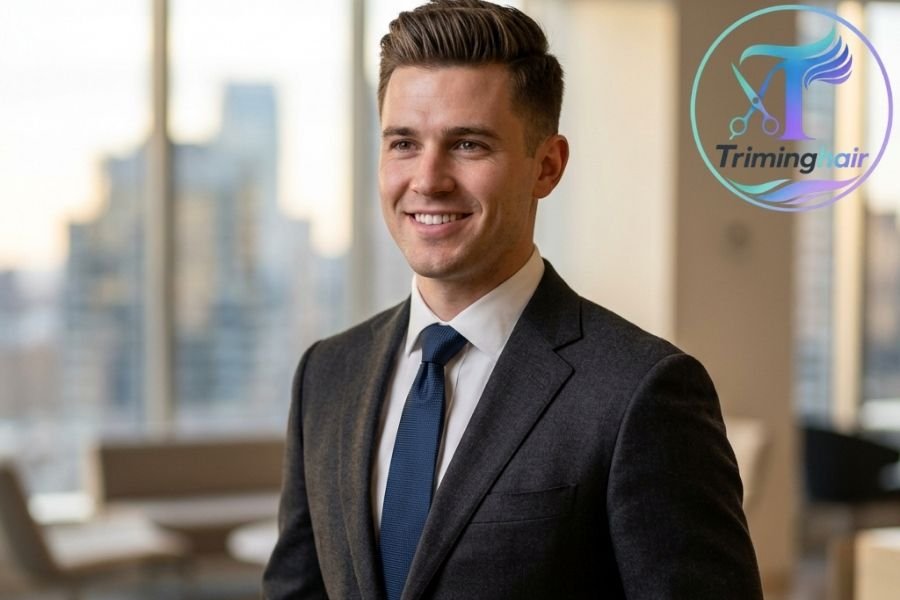
Finding the right professional men’s haircuts can feel harder than it should be, especially when you’re trying to balance personal style with what actually reads as “appropriate” for your workplace. The truth is that professional doesn’t have to mean boring, and there’s a much wider range of acceptable styles than most men assume. From tight, conservative cuts to modern, texture-forward looks, there’s a version of professional that fits almost any hair type and industry.
This guide breaks down 27 professional men’s haircuts, explains what actually makes a cut read as workplace-appropriate, and covers how to choose the right style for interviews, career stage, and hair type. You’ll also find practical guidance on how to communicate with your barber so you walk out with the exact look you had in mind. Whether you’re preparing for a big interview or just want a refresh that still looks sharp three weeks later, you’ll find a starting point below.
Attractive Business Professional Hairstyles For Men

Professional men’s haircuts don’t have to be boring to be appropriate for the office. The right cut balances structure and polish with enough personality that it still feels like you, not a costume. Below are 27 styles that read as put-together in a boardroom, a client meeting, or a job interview, ranging from tight and conservative to modern and slightly bolder.
Each of these looks works because it keeps hair off the face, maintains clean lines around the ears and neckline, and doesn’t require constant fussing to hold its shape through a workday. Whether you have straight, wavy, or curly hair, there’s a version here that will translate to your texture and your industry’s dress code.
Classy Comb Over with Taper Fade
The comb over with a taper fade is one of the most dependable professional men’s haircuts because it pairs longer top hair swept to one side with sides that gradually shorten into the neckline. It reads as neat and deliberate without looking severe. Barbers can adjust the taper’s height depending on how conservative your workplace is, making it easy to dial the look up or down.
Natural Flow
Natural flow lets the hair grow out slightly longer on top and fall in its own direction rather than being combed into a hard part. It works especially well for men with straight to wavy hair who want a softer, more relaxed professional look. Because it relies on the hair’s own movement, it needs minimal daily styling beyond a quick comb or light product.
Mature Spiky Hair
This is a refined, grown-up take on the spiky cut, with shorter, more controlled texture on top instead of dramatic peaks. A small amount of matte paste gives it definition without shine, keeping it appropriate for client-facing roles. It suits men who want a bit of edge while still clearing the bar for conservative office environments.
Short Tousled Hair with Cropped Sides
Short tousled hair with cropped sides keeps the length on top just long enough to add texture and movement, while the sides stay tight and tidy. The contrast gives the cut a modern, low-effort feel that still looks intentional. It’s a strong choice for creative or business-casual offices where a slightly relaxed look is welcome.
Short Curly Hair
For men with natural curls, keeping the sides shorter and letting the top curls stay at a manageable length creates a professional silhouette without fighting your texture. A light curl cream helps define shape and control frizz throughout the day. This cut avoids the common problem of curls growing outward and looking unkempt by midweek.
Long Fringe with Taper Fade
This style keeps a longer fringe on top that can be styled forward or swept to the side, paired with a taper fade on the sides for contrast. It offers more versatility than shorter cuts since the fringe can be dressed up or down depending on the setting. The taper keeps the overall look grounded and office-appropriate even with the extra length up top.
Side Swept Ivy League
The Ivy League is a classic American businessman’s cut, with slightly longer top hair combed to the side over short, neat sides. It’s one of the safest, most universally professional men’s haircuts because it has decades of history in corporate and formal settings. It’s an easy request to make to any barber and looks sharp with minimal daily maintenance.
Short Brush Up with Low Taper Fade
Brushing the top hair upward and slightly forward creates volume and a confident, energetic look, while the low taper fade keeps things understated at the sides. This cut works well for men who want a bit more height without going for a dramatic quiff. It’s a good middle ground between conservative and modern.
Man Bun
A well-groomed man bun can work in more relaxed or creative professional settings, particularly when the hair is kept neat, the bun is small and tight, and the sides are trimmed rather than shaggy. It’s less universally accepted than shorter cuts, so it’s worth gauging your specific workplace culture first. Pairing it with tidy facial hair and a controlled hairline helps it read as intentional rather than casual.
Textured Modern Quiff
The textured quiff lifts hair up and back from the forehead with visible texture rather than a slick finish. It’s a contemporary option that still respects professional boundaries because the length stays moderate and the sides remain tapered. A matte styling paste keeps the texture looking natural rather than overworked.
Brushed Forward Waves with Tapered Sides
This style takes natural wave pattern and brushes it forward and down toward the forehead, creating soft, textured movement. Tapered sides keep the overall shape controlled so the waves don’t read as messy. It’s particularly flattering for men with fine to medium hair density looking for extra visual texture.
Messy Medium Hair with Undercut
Medium-length hair on top paired with a disconnected undercut gives a stylish, slightly edgier professional look. The “messy” element is deliberate texture, not lack of grooming, so a matte product is essential to keep it looking curated. This cut suits industries with a more relaxed dress code, like tech, media, or design.
Mod Cut
The mod cut borrows from 1960s British style, with a rounded, slightly longer top and a defined fringe, kept fairly short and tidy overall. It has a retro-professional feel that stands out without breaking any conservative grooming rules. It works especially well for men with straight, thick hair that holds shape easily.
Buzz Cut
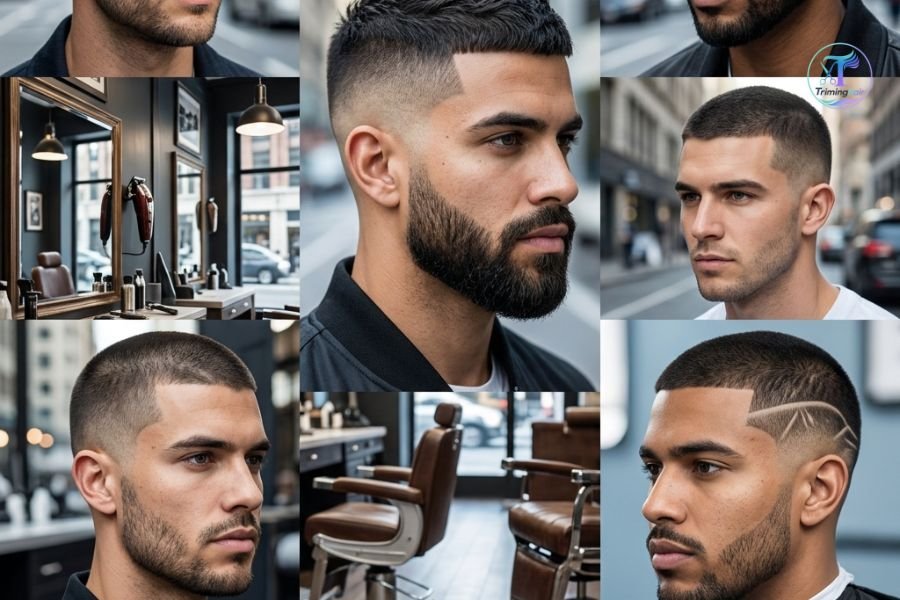
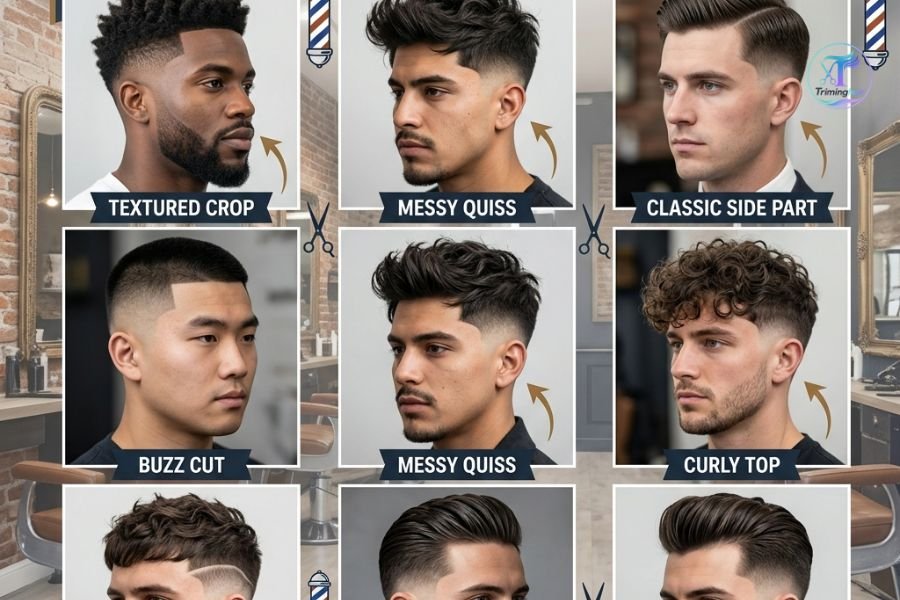
The buzz cut is about as low-maintenance and universally professional as a haircut gets, with uniform short length all over. It requires virtually no daily styling and always looks sharp, making it a favorite for men in structured or client-facing roles. Regular trims every two to three weeks keep it looking fresh and intentional.
Faux Hawk
The faux hawk creates a subtle ridge of height down the center of the head without shaving the sides completely, offering a toned-down nod to the classic mohawk. Kept short and tight, it can pass as professional in more relaxed or creative offices. It’s best avoided in highly conservative industries like law or finance.
Textured Crew Cut
The crew cut is a timeless short style with slightly longer hair on top and closely cropped sides, and the textured version adds a bit of movement and separation for a modern edge. It’s easy to maintain, grows out gracefully, and works with nearly every face shape and hair type. This makes it one of the most requested professional men’s haircuts for first-time clients describing what they want.
Visit For More: Long Top, Short Sides Haircuts for Men: 45 Stylish Looks
Brushed Back Waves
Brushing natural waves straight back off the forehead creates a polished, confident look reminiscent of classic Hollywood style. It works best on medium to thick hair that holds the brushed-back shape throughout the day. A light pomade adds control and a subtle sheen without looking greasy.
Loose Messy Curls
For men whose curls are looser and less tight, allowing some length and movement on top while keeping the sides trimmed creates a professional-yet-approachable look. The key is regular trims to prevent the curls from growing into an unstructured shape. A lightweight curl cream keeps things defined without weighing the hair down.
Low-Maintenance Short Hair with Beard
Short, simple hair paired with a well-groomed beard is a reliable combination for men who want a polished look without much daily effort. The beard should be trimmed and shaped regularly to match the neatness of the haircut. This pairing works across almost every industry, from finance to hospitality.
Tousled Long Crew Cut
This is a longer variation of the crew cut, with enough length on top to create soft, tousled texture while the sides stay classically short. It offers more styling flexibility than a standard crew cut while still reading as tidy. It’s a good option for men transitioning from longer hair who aren’t ready to go fully short.
Long Comb Over
The long comb over takes the traditional comb over and extends the length on top, giving more room for texture and volume while still directing hair to one side. It suits men who want a statement style without sacrificing professionalism. Regular use of a comb and light hold product keeps the part line crisp throughout the day.
French Crop Fade
The French crop combines a blunt, textured fringe with tapered or faded sides, creating a modern European silhouette. It’s become one of the most popular professional men’s haircuts in recent years because it looks equally sharp in a suit or business casual attire. The fringe can be tailored shorter or longer depending on how bold you want the look.
Thick Curly Fringe with Mid Taper Fade
For men with dense, curly hair, keeping a defined fringe on top with a mid taper fade at the sides balances volume with structure. This cut prevents the “grown wide instead of long” problem common with curly hair by controlling the sides. A curl-defining cream helps the fringe hold its shape through the day.
Posh Shaggy Haircut
The posh shaggy cut has longer, layered length on top with soft texture throughout, offering a more fashion-forward professional look. It works best in creative industries or offices with relaxed dress codes rather than strict corporate environments. Regular trims keep the shag looking intentional instead of overgrown.
Slick Back
The classic slick back uses pomade or gel to comb all hair straight back off the forehead, creating a sleek, formal finish. It’s a go-to choice for formal business settings, client presentations, and interviews because it looks deliberate and put-together. It works best on hair with enough length on top to hold the backward direction.
Short Side Swept Crew Cut with High Taper Fade
This variation of the crew cut sweeps the top hair to one side rather than straight back, paired with a high taper fade for extra contrast. The higher fade makes the cut look sharper and more modern than a standard crew cut. It’s a strong choice for men who want something slightly more distinctive while staying safely professional.
Hard Side Part with Low Taper Fade
The hard side part uses a razor-drawn line to create a crisp, defined part, paired with a low taper fade for a clean transition at the sides. It’s one of the most formal-looking professional men’s haircuts on this list, often chosen for interviews and important meetings. The hard line requires touch-ups every few weeks to stay looking fresh.
What Makes A Haircut “Professional” Looking?
There’s no single official definition of a “professional” haircut, but most workplaces share a similar set of unwritten expectations. Professional cuts tend to be well-maintained, appropriately conservative for the setting, and easy to keep looking neat from morning meetings to end-of-day wrap-ups. The goal is a haircut that supports how you want to be perceived, not one that distracts from it.
What counts as professional also shifts depending on industry, company culture, and even geographic region. A style that’s completely standard at a tech startup might raise eyebrows at a law firm, and vice versa. Understanding the underlying criteria, rather than memorizing a fixed list of “approved” cuts, makes it much easier to choose a style that works for your specific situation.
The Criteria of a Professional Haircut
Most professional haircuts share a few core traits: clean lines around the ears and neckline, hair kept off the face, and a shape that holds up without constant re-styling throughout the day. Length and texture matter less than tidiness and intentionality. A haircut that looks freshly groomed, rather than overgrown or undone, will almost always read as professional regardless of the specific style.
The Conservative-to-Creative Spectrum
Professional haircuts exist on a spectrum, from very conservative cuts like the buzz cut or hard side part to more expressive options like a textured quiff or man bun. Where you should sit on that spectrum depends heavily on your industry and role. Client-facing finance or legal positions typically call for the conservative end, while creative or tech roles often allow more room to experiment.
What Makes A Cut NOT Professional
Haircuts tend to read as unprofessional when they look unkempt, involve extreme or unconventional shapes, or require hair to be constantly pushed out of the eyes. Overly long, unstyled hair, uneven growth, or dramatic color choices can also work against a polished appearance in more traditional workplaces. The issue is usually less about the cut itself and more about whether it looks deliberately maintained.
The “Would A Client Notice?” Test
A simple way to judge whether a haircut is appropriate is to ask whether a client or senior executive would notice it in a way that distracts from the conversation. If the honest answer is that they’d remember the haircut more than what you said in the meeting, it’s probably too bold for that setting. This test is a useful gut check when choosing between two styles you like.
Choose A Cut That Still Looks Professional Three Weeks Later
Many haircuts look sharp on day one but lose their shape quickly, especially fades and tight tapers that grow out unevenly. When choosing a professional cut, consider how it will look two to three weeks post-appointment, not just fresh out of the chair. Styles with slightly more length or looser structure, like a natural flow or textured crop, tend to age more gracefully between trims.
The Best Haircut For A Job Interview
Job interviews call for a more conservative approach than your everyday professional look, since you’re being judged on a single impression rather than an ongoing relationship with colleagues. The safest interview haircuts prioritize neatness and predictability over personal expression. This isn’t the moment to test out a bold new style you’re unsure about.
That said, “conservative” doesn’t mean bland. A well-executed classic cut like an Ivy League, textured crew cut, or hard side part can look sharp, current, and confident without any risk of being perceived as unprofessional. The goal for interview day is to look like the most polished version of yourself, not a different person entirely.
The Safest Interview Hairstyles For Men
For interviews, stick to time-tested, low-risk styles such as the Ivy League, textured crew cut, buzz cut, or hard side part with a low taper fade. These cuts are widely recognized as professional across nearly every industry and geographic region. They also photograph well, which matters if your interview process includes a video call or headshot.
When To Schedule The Cut
Get your haircut three to five days before the interview rather than the morning of. This gives any harsh fade lines or freshly cut edges time to soften slightly, so the cut looks settled rather than brand new. It also gives you a buffer in case the cut doesn’t turn out exactly as expected.
Interview-Specific Considerations
Beyond the cut itself, make sure facial hair is trimmed to match the neatness of your haircut, and avoid any last-minute product experiments you haven’t tested before. Research the company’s culture beforehand; a startup interview allows more flexibility than one at a traditional bank or law firm. When in doubt, err toward the more conservative option.
The First-Day-at-New-Job Question
Once you’ve landed the job, you can gradually shift toward a style that feels more like your everyday self, but it’s still wise to start conservative during the first few weeks. Use that early period to observe what colleagues and leadership actually wear before introducing a bolder cut. Easing into your preferred style avoids drawing unnecessary attention during a time when you’re still making first impressions.
How To Ask Your Barber For A Professional-Looking Cut
Getting a professional haircut starts with communicating clearly at the chair, since barbers can’t read your workplace’s dress code from a vague request like “just make it neat.” The more specific you are about length, fade height, and finish, the closer the result will match what you actually need. A few well-chosen details can be the difference between a good cut and a great one.
It also helps to think of the conversation as a two-way collaboration rather than a one-sided instruction. A good barber will ask follow-up questions about your industry, your daily styling routine, and how long you want the cut to last between visits. Coming prepared with reference points makes that conversation faster and more accurate.
The Four Details That Matter Most
When describing what you want, cover length on top, fade or taper height, the finish (matte, textured, or slicked), and how you part or style it day to day. These four details give a barber almost everything they need to execute a professional cut accurately. Leaving out any one of them increases the chance of a result that doesn’t match your expectations.
The Conservative Qualifier
Simply saying the word “conservative” or “professional” when describing your desired cut signals to your barber that you want something safe rather than trendy or dramatic. Most barbers will automatically adjust length, fade height, and texture accordingly. It’s a quick, effective shorthand that avoids over-explaining every detail.
Reference Photos for Professional Contexts
Bringing one or two reference photos removes ambiguity, especially for details like fade height or fringe length that are hard to describe in words. Choose photos of men with a similar hair type and face shape to yours for the most accurate translation. Mentioning that the photo is for a “workplace-appropriate” version of the style helps the barber adjust it if needed.
The Beard Conversation
If you wear facial hair, discuss it in the same appointment so your barber can shape the haircut and beard to complement each other. Mismatched grooming, like a sharp fade paired with an untrimmed beard, undercuts an otherwise professional look. Ask your barber to line up the beard alongside the haircut for a cohesive finish.
Starting a New Job or Career Transition
If you’re heading into a new role or industry, tell your barber directly, since they can tailor recommendations based on what’s typical in that field. A barber who regularly cuts hair for finance professionals will have different instincts than one used to a creative agency clientele. This context helps them steer you toward a cut that will fit in from day one.
Professional Mens Haircuts For Curly Hair
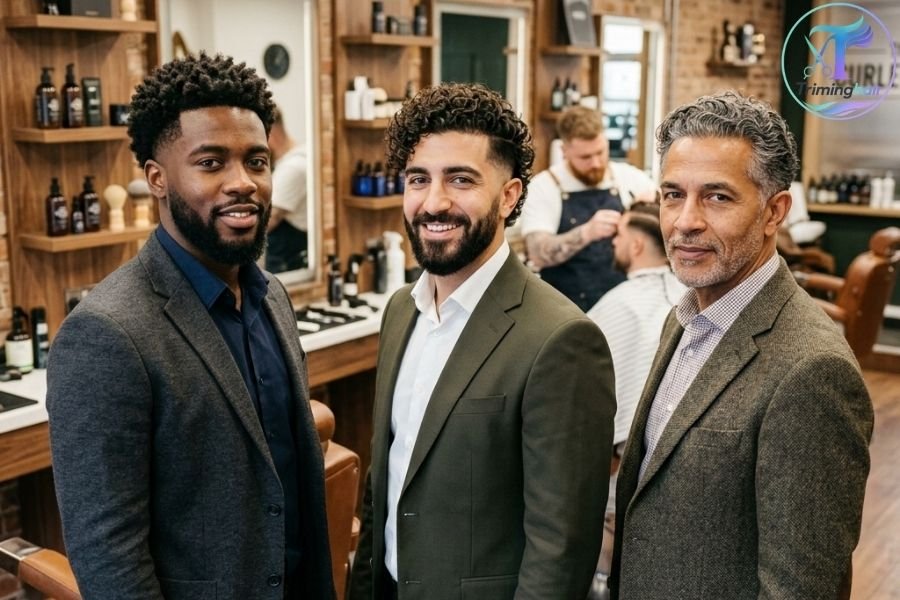
Curly hair adds a layer of complexity to professional styling because curls tend to shrink upward and outward rather than lying flat, which can make length harder to judge. The trick is choosing a cut where the curl pattern is worked with, not against, using tighter sides to balance volume on top. Regular trims are especially important for curly hair, since even small amounts of growth can noticeably change the shape.
Styles like short curly hair with tapered sides, a thick curly fringe with a mid taper fade, or loose messy curls all give curly-haired men options that stay controlled through a workday. A curl cream or light-hold gel applied to damp hair helps define curl pattern and reduce frizz without looking overly styled. Working with a barber who has specific experience cutting curly hair will make a noticeable difference in the final result.
Medium Length Professional Mens Haircuts
Medium length hair strikes a balance between the extra-low-maintenance of a buzz cut and the styling demands of longer looks, giving more versatility without requiring daily heavy styling. Cuts like the natural flow, tousled long crew cut, and posh shaggy haircut all fall into this category, offering movement and texture while staying office-appropriate. This length range also transitions well between more and less formal settings.
The key to keeping medium length hair professional is regular trims, since this length is where hair most easily drifts from “intentional” to “overgrown.” A light styling product, such as a matte cream or light pomade, helps maintain shape throughout the day without excessive shine. Medium length is also a good middle-ground option for men easing out of a longer style into something shorter.
Men’s Business Professional Haircuts
Business professional haircuts are typically the most conservative end of the spectrum, designed for environments like finance, law, consulting, and executive leadership where first impressions carry significant weight. Cuts such as the hard side part, Ivy League, slick back, and classic taper fade are staples in these industries because they’ve remained consistently appropriate for decades. These styles prioritize precision and predictability over trend-driven texture.
In business professional settings, maintenance matters as much as the initial cut, since a business professional look typically needs a trim every two to three weeks to stay sharp. Facial hair, if worn, should be kept equally tidy to match the overall polish of the haircut. This category of cuts is also the safest default when you’re unsure how conservative your specific workplace expects you to be.
Classic Professional Men’s Haircuts
Classic professional cuts are the styles that have remained standard across generations of workplaces, including the Ivy League, crew cut, side part, and slick back. Their staying power comes from a universal formula of tidy sides, controlled length on top, and minimal reliance on trends that go in and out of fashion. These cuts are essentially risk-free in any office environment, regardless of industry.
Choosing a classic cut is also a practical decision, since barbers everywhere are familiar with executing them accurately, which reduces the chance of a miscommunicated haircut. They tend to suit a wide range of face shapes and hair textures with only minor adjustments needed. For men who want to spend less time thinking about their hair and more time on everything else, a classic cut is usually the most efficient choice.
Young Men’s Professional Haircuts
Younger professionals, particularly those in their first jobs or early career stages, often have more flexibility to incorporate current trends into a professional cut than more senior colleagues might. Styles like the French crop fade, textured modern quiff, or textured crew cut allow for a contemporary look while still reading as workplace-appropriate. This is a good stage to experiment slightly, since expectations are often a bit more relaxed for entry-level roles.
That flexibility does have limits, and it’s still worth reading the room at a new workplace before committing to a bolder style. Observing what more senior colleagues wear, and erring conservative during the first few months, is a reasonable strategy. As comfort and tenure grow, young professionals can gradually shift toward a cut that better reflects personal style.
Professional Haircuts by Career Stage
Hair expectations often shift subtly as a career progresses, even within the same industry, reflecting changes in visibility, client interaction, and seniority. What reads as fine for a junior employee might feel slightly too casual once someone is regularly presenting to executives or clients. Thinking about your haircut in the context of your specific career stage can help you choose a style that matches where you are, and where you’re heading.
This doesn’t mean career growth requires increasingly boring hair. It means the margin for trend-driven or unconventional choices tends to narrow as responsibility and visibility increase, particularly in more traditional industries. The sections below break down general guidance for different points in a career, though individual company culture will always be the final word.
Entry-Level and Recent Graduates
Entry-level professionals typically have the most room to incorporate current trends into their haircut, since expectations are often somewhat more relaxed for junior roles. Styles like the French crop, textured quiff, or messy medium hair with an undercut work well here. It’s still worth observing office norms during the first few weeks before committing to anything too bold.
Mid-Career Professionals
As professionals take on more client-facing or leadership responsibilities, haircuts often shift toward slightly more conservative, polished options like the classic taper fade or textured crew cut. This stage tends to call for a balance between personal style and increased visibility within the organization. Regular, consistent maintenance becomes more important as informal grooming standards rise with seniority.
Senior Professionals and Executives
Senior professionals and executives generally benefit from the most classic, understated cuts, such as the hard side part, Ivy League, or slick back, which project stability and authority. At this stage, the haircut should support gravitas rather than draw attention to itself. Consistency between appointments also matters more, since senior professionals are often recognized and photographed more frequently.
C-Suite and Leadership Roles
C-suite executives are frequently the public face of their organization, appearing in press photos, investor meetings, and company communications, which raises the stakes on a polished, timeless haircut. Classic styles with minimal maintenance risk, like a short taper fade or hard side part, are common choices at this level. The goal is a look that ages well across years of public appearances, not just weeks between haircuts.
Career Transitions and Reinventions
Switching industries or roles is a natural moment to reconsider your haircut, particularly if you’re moving from a more casual field into a more traditional one, or vice versa. Researching the norms of your new industry, and possibly bringing reference photos to your barber, can help ease the transition. A slightly more conservative cut during the first few months in a new role is a safe way to establish credibility before easing into your preferred style.
Best Professional Men’s Haircuts
Among all the styles covered, a handful consistently stand out as the most reliable choices across industries: the Ivy League, textured crew cut, hard side part, and classic taper fade. These cuts combine low maintenance, broad workplace acceptance, and a timeless look that won’t feel dated in a few years. They’re also straightforward for any barber to execute accurately, reducing the risk of a miscommunicated result.
What makes a haircut “the best” ultimately depends on your hair type, face shape, and specific work environment, so there isn’t a single universal answer. That said, starting from this shortlist and adjusting length, fade height, or texture to your preferences is a reliable way to land on a cut that works well for you. These styles also tend to photograph and video-call well, which matters more than ever in hybrid work settings.
Stylish Professional Men’s Haircuts
For men who want their haircut to feel current without straying from workplace norms, styles like the textured modern quiff, French crop fade, and brushed forward waves offer more personality than the strictest classics. These cuts incorporate texture and movement while still maintaining clean lines at the sides and back. They tend to suit business-casual or creative office environments especially well.
Achieving the stylish-yet-professional balance usually comes down to product and maintenance rather than the cut alone. A matte paste or light clay gives texture without excessive shine, which keeps the look grounded rather than flashy. Regular trims every three to four weeks also help these slightly more expressive cuts stay looking sharp rather than drifting toward unkempt.
Professional Mens Haircuts 2026
Current trends in professional men’s haircuts lean toward natural texture and movement rather than the ultra-slick, heavily gelled looks of years past. Cuts like the natural flow, textured crop, and modern quiff reflect this shift, favoring a more relaxed, effortless finish while still keeping sides tidy and controlled. Taper fades remain more popular than skin fades in conservative office settings, since they offer a softer transition.
Another notable trend is the growing acceptance of slightly longer, more textured styles even in traditionally conservative industries, reflecting broader shifts in workplace dress codes. That said, the fundamentals haven’t changed: clean lines, regular maintenance, and a cut that suits your specific role and industry remain the most reliable guide, regardless of which specific trend is currently popular.
Short Professional Mens Haircuts
Short haircuts remain the most consistently low-maintenance and universally accepted option for professional settings, since they require minimal daily styling and hold their shape well between trims. Styles like the buzz cut, textured crew cut, and French crop fade all fall into this category, offering a range of texture and personality within a compact length. They’re also a practical choice for men who want to spend as little time as possible on their morning routine.
Short cuts are particularly well-suited to the most conservative industries, including finance, law, and government, where predictability and neatness are valued above trend-driven styling. They also tend to suit a wide range of hair types, from straight to curly, with only minor adjustments to how the sides are tapered or faded. For most professional men, a well-executed short cut is the safest, most efficient long-term choice.
Frequently Asked Questions
How often should I get a professional haircut?
Most professional men’s haircuts need a trim every two to four weeks, depending on how fast your hair grows and how tight the sides are cut. Shorter, faded styles fall out of shape faster and need more frequent visits, while longer or textured cuts can stretch closer to the four-week mark. Booking a standing appointment with your barber is an easy way to stay consistent without having to remember to schedule it yourself.
What is the most conservative professional haircut?
The buzz cut, hard side part, and classic taper fade are generally considered the safest, most conservative professional men’s haircuts. They’re accepted in virtually every industry, from law and finance to hospitality and government. If you’re unsure how strict your workplace’s expectations are, starting with one of these three is a low-risk way to stay safely within bounds.
Can I have long hair and still look professional?
Yes, longer hair can absolutely look professional if it’s kept clean, well-maintained, and styled with intention, such as a long comb over or a neatly tied man bun. The key is making sure hair stays off the face and doesn’t look unkempt or in need of a trim. Longer styles are generally better received in creative, tech, or hospitality settings than in more traditional corporate environments.
How do I know if my haircut is too trendy for work?
A useful gut check is asking whether a client or senior executive would notice the haircut in a way that distracts from the conversation you’re having with them. If a style involves dramatic shapes, unconventional color, or requires constant re-styling throughout the day, it’s likely too bold for a conservative office. When in doubt, a slightly more classic version of the same cut is usually a safer bet.
Should I get a haircut the day before a job interview?
It’s better to schedule your haircut three to five days before an interview rather than the day before. This gives fresh fade lines and sharp edges a little time to settle so the cut looks natural rather than freshly done. It also leaves you a buffer in case the result isn’t quite what you expected.
What haircut works best for curly hair in a professional setting?
Curly-haired men generally get the best professional results from cuts that keep the sides tighter while allowing curls on top to stay defined, such as short curly hair with tapered sides or a curly fringe with a mid taper fade. Regular trims are especially important, since curls can quickly grow outward and lose shape. A lightweight curl cream also helps keep the style controlled throughout the day.
Conclusion
A professional haircut isn’t about picking the most boring option in the chair, it’s about choosing a style that fits your hair, your industry, and the impression you want to leave. From the 27 professional men’s haircuts covered here to the guidance on interviews, career stages, and how to talk to your barber, you now have a clear framework for making that choice with confidence. The best professional men’s haircuts are the ones that still look sharp three weeks later, not just on the day you leave the salon.
If you’re still unsure where to start, default to a classic option like the textured crew cut, Ivy League, or taper fade, and adjust from there as you get a feel for your workplace’s specific culture. A quick conversation with your barber about your industry and daily routine will do more for the final result than any single style choice. With the right cut and a bit of regular maintenance, looking professional can be effortless rather than one more thing to worry about.

Leave a Reply