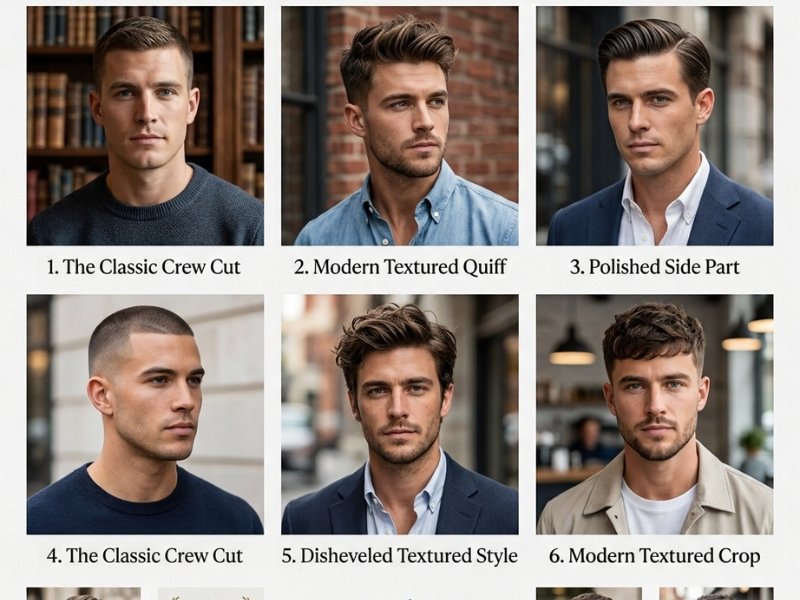
The Ivy League haircuts has remained one of the most reliable men’s hairstyles for decades, prized for its clean lines and effortless versatility. It works equally well in a boardroom or on a weekend out, which is exactly why barbers keep recommending it to clients who want something sharp without being high-maintenance.
Whether you’re after the traditional collegiate look or a fresher, textured take on the classic, this guide breaks down 21 of the best Ivy League haircuts for men. From taper fades to curly variations, there’s a version here for every hair type, face shape, and lifestyle.
Sophisticated Ivy League Hairstyle Variations
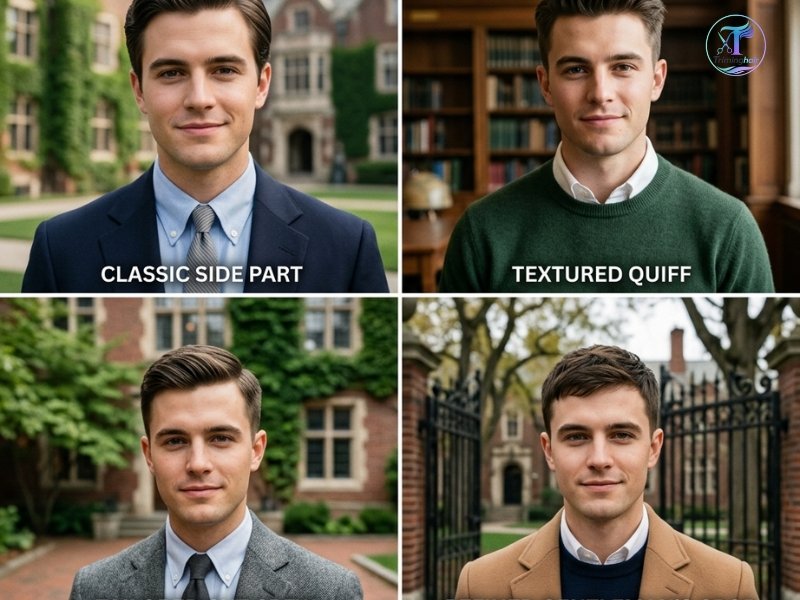
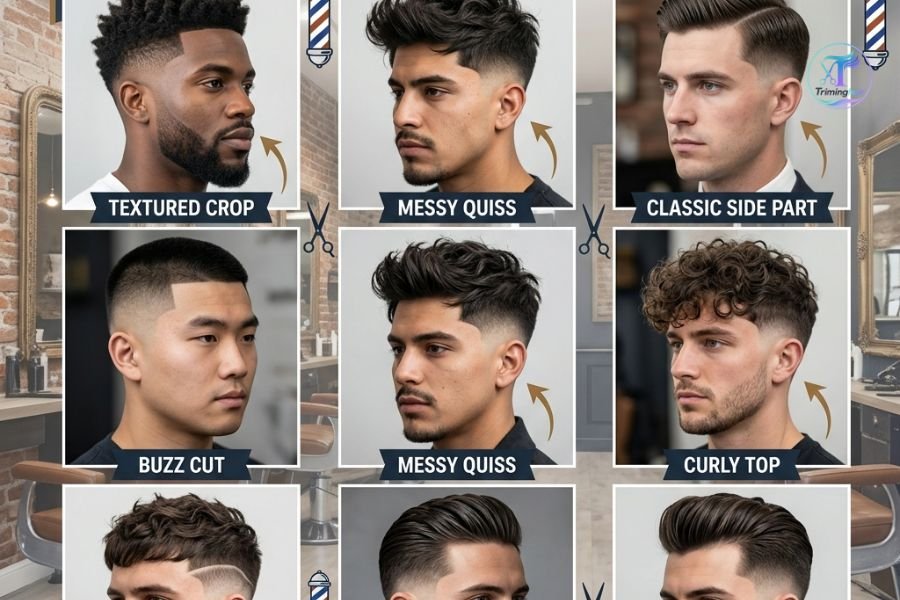
The beauty of the Ivy League cut lies in how easily it adapts. A slightly longer top, a tighter fade, or a change in part can completely shift the vibe from buttoned-up professional to relaxed and modern. Below are the most popular variations barbers are cutting right now.
Each style keeps the signature short sides with a slightly longer top, but the finishing touches make all the difference. Use this list to find the exact variation that matches your hair texture and the amount of daily styling you’re willing to put in.
Classic Ivy League Haircut
The original version features short, neatly trimmed sides with a slightly longer top that’s combed forward and to the side. It’s the foundation every other variation builds from, offering a timeless, polished look that never goes out of style.
Modern Ivy League Haircut
This updated take adds texture and movement to the top while keeping the sides sharp, often paired with a fade instead of a traditional taper. It feels more current while still nodding to the classic silhouette.
Short Ivy League Haircut
A tighter, closer cut all around, this version keeps the top just long enough to style while trimming everything else down for a low-maintenance, ultra-clean finish. It’s ideal for hot climates or busy schedules.
Textured Ivy League with Taper Fade
Adding texture to the crop gives the style extra dimension and a slightly tousled finish, while the taper fade keeps the sides crisp and gradual. It’s a great middle ground between polished and effortless.
Ivy League Crew Cut
This variation borrows from the classic crew cut by keeping the top shorter and more uniform, resulting in a sharper, more military-inspired silhouette. It’s a strong choice for thick or coarse hair.
Professional Ivy League with Tapered Sides
Built for the office, this cut leans into subtlety with a gentle taper instead of a fade, keeping the look conservative and easy to maintain between appointments. It photographs well and suits formal settings.
Curly Ivy League
Curly hair gets its own spin on the style, with natural texture left longer on top to embrace the curl pattern while the sides stay tightly cropped. The contrast highlights the curls instead of fighting them.
Preppy Ivy League
True to its collegiate roots, this version keeps everything neat, symmetrical, and combed to one side, often finished with a light hold product for a polished, put-together appearance. It’s the closest to the style’s original 1950s form.
Ivy League Fade
Swapping the classic taper for a fade instantly modernizes the cut, creating sharper contrast between the short sides and the longer top. It’s one of the most requested versions in barbershops today.
Messy Ivy League
Instead of a neat comb-over, this style is styled with fingers and a matte product for a lived-in, undone look. It keeps the short sides but trades precision on top for natural movement.
Long Ivy League
Here, the top is left noticeably longer than usual, giving more room to style waves, quiffs, or side sweeps while the sides remain short for contrast. It suits guys who want more versatility in daily styling.
Brushed Up Ivy League
Styled with volume, the top is brushed upward and slightly back instead of to the side, creating height and a more dynamic silhouette. It works especially well on thicker hair that holds shape easily.
Ivy League Comb Over
A close cousin of the preppy version, the comb over emphasizes a defined part and a smooth, directional sweep across the top. It’s a dependable, formal option for interviews or events.
Also Read This: Professional Men’s Haircuts: 27 Classy Styles For A Sharp Business Look
Simple Short Ivy League with Texture
This pared-back style keeps length minimal everywhere while adding light texture on top for subtle dimension. It’s about as low-effort as the Ivy League gets without losing its character.
Side Swept Ivy League with Low Taper Fade
The top is swept gently to one side and paired with a low taper fade for a soft transition between the lengths. It’s a versatile option that suits both casual and formal wardrobes.
Hard Side Part
A razor-sharp line is shaved directly into the hair to define the part, giving the style a bold, graphic edge. It pairs especially well with the fade variations for maximum contrast.
Ivy League with Low Fade
The fade starts much closer to the ears here, creating a subtler blend that still adds shape without the drama of a high fade. It’s a good entry point for first-timers trying a fade.
Medium Length Ivy League
Slightly longer than the classic cut, this version gives more flexibility for styling quiffs, textured waves, or a soft side part. It requires a touch more daily maintenance but offers more variety.
Low-Maintenance Ivy League
Designed for guys who don’t want to style every morning, this version relies on a shorter top and a simple, air-dried finish that still looks intentional. A quick run of fingers through damp hair is usually all it needs.
Fresh Ivy League with Clean Tapered Sides
This is the barbershop-fresh version of the cut, with crisp, freshly tapered sides and a neatly defined top. It’s the look most guys aim to recreate right after a haircut appointment.
Textured Ivy League Taper Fade with Stubble Beard
Pairing the cut with a short stubble beard adds balance and a more rugged, masculine finish. The textured top and taper fade complement facial hair nicely, making this a popular full-look choice.
Ivy League Haircut Asian
Asian hair tends to be straight and dense, which actually works in favor of the Ivy League cut, since it holds a clean shape and defined part with minimal product. Barbers often recommend a slightly longer top with a taper or low fade to soften the natural thickness while keeping the silhouette sharp.
Textured or slightly tousled finishes are also popular among Asian clients, as they add movement without fighting the hair’s natural straightness. This makes the style easy to maintain between cuts, with just a touch of styling paste needed for daily upkeep.
Ivy League Haircut Indian
For thicker or wavy hair textures common among Indian men, the Ivy League cut is often adapted with more texturizing on top to prevent the style from looking too bulky. A mid or low fade on the sides helps balance out denser hair while keeping the overall look clean and structured.
Styling typically involves a matte pomade or clay to control frizz and define the top without adding shine. This version of the cut tends to favor practicality, offering a sharp look that holds up well in humid climates.
Ivy League Haircut Men

At its core, the Ivy League is a men’s haircut built around contrast: short, tapered or faded sides paired with a longer, styled top. It suits nearly every hair type and face shape, which is a big part of why it has stayed popular across generations.
Men gravitate toward this cut because it requires relatively little daily maintenance while still looking deliberate and refined. It’s equally at home in professional settings and casual ones, making it one of the most practical choices in modern men’s grooming.
Ivy League Haircut Korean
Korean-inspired takes on the Ivy League often incorporate softer, more textured tops with subtle fringe influences, blending Western tailoring with Korean styling trends. The sides are usually kept tighter with a fade, while the top is left with enough length to add volume and texture.
This version leans slightly more fashion-forward, often finished with a light wax for a matte, separated texture rather than a slicked look. It’s a popular choice for guys wanting a modern, K-style edge on a traditional cut.
Ivy League Haircut Classic
The classic Ivy League sticks closely to its Ivy League roots: short, tapered sides and a neatly combed top, usually parted to one side. It’s a refined, no-fuss style that has barely changed since its rise in popularity decades ago.
This version is especially popular in corporate and formal environments because of its polished, understated appearance. It pairs well with minimal product, making it one of the easiest classic cuts to maintain day to day.
Modern Ivy League Haircut
The modern take swaps the traditional taper for a fade and introduces more texture on top, giving the cut a fresher, slightly edgier feel. It still respects the original shape but updates the finishing details to suit current trends.
This version is popular among younger clients who want something recognizable but not old-fashioned. It photographs well and adapts easily to different styling products, from matte pastes to light-hold creams.
What Is The Ivy League Haircut?
The Ivy League haircut is a classic men’s style defined by short, neatly trimmed sides paired with a longer top that’s combed or styled to one side. It originated in American Ivy League universities in the mid-20th century, which is where the name comes from.
Unlike more dramatic styles, the Ivy League emphasizes clean lines and understated sophistication rather than bold statements. Its lasting popularity comes down to versatility: it looks equally sharp with a suit or a casual outfit, and it works across nearly every hair texture and face shape.
Ivy League Haircut Classic
The classic version remains the benchmark against which every modern variation is measured, thanks to its balanced proportions and easy styling. Short sides transition smoothly into a slightly longer top, usually finished with a defined side part.
It continues to be a go-to choice for men who want a dependable, professional look that doesn’t require constant upkeep. A quick comb and a small amount of product are typically all that’s needed to keep it looking sharp throughout the day.
Modern Ivy League Haircut
Modern interpretations lean into fades, added texture, and slightly more relaxed styling compared to the traditional version. The overall shape stays recognizable, but the details feel more current and adaptable to today’s grooming trends.
This makes the modern Ivy League a strong option for men who want the structure of a classic cut without it feeling dated. It’s especially popular with barbers who like to add subtle texturizing to break up the top for a lived-in finish.
Ivy League Haircut Receding Hairline
For men dealing with a receding hairline, the Ivy League can be adjusted to soften the hairline rather than draw attention to it. Keeping the top slightly shorter and adding texture helps disguise thinning areas, while a fade on the sides shifts focus away from the hairline itself.
Barbers often recommend avoiding a hard side part in these cases, since a sharp line can highlight recession more than a softer, textured finish would. A slightly forward-styled fringe or textured crop tends to work best for creating the illusion of a fuller hairline.
Side Part Ivy League Haircut
The side part version leans into the style’s preppy origins, using a defined part to create structure and a polished, formal appearance. It works particularly well with straight to slightly wavy hair, which holds the part cleanly throughout the day.
To achieve this look, hair is typically dried and combed in the direction of the part while damp, then set with a light-hold pomade. It’s one of the more formal takes on the Ivy League, making it a popular choice for weddings, interviews, and other dressed-up occasions.
How To Style An Ivy League
Styling an Ivy League haircut starts with towel-drying hair to about 80 percent, then applying a small amount of pomade, cream, or paste depending on the finish you want. Comb or brush the top in your preferred direction, whether that’s a classic side part or a more textured, brushed-up look, then let it air dry or finish with a blow dryer on low heat.
For added texture, work a matte product through with your fingers instead of a comb, focusing on the ends to create separation. Touch-ups throughout the day are minimal since the short sides need little attention; a quick pass of a comb or fingers through the top is usually enough to keep the style looking fresh.
FAQ’s
How often do I need to get an Ivy League haircut trimmed?
Most men need a trim every 3 to 4 weeks to keep the sides tight and the top from losing its shape. If you’re wearing a fade version, you may want to visit slightly sooner since fades grow out faster than a simple taper.
Does the Ivy League haircut work with thick or curly hair?
Yes, the cut adapts well to thick and curly hair by leaving extra length on top to let the natural texture show while keeping the sides short for contrast. Barbers often add texturizing to thin out bulk without losing the curl pattern.
What products should I use to style an Ivy League haircut?
A light pomade or cream works best for a classic, combed finish, while a matte paste or clay is better for textured, messier variations. The right product depends on the hold and shine level you’re going for.
Is the Ivy League haircut suitable for a receding hairline?
Yes, with a few adjustments. Keeping the top shorter, adding texture, and avoiding a hard side part all help soften the appearance of a receding hairline while still delivering the classic Ivy League shape.
What’s the difference between an Ivy League and a crew cut?
The Ivy League typically leaves more length on top for styling versatility, while a traditional crew cut keeps the top shorter and more uniform throughout. Both share short, tapered sides, but the Ivy League offers more room to experiment with texture and part.
Conclusion
The Ivy League haircut has earned its staying power by being one of the few styles that works for nearly every hair type, face shape, and lifestyle. Whether you prefer the timeless classic version or a modern fade with added texture, there’s a variation on this list suited to your look and maintenance level.
At the end of the day, the best Ivy League haircut is the one that fits your hair’s natural texture and how much time you’re willing to spend styling it each morning. Bring a photo of your favorite variation to your next barber appointment, and don’t be afraid to ask for small tweaks that make the cut your own.

Leave a Reply