
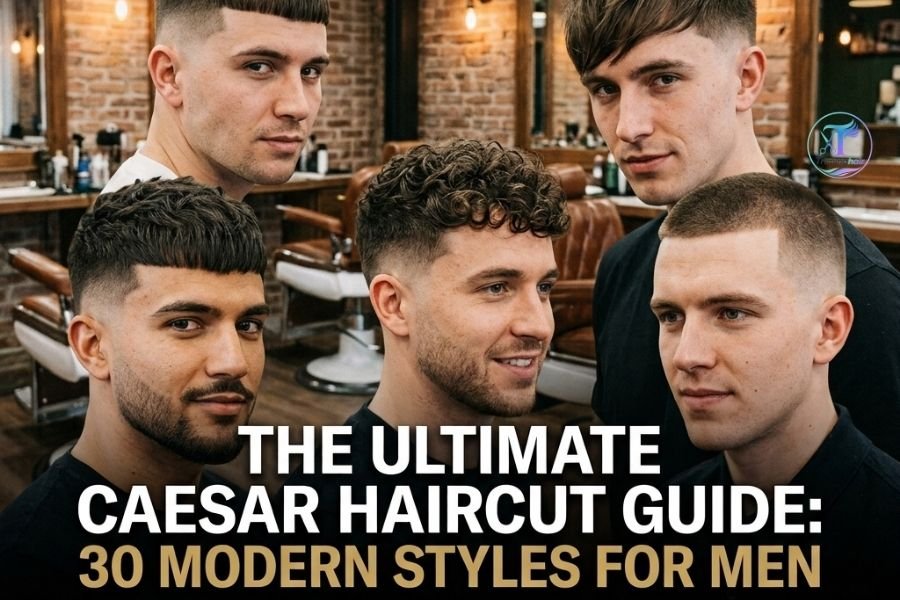
The Caesar haircut has been a go-to choice for men for decades, prized for its clean lines, short length, and almost effortless upkeep. Named after Julius Caesar himself, this cut has evolved far beyond its historical roots into dozens of modern variations, from sharp fades to soft textured finishes. Whether you want something classic or a bit more edgy, there’s a version of this cut for nearly every hair type and lifestyle.
In this guide, we’re breaking down everything you need to know about the Caesar haircut, including 30 of the most popular styles trending right now. We’ll also cover how the cut has been worn by celebrities, its roots in the 90s, and even how to recreate it yourself at home. By the end, you’ll have a clear picture of which Caesar variation fits your look best.
What Is A Caesar Haircut?
A Caesar haircut is a short, low-maintenance men’s style defined by evenly cropped hair on top combed forward into a straight, horizontal fringe. The sides and back are kept short too, usually blended with clippers, giving the whole cut a neat and uniform texture. It’s named after Julius Caesar, who is said to have worn his hair this way to hide a receding hairline.
The style has stayed popular for decades because it works with almost any hair type and face shape while requiring very little daily styling. Modern barbers have modernized it with fades, tapers, and textured finishes, but the core idea remains the same: short length on top, forward-combed fringe, and clean sides. It’s a go-to choice for men who want a sharp look without spending time on complicated routines.
Popular Caesar Men’s Hairstyles
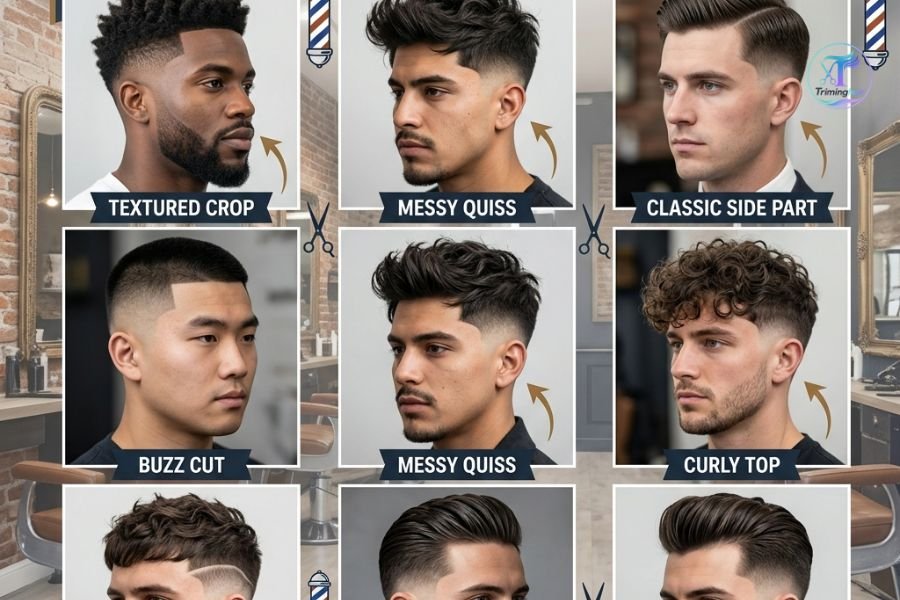
The Caesar cut has branched into dozens of variations, each adjusting the fade height, texture, or fringe length to suit different tastes. Some versions lean classic and understated, while others add sharp fades, shaved lines, or extra texture for a bolder finish. This range is part of why the cut has remained relevant across generations of men’s grooming trends.
Below are some of the most requested Caesar hairstyle variations barbers see today, from subtle low fades to more dramatic textured crops. Each one keeps the signature forward fringe but changes the surrounding elements to create a distinct overall look. Use this list to find the version that matches your hair texture, lifestyle, and personal style.
Modern Caesar
The Modern Caesar keeps the traditional forward fringe but pairs it with slightly longer length on top for added texture and movement. Sides are usually tapered rather than shaved down, giving the cut a softer, more contemporary edge. It suits men who want the classic silhouette without looking too retro. This version works especially well with a little matte styling product for texture.
Caesar Fade
The Caesar Fade blends the short, forward-combed top into a gradually fading side, creating a sharp contrast between the two sections. The fade can be tailored from subtle to dramatic depending on personal preference. This combination gives the cut a fresher, more polished appearance than the traditional style alone. It’s one of the most requested Caesar variations in modern barbershops.
Long Caesar
The Long Caesar extends the length on top slightly more than the classic version, allowing for a fuller fringe and a bit more texture throughout. It still keeps the sides short and neat, maintaining the tidy structure the cut is known for. This variation suits men with thicker hair who want extra volume up top. It also offers more flexibility for styling with fingers or a comb.
Low Fade Caesar
The Low Fade Caesar keeps the fade close to the hairline, creating a subtle transition rather than a dramatic one. This makes it a great option for workplaces or more conservative settings where a bold fade might feel too flashy. The top remains true to the classic forward fringe. It’s an easy, low-key way to modernize the traditional Caesar shape.
Short Caesar
The Short Caesar sticks closely to the cut’s original form, with very short length on top and tightly trimmed sides. It’s an extremely low-maintenance option that requires almost no daily styling effort. This version is popular among men with busy schedules or those who prefer a clean, no-fuss look. It also works well for hot climates since it keeps hair off the forehead and neck.
Caesar Taper Fade
The Caesar Taper Fade combines a gradual taper on the sides with the short forward fringe on top. The taper creates a smoother, more gradual blend compared to a sharper fade. This makes the style versatile enough for both casual and professional settings. It’s often chosen by men who want subtle dimension without a dramatic contrast.
High Fade Caesar
The High Fade Caesar takes the fade line up higher on the head, creating a bolder and more noticeable contrast against the short top. This version tends to draw more attention and gives the cut a sharper, edgier feel. It pairs especially well with defined hairlines and added texture on top. Many men choose this variation for a more statement-making finish.
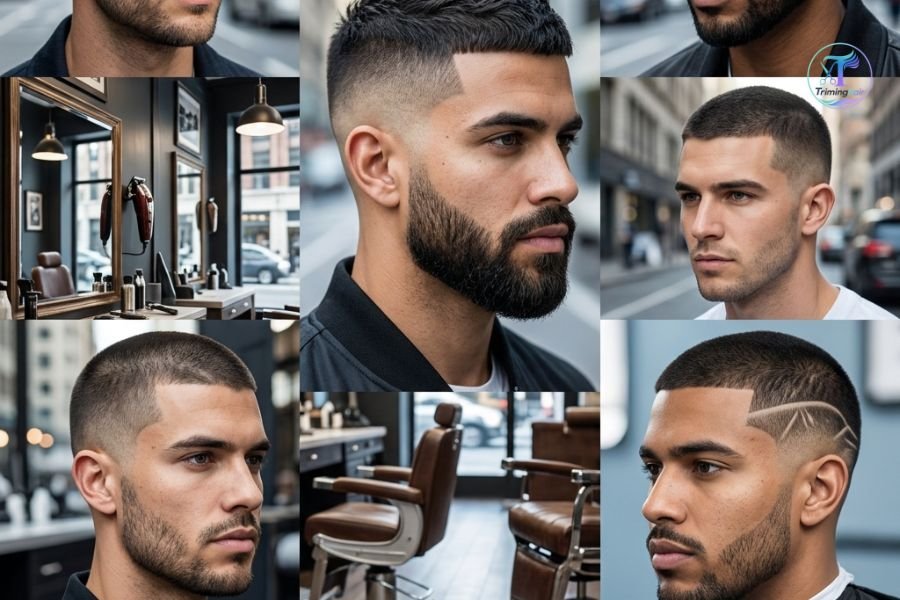
Soft Textured Caesar Fade with Beard
This variation softens the classic Caesar with light texturizing on top, giving it a slightly tousled rather than perfectly uniform finish. Paired with a well-groomed beard, it creates a balanced, masculine look that works for both casual and semi-formal settings. The fade stays moderate, complementing rather than overpowering the texture on top. It’s a popular pick for men who want a rugged yet polished appearance.
Combed-Through and Textured Caesar
This style keeps the forward fringe but adds texture throughout the top, giving it a slightly disheveled, lived-in look rather than a rigid, uniform finish. It’s achieved with texturizing scissors or thinning shears during the cut. The result feels more relaxed while still nodding to the classic Caesar shape. It works particularly well for men with naturally textured or wavy hair.
Dark Caesar
The Dark Caesar refers less to a cutting technique and more to how the style looks on dark hair, where the forward fringe and clean sides create strong visual contrast. Dark hair tends to emphasize the crisp lines of the cut, making fades and shaved details stand out more. This makes the Caesar particularly striking on black or deep brown hair. It’s a favorite for men wanting a bold, defined silhouette.
Messy Caesar with Soft Fringe
This version relaxes the traditionally sharp, uniform fringe into a softer, slightly tousled shape. The top is left with a bit more length and texture, giving it a more casual, undone appearance. It still holds onto the essential Caesar structure but feels less formal overall. It’s an easy everyday option for men who prefer a low-effort styling routine.
Textured Caesar Cut with Drop Fade
The drop fade curves downward behind the ear rather than staying level, adding a more dynamic shape to the sides. Combined with a textured top, this version feels more modern and detailed than the standard fade. The curve of the drop fade also tends to flatter rounder head shapes. It’s a popular choice among men looking for something slightly more elaborate.
Heavy Caesar Fade
The Heavy Caesar Fade uses a much steeper contrast between the top and sides, creating a dramatic, high-impact look. The fade itself is cut closer and more aggressively than standard variations. This style tends to suit men who want their haircut to make a strong visual statement. It pairs well with sharp, precise styling on top.
Long Caesar Cut with High Fade
This variation pairs extra length on top with a high fade on the sides, creating a striking contrast between the two sections. The longer top allows for more texture and styling versatility, while the high fade keeps things sharp and clean. It’s a popular combination for men who want both volume and edge. This style often benefits from a light styling cream to define the fringe.
Edgy Caesar Fade with Shaved Line
Adding a shaved line to the fade introduces a sharp, graphic element to the classic Caesar shape. The line is usually placed along the part or edge of the fade for a bold accent. This version tends to appeal to men who want a more distinctive, personalized cut. It’s frequently paired with a high or mid fade for added contrast.
Fluffy Caesar with Low Temp Fade
The Fluffy Caesar keeps extra volume and softness on top, often achieved through texturizing and minimal product use. Paired with a low temple fade, the sides stay subtle so attention remains on the fuller top section. This combination gives a relaxed, youthful appearance. It works especially well for men with naturally thick or wavy hair.
Moody Caesar with Taper Fade
This version leans into darker tones and a slightly longer, textured top paired with a smooth taper fade. The overall effect feels moodier and more brooding compared to the classic crisp Caesar. It suits men who want a stylish look with a bit of edge. The taper keeps the sides polished without competing with the textured top.
Wavy Caesar Cut
The Wavy Caesar works with naturally wavy hair, letting the texture show through the forward fringe instead of forcing it flat. This creates a more organic, effortless version of the classic cut. Sides are typically kept short to balance the movement on top. It’s an ideal choice for men who don’t want to fight their natural hair pattern.
Dark Caesar Fade with Line Up
A line up adds a crisp, defined edge along the hairline, sharpening the overall look of a dark Caesar fade. This detail is especially popular in barbershops that specialize in precision edging. The contrast between dark hair and a clean line creates a polished, put-together finish. It’s a small addition that noticeably elevates the cut.
Blunt Caesar with High Fade
The Blunt Caesar keeps the fringe cut in a straight, deliberate line rather than softened or textured edges. Paired with a high fade, this creates a bold, graphic contrast between the top and sides. It’s a striking option for men who prefer sharp, defined lines over softer texture. This version tends to require more precise upkeep to maintain its crisp shape.
Textured Caesar Low Fade
This variation combines added texture on top with a subtle low fade on the sides, balancing movement with a clean finish. It’s a versatile option that works for both casual and professional environments. The low fade keeps things understated while the texture adds visual interest. Many men choose this as an everyday, easy-to-style option.
Also Read This: High and Tight Haircut for Men: 20 Clean & Modern Ideas
Modern Textured Crop with High Fade
This style borrows from the textured crop trend while keeping Caesar-style forward styling on top. Paired with a high fade, it creates a fashion-forward look with plenty of contrast. The crop length allows for more textured styling using matte pastes or clays. It’s a popular pick among men following current men’s hairstyle trends.
Natural Caesar Fade with Shaved Line
This version keeps the fade soft and natural-looking while adding a single shaved line for a subtle design detail. It’s a good middle ground between a plain fade and something more elaborate. The natural blend keeps the overall style wearable for most settings. This detail adds character without overwhelming the classic Caesar shape.
Shaggy Caesar with Tapered Sides
The Shaggy Caesar lets the top grow slightly longer and messier, with texturizing used to break up the classic uniform fringe. Tapered sides keep the cut grounded and prevent it from looking unkempt overall. This version suits men who like a relaxed, low-maintenance styling routine. It works particularly well with naturally textured or curly hair types.
Long, Textured Caesar with High Taper
This variation combines noticeably longer length on top with heavy texturizing and a high taper on the sides. The result is a fuller, more voluminous take on the traditional cut. It gives more room for creative styling compared to shorter versions. This style is often chosen by men wanting a bolder, more modern silhouette.
Spiky Caesar with Sharp Low Fade
Adding spikes to the top of a Caesar cut creates a more youthful, energetic finish while keeping the fade low and understated. Styling product is essential here to hold the spiked texture throughout the day. The low fade ensures the sides don’t compete with the spiked top. It’s a popular choice for younger men and casual settings.
Angular Caesar with Taper Fade and Shaved Designs
This more elaborate version incorporates angular cutting lines and shaved designs into the taper fade for a highly personalized look. It requires a skilled barber to execute the geometric details cleanly. The designs can range from simple lines to more intricate patterns. This style is best suited for men who want their haircut to stand out.
Cropped Cut with High Fade
The cropped version keeps the top very short and uniform, closer to a French crop than a traditional long Caesar fringe. Paired with a high fade, it creates a clean, minimalist silhouette. This style requires very little daily maintenance once cut. It’s a solid option for men who prefer simplicity over elaborate styling.
Tousled Caesar with Tapered Sides
This variation uses light texturizing to create a naturally tousled top while keeping the sides neatly tapered. It softens the traditionally rigid Caesar shape into something more relaxed. The tapered sides keep the cut from looking messy despite the textured top. It’s an easy everyday style that photographs well.
Thick Caesar with Sharp Low Fade
Designed with thicker hair types in mind, this version keeps enough length on top to manage volume while pairing it with a precise low fade. The sharp fade line helps balance out the density of thicker hair. This combination keeps the cut looking intentional rather than bulky. It’s a practical choice for men with fuller, coarser hair.
Caesar Haircut George Clooney

George Clooney has worn variations of the Caesar cut throughout his career, often choosing a slightly grown-out, textured version rather than a razor-sharp fringe. His take tends to favor natural gray tones and a relaxed forward comb rather than a rigid, uniform line. This softer approach has helped keep the style associated with mature, put-together men’s grooming.
His version demonstrates how the Caesar cut can be adapted for older men or those with graying hair without losing its signature structure. The forward fringe remains, but the overall styling feels less deliberate and more effortless. This has made his take on the cut a frequent reference point for men seeking a similar low-key, classic look.
Caesar Haircut 90s
The Caesar cut saw a major surge in popularity during the 1990s, largely thanks to actors and musicians who wore it on screen and in music videos. The decade’s version tended to favor a very short, uniform top with minimal texture, paired with tightly trimmed sides. It became a defining short hairstyle of the era for men across different style scenes.
Unlike some of today’s more elaborate fade and texture combinations, the 90s Caesar was typically simple and consistent, without shaved lines or dramatic contrast. This straightforward approach made it easy to maintain and widely accessible. Its resurgence in recent years often nods back to this cleaner, more minimal 90s styling.
Caesar Haircut Male
The Caesar haircut has always been marketed and worn primarily as a men’s style, largely because of its short length and structured, low-maintenance nature. It works across a wide range of hair types, from straight to curly, and adapts easily to different face shapes with adjustments to fringe length and fade height. This versatility is part of why it remains a staple men’s cut.
For most men, the appeal comes down to practicality combined with a sharp, intentional appearance. It requires far less daily styling than longer hairstyles while still looking deliberate and well-groomed. Barbers can also easily customize the fade, taper, or texture level to suit individual preferences, making it one of the more adaptable short cuts available.
Julius Caesar Haircut
The haircut takes its name from the Roman leader Julius Caesar, who is historically believed to have worn his hair combed forward to help conceal a receding hairline. This forward-combed styling eventually became associated with his image and, over time, gave the modern cut its name. The connection is more about styling technique than any documented historical grooming standard.
While there’s no strict evidence of Caesar himself getting a “Caesar cut” as barbers define it today, the association has stuck for generations. Modern interpretations take creative liberties with fades and texture, but the forward fringe remains a nod to this historical naming origin. It’s a rare example of an ancient figure lending his name to a lasting modern hairstyle trend.
Caesar Haircut No Fade
A no-fade Caesar keeps the sides at a consistent length rather than gradually blending into a shorter fade near the hairline. This creates a more uniform, old-school appearance closer to the original historical styling. It’s often chosen by men who prefer a subtler transition or want to avoid the maintenance a fade requires.
Without a fade, the cut relies entirely on the forward fringe and consistent length for its structure, making precision trimming essential. This version tends to grow out more evenly than faded styles, requiring slightly less frequent barber visits. It remains a solid, classic option for men who want simplicity over more elaborate detailing.
Long Caesar Haircut
The long Caesar increases the length on top significantly compared to the traditional short version, allowing for more texture, movement, and styling flexibility. The fringe is still combed forward, but with added length it often falls with a softer, fuller look rather than a rigid line. This makes it a popular choice for men transitioning away from very short cuts.
This version pairs well with light texturizing to prevent the extra length from looking flat or heavy. It also gives more room to experiment with subtle waves or natural texture if the hair supports it. Because of the added length, it typically requires a bit more daily styling effort than shorter Caesar variations.
How To Do A Caesar Cut At Home
Cutting a Caesar style at home is possible with the right tools, primarily a good clipper set with multiple guard lengths and sharp scissors for detailing. Patience and a steady hand matter more than expensive equipment, since precision is what defines this cut’s clean appearance. Working slowly and checking sections frequently in a mirror helps avoid uneven results.
Below is a simplified step-by-step approach for recreating the classic Caesar shape without a barbershop visit. It won’t replicate the precision of a professional cut, especially for fades, but it can achieve a solid, presentable version of the style. Following the steps in order helps maintain consistency across the whole head.
1. Comb All The Hair Down and Forward
Start by combing all the hair on top downward and forward toward the forehead, following the natural direction the Caesar fringe will sit in. This step helps identify the natural length and growth pattern before any cutting begins. It also makes it easier to see where the fringe line should eventually fall. Take your time here since this sets the foundation for the entire cut.
2. Start with the Sides and Back
Using a clipper guard appropriate for your desired length, begin trimming the sides and back first before touching the top. Working from the bottom up in smooth, even strokes helps avoid noticeable lines or gaps. This section is more forgiving than the top, making it a good starting point for beginners. Keep checking both sides in a mirror to ensure they match.
3. Trim The Top
With the sides done, move to trimming the top section, keeping the hair combed forward throughout the process. Use scissors over a comb for more controlled length reduction rather than clippers, which can be less precise here. Work in small sections to maintain even length across the entire top. This step requires the most patience and steady hands.
4. Create The Fringe
Once the top is trimmed to the desired length, focus on shaping the fringe itself along the forehead. Comb the hair straight down and trim along a slightly curved or straight line, depending on preference. This is the most defining feature of the cut, so take extra care to keep it even. Small, incremental trims are safer than cutting too much at once.
5. Clean The Neckline
Use clippers or a trimmer to clean up the neckline, creating a crisp, defined edge at the base of the hairline. This step significantly improves the overall polished look of the haircut. Take care to follow the natural curve of the neck rather than cutting a harsh straight line. A handheld mirror can help check the back more accurately.
6. Refine The Cut
Finish by going over the entire head once more, blending any noticeable lines between sections and trimming stray hairs. Check the cut from multiple angles under good lighting to catch anything missed earlier. Small touch-ups at this stage make a significant difference in the final appearance. Once satisfied, style as usual with your preferred product.
Caesar Haircut Kids
The Caesar cut translates easily to kids because of its low-maintenance nature and simple styling requirements. Short length on top combined with a forward fringe means less daily hassle for parents, since it doesn’t require much combing or product to look neat. It’s also practical for active kids since there’s minimal hair to get in the way during play.
Barbers often adjust the fringe slightly softer or less structured for younger children compared to adult versions of the cut. This keeps the style looking age-appropriate while still offering the same easy upkeep. It’s a popular choice for parents wanting a clean, classic look without frequent trims.
Caesar Curly Haircut
On curly hair, the Caesar cut takes on a distinctly textured appearance since the curls naturally break up the usually uniform fringe. Rather than lying flat, the forward section tends to have more volume and movement, giving the style a unique twist on the classic shape. Barbers familiar with curly hair often adjust their technique to work with the curl pattern rather than against it.
This version usually benefits from lightweight, curl-specific styling products to define texture without weighing the hair down. Regular trims help maintain the shape since curly hair can grow unevenly compared to straight hair. It’s an increasingly popular option for men wanting to keep their natural curl pattern while still following the Caesar silhouette.
Black Caesar Haircut
The Caesar cut is a longstanding favorite in Black men’s hairstyling, often paired with sharp line ups, fades, and clean edges for a polished finish. The contrast between coily or curly hair texture and the crisp fringe line creates a distinctive, sharp look that has remained popular across generations. It’s frequently seen paired with beard grooming for a complete, put-together style.
Barbers specializing in textured hair often bring extra precision to the fringe and fade lines, since the hair pattern requires specific cutting techniques to lay correctly. This attention to detail is part of what makes the style so recognizable within Black barbershop culture. It remains one of the most requested short cuts for men with coily or kinky hair textures.
Short Caesar Haircut
The short Caesar sticks to minimal length on top and tightly cropped sides, staying true to the cut’s original low-maintenance appeal. It’s an ideal choice for men who want a neat, professional appearance without spending time on daily styling. This version also tends to hold its shape well between barber visits compared to longer variations.
Because there’s so little length to manage, the short Caesar works well in hot weather or active lifestyles where longer hair might feel impractical. It’s a dependable, classic option that has stayed relevant precisely because of its simplicity. Many men return to this version repeatedly as a reliable, easy-to-maintain go-to cut.
FAQ’s
What is a Caesar haircut?
A Caesar haircut is a short men’s style with cropped hair on top combed forward into a straight fringe, paired with short, neatly trimmed sides.
Is the Caesar haircut low maintenance?
Yes, it’s one of the easiest short styles to maintain, typically requiring little more than a comb or light styling product day to day.
What face shapes suit a Caesar cut?
The Caesar cut works well on most face shapes, though the fringe length and fade height can be adjusted to better balance rounder or longer faces.
Can you get a Caesar cut with curly hair?
Yes, curly hair adds natural texture to the fringe, giving the cut a distinctive, textured version of the classic style.
How often do you need to get a Caesar haircut trimmed?
Most men get this cut trimmed every two to four weeks to keep the fringe and fade looking sharp.
What’s the difference between a Caesar cut and a French crop?
Both are short with a forward fringe, but the Caesar traditionally has a slightly longer, more defined fringe while the French crop is cropped closer overall.
Does the Caesar haircut work with a beard?
Yes, it pairs well with most beard styles, especially textured or fade variations, for a balanced, put-together look.
Conclusion
The Caesar haircut has stood the test of time because it manages to be both classic and endlessly adaptable, fitting everyone from Roman-inspired traditionalists to men chasing the latest fade trends. With so many variations covered in this guide, there’s plenty of room to find a version that matches your hair type, personality, and daily routine.
Whether you head to a barber or attempt it at home, this cut remains one of the most reliable ways to keep your look sharp with minimal effort.

Leave a Reply