
A low taper fade is one of the cleanest, most flexible haircuts you can ask for. It shortens the hair gradually around the sideburns, ears, and neckline, then leaves your natural texture alone on top. For Black men, that means sharp edges without losing the shape, volume, or pattern of your curls, coils, or waves.
The tricky part is that “low taper fade” can mean very different things depending on the top length, the line-up, the beard blend, and how close the clippers go. This guide breaks down the most popular versions, who they suit, and what to say in the chair so you walk out with the cut you pictured.
Preview a clean taper-style cut on your photo
Before you book, it helps to see the haircut on your own face. A small change, such as a slightly higher fade or a shorter top, can completely change the look. Upload a clear, front-facing photo to a haircut preview tool and compare a few versions: a soft taper with natural curls, a sharper taper with a crisp line-up, and one with a beard blend.
Save the best screenshot and show it to your barber alongside a side-view reference. A picture removes the guesswork from words like “low” or “tight,” which every barber reads a little differently.
Key Takeaways
- A low taper fade keeps the shortest hair near the ears and nape, so the overall shape stays full.
- Leave roughly 1 to 2 inches on top if you want curls, coils, or sponge texture to show.
- A soft line-up grows out gracefully, while a sharp line-up looks best fresh and needs more upkeep.
- Tell your barber “low taper, not a mid fade” so the fade does not climb too high.
- If you wear a beard, the sideburn-to-beard blend matters as much as the fade.
- Expect a refresh every 2 to 3 weeks, or every 1 to 2 weeks for a razor-sharp finish.
What Is a Low Taper Fade?
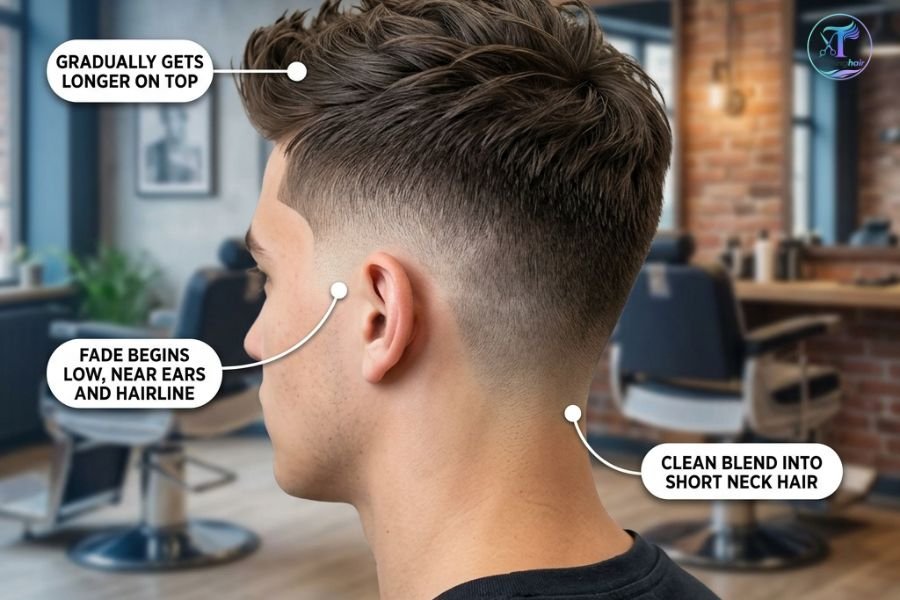
A taper shortens the hair gradually from longer on top to shorter at the edges. A fade does the same, but usually blends down much closer to the skin. A low taper fade combines the two: the transition starts low, near the lower sideburn, the top of the ear, and the back of the neck, instead of climbing up the sides of the head.
That low starting point is the reason the cut is so popular. You keep fullness on the sides, the haircut looks neat in every setting, and the grow-out is gentle, so it never looks “overgrown” in a few days.
It also works with almost every hair type. Tight coils, loose curls, waves, short twists, and afros can all sit on top of a low taper. The real decision is how much contrast you want and how sharp you want the edges.
Which Low Taper Fade Should You Choose?
Use this quick comparison to match the cut to your hair, style, and schedule.
| Style | Best for | What to ask your barber | Typical upkeep |
| Classic low taper with curls | Natural coils, first-time taper clients | Low taper around the ear, curl volume on top, clean neckline | Every 2 to 3 weeks |
| Low taper with line-up | Defined hairline, photo-ready finish | Low taper, crisp line-up, natural corners if your hairline is light | Every 1 to 2 weeks |
| Low taper with waves | 360 waves, short dense hair | Protect the wave pattern, do not cut high into the crown | Every 2 weeks |
| Low taper with sponge curls | Coily texture, casual volume | 1.5 to 2.5 inches on top, soft taper around the ear | Every 2 to 3 weeks |
| Low taper with beard | Strong jawline, fuller facial hair | Blend sideburn into beard, clean the cheek line | Weekly beard touch-up |
| Low taper afro | Dense hair, lower-commitment change | Shape the afro first, taper only the edges and neckline | Every 3 weeks |
If you want the lowest-maintenance option, go for the classic low taper with a soft line-up. If you love a crisp, sharp look and do not mind frequent visits, choose the line-up or wave version.
Face Shape Fit
The low taper fade suits most faces, but small tweaks make it more flattering.
Round face: Keep more height and texture on top, and avoid rounding out the sides. A short afro or sponge top adds length visually.
Square face: The low taper keeps your jawline strong. Pair it with a clean line-up and a tidy beard for a polished frame.
Oval face: Almost any version works, so choose based on your hair texture and how sharp you want the edges.
Long face: Avoid too much height. Keep the top slightly shorter or wider so the cut does not stretch the face.
Heart-shaped face: Keep some fullness near the temples. A very tight taper with a tall top can make the forehead look wider.
Short Low Taper Fade Black Male
If you prefer a neat, easy cut, a short low taper fade for Black males is the simplest place to start. Keep about 1 inch of length on top, taper the sides and neckline low, and finish with a light line-up. The result looks clean and professional, and it takes almost no styling time.
A short version works especially well for work, school, and anyone who wears hats or helmets often. It also keeps the hair easy to brush or lightly moisturise each morning.
Also Like To Read This: Color Analysis Quiz: Discover Your Season and Best Hair Color
Low Taper Fade Black Male Short Hair
When your hair is naturally short or you are growing out a cut, a low taper fade on short hair helps the shape look intentional. Because there is less length to work with, the barber relies on the taper and line-up to create structure.
Ask for a low taper with a softly rounded top. Avoid pushing the hairline back, since short hair has less room to hide an overly sharp edge. A light brush and a bit of moisturiser keep short coils looking even and healthy.
Lower Taper Fade Black Male
A lower taper fade is the most conservative version of the cut. The taper stays right at the sideburn and the nape, leaving the sides almost fully intact. It is a great choice if you want a subtle edge-up that still looks natural in a week or two.
If your barber offers a “lower” option, ask them to keep the fade below the temple and around the ear only. This version grows out beautifully and suits men who change styles often or prefer a classic, understated look.
Low Taper Fade Black Male Waves
Waves and a low taper are a natural pair. The clean edges make the wave pattern look more defined, while the low fade keeps the crown and top untouched. To protect your pattern, ask the barber not to take clipper work too high above the temple.
Wave maintenance matters just as much as the cut. Brush regularly, wear a durag or wave cap at night, and book a refresh about every 2 weeks so the lines stay crisp.
Fade Haircut Black Person
People searching for a fade haircut for a Black person are usually looking for a style that respects their hair texture rather than fighting it. The best fade works with your natural pattern, whether it is tight coils, loose curls, or waves, and keeps the density and shape on top.
A low taper is often the safest first fade because it gives clean edges without removing much bulk. From there you can go higher or tighter if you want more contrast. Always choose a barber who regularly works with your hair type, and bring a photo so your expectations match.
Drop Fade Black Men
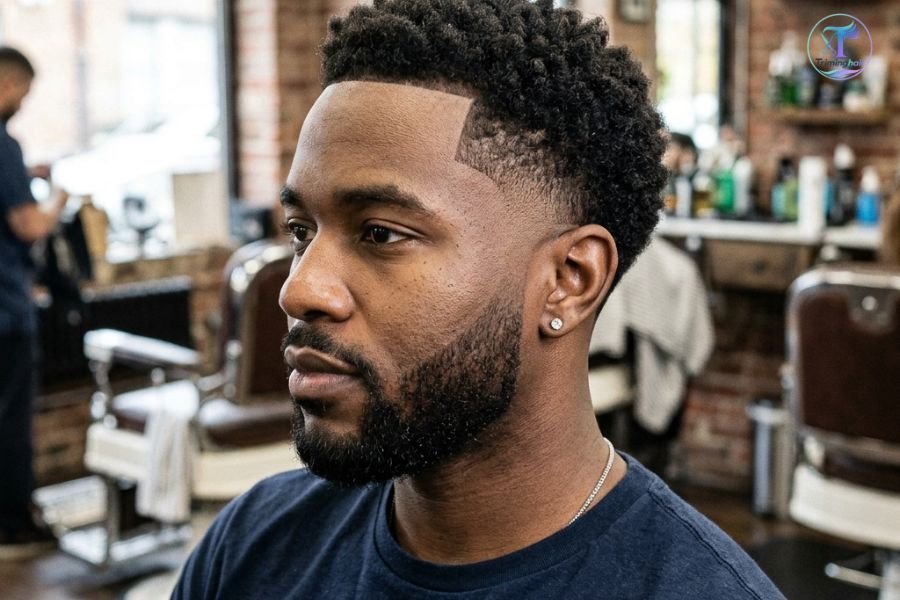
A drop fade curves down behind the ear instead of running in a straight line around the head. The fade “drops” lower at the back, which gives the cut a rounded, modern shape that follows the skull.
Combine it with a low taper and you get a hybrid: soft at the sideburns, with a stylish curve behind the ears. It looks great with waves, twists, and short curls. Ask for a “low drop taper” and show a back-view photo, because this style depends on the exact angle of the curve.
Afro Taper Fade
An afro taper fade keeps a full, rounded afro on top and tapers only the edges, sideburns, and neckline. It is one of the best ways to keep length and volume while looking sharp.
To get it right, have your barber shape the afro first, then taper around it so the outline stays smooth. Use a pick to lift the hair and a leave-in moisturiser to prevent dryness. Refresh the edges about every 3 weeks to keep the shape tidy.
Hair Texture Notes
Black men’s hair comes in many textures, and the same taper can look different on each.
- Tight coils: Ask for a clean outline on top before the taper begins, so the barber defines the shape without cutting too far into the density.
- Loose curls: Keep enough length so curls fall naturally and do not look disconnected from the sides.
- Waves: Protect the pattern by avoiding high clipper work above the temple.
- Twists or short locs: Taper only the edges and neckline to clean the perimeter without shrinking the whole style.
- Thin or uneven corners: Choose a softer line-up. A very sharp corner can reveal uneven density as the hair grows out.
What to Tell Your Barber
Be specific about fade height, top length, line-up, neckline, and beard blend. Bring a front and side photo if you can. Then try this script:
“I want a low taper fade, not a mid fade. Keep the taper low around the ears and neckline, leave enough length on top to show my natural texture, clean up the line-up without pushing it back, and blend the sideburn into the beard.”
For a softer finish, add: “Keep the line-up natural and do not over-sharpen the corners.”
For a crisp finish, add: “Make the line-up sharp, clean the corners, and keep the beard blend tight.”
Common Mistakes
- Showing a mid fade photo. If your reference is a higher fade, you may leave with more contrast than you wanted. Match the photo to the height you are asking for.
- Taking too much off the top. A low taper needs enough top shape to balance the clean edges. Too short, and it becomes a plain short fade.
- Ignoring the beard. A mismatched sideburn or beard line makes the whole haircut look unfinished.
- Pushing the line-up too far back. A line-up should follow your real hairline. Moving it back creates an edge that is hard to maintain.
- Skipping aftercare. Moisturise the top, protect your hair at night, and book regular touch-ups so the taper stays sharp.
How to Preview the Cut Before You Commit
A low taper fade is not a risky haircut, but small details change everything: the fade height, the line-up, the top length, and the beard blend. Previewing the style before your appointment removes most of that uncertainty.
At TrimingHair, we recommend starting with a clear, front-facing photo in good light. Compare a few versions side by side:
- Low taper with natural curls
- Low taper with a sharper line-up
- Low taper with a beard blend
- Low taper with waves or sponge texture
- Low taper with a shorter top
Pick the one that suits your face shape and routine, screenshot it, and take it to your barber along with the script above. Explore more cut ideas, barber tips, and grooming guides at TrimingHair to keep your next haircut fresh, clean, and exactly what you asked for.
FAQs
Is a low taper fade good for Black men?
Yes. It is one of the most versatile cuts for Black men because it cleans up the edges while keeping natural texture visible. Depending on the top length and line-up, it can look subtle, sharp, professional, or more expressive.
How often should I get a low taper fade refreshed?
Most men refresh it every 2 to 3 weeks. If you want a crisp line-up and a tight beard blend at all times, plan on a touch-up every 1 to 2 weeks.
What is the difference between a low taper and a low fade?
A low taper shortens the hair gradually and usually leaves a little length at the edges, so it looks softer and grows out more naturally. A low fade blends much closer to the skin, which creates stronger contrast and needs more frequent upkeep.
Does a low taper fade work with waves?
Yes. Ask your barber to keep the taper low and avoid cutting too high into the wave pattern. The clean edges make waves look more defined, and regular brushing keeps them even.
How much hair should I leave on top?
For curls, coils, or sponge texture, leave about 1 to 2 inches so the pattern shows. For waves, a shorter top works well as long as the pattern is protected.
Can I get a low taper fade with a beard?
Absolutely. Ask the barber to blend the sideburn into the beard and clean the cheek line. Matching the beard density to the fade makes the whole look cleaner.
What should I show my barber?
Bring a front and a side reference photo, then state the fade height, top length, line-up sharpness, neckline finish, and beard blend. A preview of the cut on your own photo makes the reference even more accurate.
Conclusion
A low taper fade is a clean, flexible haircut that frames natural texture without removing too much shape. Keep the taper low, protect the texture on top, decide how sharp you want the line-up, and plan the beard blend from the start. Whether you choose a short cut, waves, a drop fade, or an afro taper fade, the right details make the difference.
Before your next appointment, preview the style, save your reference photos, and use the barber script above. For more haircut ideas and grooming guides, keep exploring TrimingHair.



Leave a Reply