
Choosing a new hair color is exciting, but it can also be risky. A shade that looks stunning on a model or a friend can look dull, harsh, or washed out on you. The reason is rarely the dye itself. It is usually a mismatch between the color and your natural skin tone, undertone, and eye color.
That is exactly what a colorimetry test helps you solve. Colorimetry sorts people into four seasons (spring, summer, autumn, and winter) based on how their skin, eyes, and natural hair work together. Once you know your season, choosing flattering hair colors, clothes, and makeup becomes far easier and much less of a guessing game.
In this guide, you will learn how skin tone and undertone work, why a question-based test can be more reliable than a photo, and how each season affects your hair. You can also take the free to find your color season in about three minutes. Let’s start with the basics.
What Is the Overall Skin Tone?
Your overall skin tone is the first thing a colorimetry test looks at, and it simply describes how light or deep your skin is. The very first question asks you to choose between four options: fair, light-medium, medium, or deep. Fair skin burns easily and looks porcelain, while deep skin tans easily and shows cinnamon or brown tones.
Overall skin tone is not the same thing as undertone, and mixing the two up is the most common mistake in any color analysis. Skin tone is about depth (light to dark), while undertone is the cool, warm, or neutral shade beneath the surface. Two people can have the same skin tone and need completely different hair colors because their undertones are opposite.
That is why the quiz does not stop after question one. It also asks about your undertone, which jewelry flatters you, the contrast between your skin and natural hair, the clothing colors that brighten your face, and your eye color. Taken together, these answers place you in one of the four color seasons and point you toward hair shades that suit your features.
Virtual Hair Color Try On Free

A virtual hair color try on lets you preview a shade on a photo before you commit to a dye job. These tools are fun and quick, but they have one weakness: they show you a color, not whether that color suits your skin, eyes, and natural contrast. A shade can look great in a filter and still make your skin look dull or overly red in real life.
The Blendsor colorimetry test works the other way around. It is a free, interactive 9-question quiz that takes about three minutes, and it tells you which colors suit you before you try anything on. You do not upload a photo or use a camera filter. You simply answer questions about your skin, eyes, hair, and style.
A smart approach is to use both. Take the quiz first to find your color season and your recommended shades, then use a virtual try-on to see how those specific colors look on your face. This way you are testing options that already fit your coloring instead of guessing.
Color Analysis Test Photo
Many people search for a color analysis test with a photo because they expect an app to read their skin and eyes automatically. Photo-based analysis can work, but its results depend heavily on lighting, camera quality, and filters. A yellow bulb or a bright window can easily change how your undertone appears on screen.
A question-based color analysis avoids that problem. The Blendsor test asks you to check simple real-life signals instead, such as the color of the veins on your wrist. Bluish or purple veins suggest a cool undertone, greenish veins suggest a warm one, and a mix points to neutral. You also compare how gold and silver jewelry look against your face.
If you do want to use a photo as a helper, take it in soft natural daylight, without makeup or filters, and compare it with your quiz answers. When the photo and the quiz point to the same undertone, you can feel much more confident in your result.
What Hair Colour Suits Me Upload Photo
If you are searching for what hair colour suits you by uploading a photo, you are really asking for a fast and personal answer. Photo tools can give a quick visual idea, but they usually do not explain why a shade works. Without that reason, it is hard to repeat the result or explain it to your hairstylist.
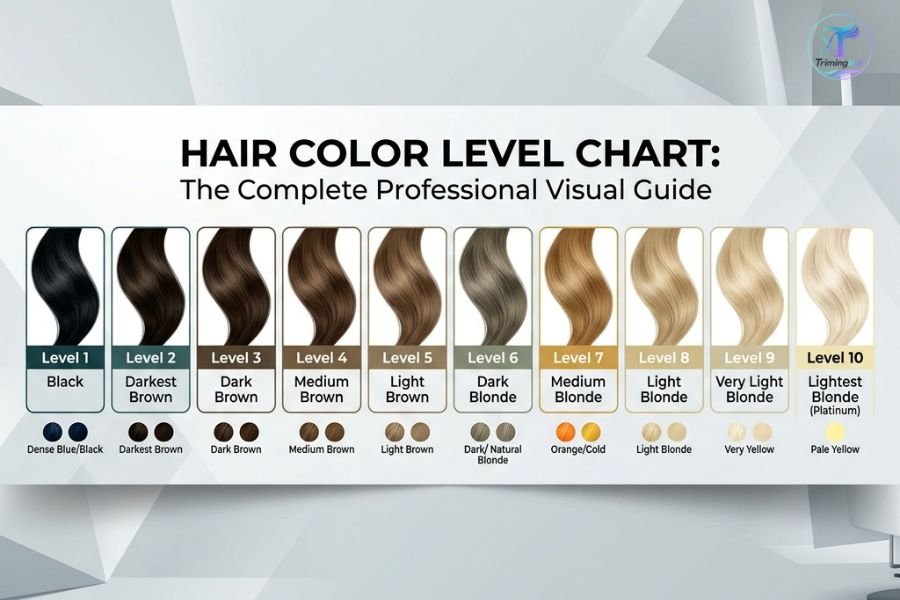
The colorimetry test gives you the reasoning along with the answer. It does not require an upload, and it returns your color season, a palette of colors that flatter you, recommended hair colors with a level and tone, and hair colors to avoid. The level describes how light or dark a shade is on a scale of 1 to 10, and the tone describes the undertone of the color, such as ash, golden, or copper.
Because the result comes in professional terms, you can show it to your colorist and have a clear conversation about what is realistic for your natural base. That is much more useful than showing a filtered photo and hoping the final color matches.
What Hair Color Suits Me Quiz
A good “what hair color suits me” quiz looks at more than your skin. The Blendsor colorimetry test asks nine questions covering your skin tone, undertone, jewelry preference, skin-to-hair contrast, clothing colors, eye color, natural hair level, the kind of change you want, and your preferred style. Each answer narrows down which family of shades will work for you.
The last three questions make the result practical. Your natural hair level shows your starting point, from very dark brown or black (levels 1–3) up to medium and light blonde (levels 8–10). The type of change you want tells the quiz whether you are going lighter, going darker, changing only the tone, or covering gray. Your style preference, whether natural, trendy, or bold, helps shape how dramatic the recommendation should be.
When you finish, you receive your color season along with specific hair colors to try and to avoid. Treat the result as a starting point: it gives you direction and the right vocabulary, and a professional colorist can then adjust it for your hair history and condition.
What Hair Colour Suits Me Upload Photo Online Free
Searching for a free online tool that suggests your hair color from an uploaded photo is very common, and free options are plentiful. The catch is that most of them show you a recolored image without telling you whether the shade matches your undertone. A free tool that explains its logic is far more valuable than one that only changes pixels.
The colorimetry test is free to use online and built around professional color theory. In about three minutes, you get your seasonal color type and a clear set of recommended and avoided hair shades. You can take it as often as you like, which is handy if you want to compare how your answers change when you consider a lighter or darker goal.
If you are planning a real color change, save or share your result so you can bring it to your colorist. A free quiz result does not replace professional advice, but it gives you a well-informed starting point for the appointment. Ready to find your season?
Also Read This: Hair Color Level Chart: The Complete Professional Visual Guide
The 4 Seasons of Hair Color and How They Affect Hair
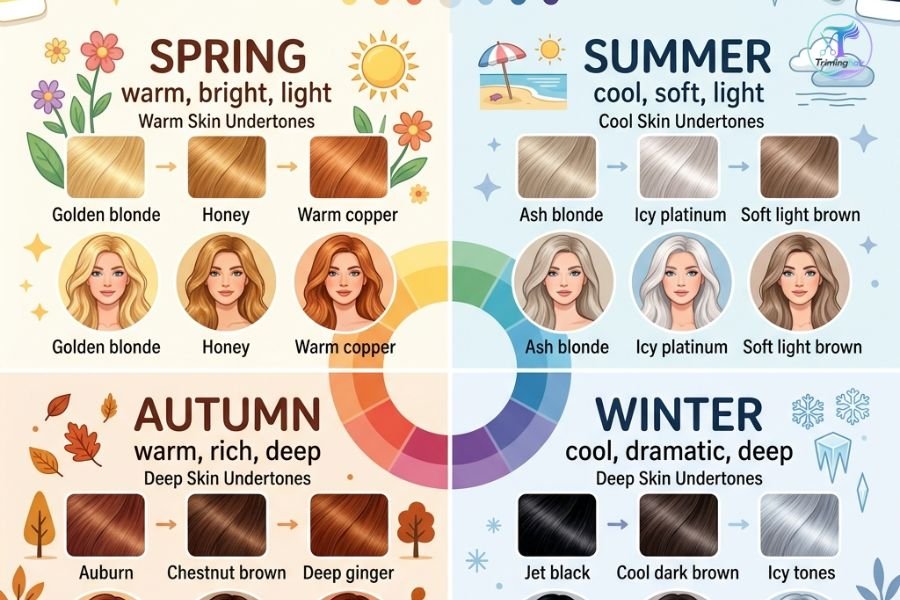
Seasonal colorimetry sorts people into four seasons (spring, summer, autumn, and winter) based on the combination of skin tone, eye color, and natural hair color. Each season has its own palette that blends naturally with your features. Each season is also divided into three sub-types, which creates 12 sub-seasons in total, so your final result can be quite specific.
Spring: Warm and Bright
Spring types have a warm undertone and a luminous, fresh look. They usually look best in golden, copper, and honey shades, which echo their natural warmth. Golden (/3) and copper (/4) tones are the most harmonious in hair, while ashy or very cool shades should be avoided because they can dull the natural glow.
Summer: Cool and Soft
Summer types have a cool undertone with low-to-medium contrast between skin and hair. The most flattering colors are ash, soft violet, and muted cool tones. In hair, ash (/1) and violet ash (/12) reflections create the most harmony, while warm golds and coppers tend to clash with the cool, gentle look.
Autumn: Warm and Deep
Autumn types also have a warm undertone, but with an earthy, rich, and deeper appearance. Golden, copper, mahogany, and warm brown shades suit them best. The /3, /4, and /35 tones form the base for autumn hair colors, and cool ash or platinum blondes should be avoided because they can create a washed-out effect.
Winter: Cool and Intense
Winter types combine a cool undertone with high contrast, such as light skin with dark hair or the reverse. Deep ash tones, violets, and true black bring out their dramatic look, with /1 and /2 reflections keeping the color cool and crisp. Golden and copper shades are best avoided because they break up the intensity that makes winter coloring striking.
Frequently Asked Questions
What is a colorimetry test?
A colorimetry test is a short quiz or analysis that identifies your color season based on your skin tone, undertone, eye color, and natural hair color. It shows which colors flatter you most. The result can guide your hair color, clothing, and makeup choices.
How do I find out which hair color suits me?
Start by identifying your skin undertone (cool, warm, or neutral) and the contrast between your skin and natural hair. Then match those traits to a color season. A colorimetry test does this for you and suggests specific hair shades to try and to avoid.
How do I know if my undertone is warm or cool?
Look at the veins on your wrist in natural light. Bluish or purple veins usually mean a cool undertone, greenish veins suggest a warm one, and a mix points to neutral. You can also check whether gold or silver jewelry looks better on you.
How long does the Blendsor colorimetry test take?
The test has 9 questions and takes about 3 minutes. It is free to use online. You answer questions about your skin, undertone, eyes, natural hair level, and style, and then receive your color season and hair color recommendations.
Do I need to upload a photo to find my color season?
No. The Blendsor test is question-based, so no photo upload is needed. This avoids problems with lighting, filters, and camera quality that can distort how your skin and eyes look in a picture.
What are the four color seasons?
The four seasons are spring, summer, autumn, and winter. Spring and autumn have warm undertones, while summer and winter have cool undertones. Each season is also split into three sub-types, which creates 12 sub-seasons in total.
Can a dramatic hair color change look bad on me?
Yes, it can. A change of more than 3–4 levels from your natural color alters the contrast between your face and hair, which can make skin look dull or red. Smaller changes of 1–2 levels are safer, and adjusting the tone can help balance a bigger change.
Does a colorimetry test replace a professional colorist?
No. The test gives you a well-informed starting point and the right vocabulary to use. A professional colorist also considers your hair history, hair condition, gray coverage, and what is technically possible, so bring your result to your appointment.
Conclusion
Finding your ideal hair color does not have to be a gamble. A colorimetry test turns a vague preference into a clear answer by looking at your skin tone, undertone, eye color, and natural contrast. Knowing your season means you can choose shades that brighten your face instead of competing with it.
Whether you are spring, summer, autumn, or winter, the key is to match the tone of your hair color to your natural coloring. Warm seasons shine in golden and copper shades, while cool seasons look best in ash, violet, and deeper cool tones. Remember that smaller, gradual changes are usually the safest way to refresh your look.
Ready to find out where you belong? Take the free colorimetry test, save your result, and show it to your colorist at your next appointment. With the right season and the right shade, your next hair color can look natural, polished, and truly made for you.


Leave a Reply