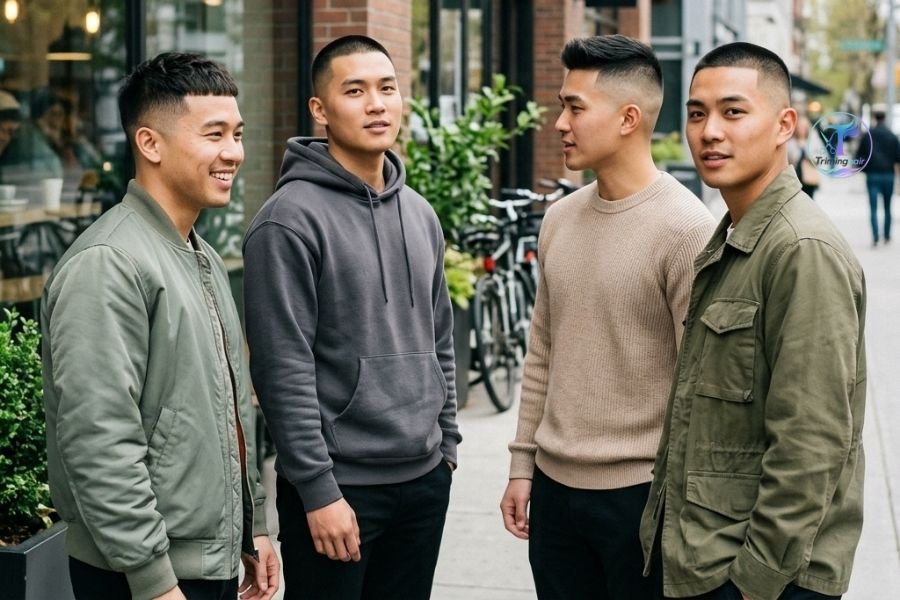
The buzz cut has become one of the go-to hairstyles for Asian men, and for good reason. It’s low-maintenance, sharp, and pairs naturally with the thick, straight hair texture common across Asian hair types.
Whether you want a barely-there induction cut or a longer buzz with a high skin fade, there’s a version of this style that fits your face shape and lifestyle. This guide walks through 17 buzz cut variations, how to talk to your barber, and how to keep the cut looking fresh between visits.
Cool, Attractive Asian Men’s Buzz Cut Hairstyles
A buzz cut is one of the most reliable choices for Asian men because it works with straight, dense hair instead of fighting it. There’s no styling guesswork, no product dependency, and no bad-hair-day risk once the cut is dialed in correctly.
Below are 17 buzz cut variations that suit different face shapes, hair textures, and personal styles. Each one takes the same base cut and adjusts length, fade, or finish to create a distinct look.
Classic Buzz Cut
The classic buzz cut uses a single guard length all over, usually a number 2 or 3, for a clean and uniform finish. It’s the lowest-maintenance version of the cut and the easiest for any barber to execute well. This style suits nearly every face shape and hair density, making it a safe starting point for first-timers.
Buzz Cut Fade
Adding a fade to the sides and back turns a basic buzz cut into a sharper, more tailored look. The top stays buzzed short while the sides gradually shrink to skin, creating contrast without extra length. This version reads as more polished and works well for office or formal settings.
Buzz Cut with Mid Fade
The mid fade starts the blend around the temple area, striking a balance between subtle and bold. It keeps more hair on the sides than a high fade while still creating clear definition. This is a popular middle-ground option for men who want texture without going too dramatic.
High and Tight Buzz Cut Fade
This version pairs a very short top with an aggressive high fade that starts near the crown. It’s a bold, military-inspired look that emphasizes the fade itself as the main feature. Men with strong jawlines or angular faces tend to get the most out of this style.
Classy Buzz Cut
A classy buzz cut keeps things understated with slightly longer guard lengths and a soft, natural fade. There’s no line up or sharp edging involved, just a neat, grown-up finish. It’s ideal for professional environments where a low-key, mature look is preferred.
Buzz Cut with Line Up
Adding a line up means the barber uses a razor to define a crisp edge around the hairline and temples. This small addition makes the entire cut look sharper and more intentional. It’s especially effective for men with straight, defined hairlines, which many Asian men naturally have.
Blonde Buzz Cut
Bleaching a buzz cut blonde turns a simple cut into a statement look, since the short length puts the color on full display. Because Asian hair is typically dark and dense, the contrast after bleaching tends to be striking. This option requires more upkeep than a standard buzz cut due to root touch-ups and toning.
Buzz Cut with Drop Fade
The drop fade curves downward behind the ear instead of staying level like a standard fade. This creates a rounder, more dynamic shape that works particularly well with buzzed tops. It’s a great option for men who want their fade to feel a bit more custom.
Crew Cut Fade
The crew cut fade keeps a bit more length on top than a true buzz cut while still fading the sides short. It offers slightly more styling flexibility while keeping the overall silhouette tight and clean. This is a good bridge style for men transitioning away from longer hair.
Induction Cut
Also known as a “buzz zero,” the induction cut uses no guard at all, taking the hair down to near-skin length. It’s the most extreme and lowest-maintenance version of the buzz family. This cut works best on men who are comfortable showing their scalp shape and skin tone.
Thick Buzz Cut
For men with especially dense hair, keeping a slightly longer guard length prevents the buzz from looking too flat or severe. This version preserves some visible texture and volume on top. It’s a good way to embrace thick Asian hair rather than fighting against it.
Long Buzz Cut with High Skin Fade
This style keeps more length on top, around a number 4 or 5, paired with a fade that goes all the way to skin. The length difference creates strong visual contrast between the top and sides. It’s a versatile option that can be brushed forward or left textured depending on the day.
Buzz Cut Low Fade
A low fade keeps the blend close to the ears and neckline, leaving more hair coverage on the sides overall. It’s a subtler alternative to a high fade and suits more conservative or professional settings. This version tends to age well and doesn’t require frequent touch-ups.
Spiky Buzz Cut
By leaving slightly more length on top and applying a small amount of matte product, a buzz cut can be pushed into a subtle spiky texture. This adds a bit of edge without needing a full styling routine. It works especially well on straight Asian hair, which holds spikes cleanly.
Crew Cut Taper Fade
This variation combines a slightly longer crew cut top with a gradual taper fade rather than a sharp one. The result is a softer transition between lengths that still looks neat and structured. It’s a versatile everyday option for men who want some length without heavy maintenance.
Very Short Buzz Cut All Over
This is the buzz cut in its purest form: one uniform, very short length across the entire head with no fade or line up. It’s the fastest cut to get and the easiest to maintain between barber visits. Men who want zero styling time gravitate toward this option.
Brush Cut
The brush cut keeps slightly more length on top than a standard buzz, styled upright to create a brush-like texture. It sits between a buzz cut and a crew cut in terms of length and versatility. This style adds a bit of personality while still being low-maintenance overall.
What Is a Buzz Cut?
A buzz cut is a short hairstyle created using electric clippers, typically with guard lengths ranging from a 0 to a 4. Unlike scissor cuts, the length stays uniform or gradually blended, which is what gives the buzz cut its clean, no-fuss appearance.
The term covers a wide range of looks, from a barely-there induction cut to longer variations with fades and line ups. What unites all of them is the use of clippers as the primary tool and a focus on simplicity over elaborate styling.
Why the Buzz Cut Works So Well on Asian Hair

Asian hair tends to share a few common traits, and those traits happen to align well with what a buzz cut needs to look its best. Straight, dense strands hold clean lines and even coverage better than finer or curlier hair textures.
This natural compatibility is part of why the buzz cut has become such a popular choice among Asian men specifically. It’s not just a trend; the hair type genuinely suits the cut’s requirements for structure and consistency.
It’s Straight and Dense
Straight hair lies flat against the scalp, which helps a buzz cut look smooth and even rather than uneven or patchy. Density adds coverage, so even very short lengths don’t reveal much scalp unless that’s the intended look. Together, these traits make Asian hair especially well-suited to short clipper cuts.
It Holds a Sharp Line
Straight hair strands create crisper edges when lined up with a razor compared to wavy or curly hair. This means line ups and fades tend to look more defined and last longer between touch-ups. It’s one of the reasons sharp, structured buzz cuts photograph and wear so well on Asian men.
It Grows Fast and Even
Asian hair often grows at a fairly quick, consistent rate, which keeps a buzz cut looking fresh for longer between trims. Even regrowth means the shape doesn’t distort unevenly the way some other hair types might. This makes the buzz cut a practical option for men who don’t want frequent barber visits.
The One Thing to Watch: Cowlicks
Cowlicks are more noticeable on very short hair since there’s no length to help hide the swirl pattern. A barber needs to know where these growth patterns sit before cutting, especially near the crown or hairline. Mentioning cowlicks ahead of time helps avoid an uneven or oddly parted result.
How to Choose the Best Buzz Cut for Your Face
Face shape plays a big role in which buzz cut variation will look most balanced. Round faces often benefit from added height on top and a higher fade to create length, while square or angular faces can usually handle a very short, uniform buzz without softening.
Oval and heart-shaped faces tend to have the most flexibility, since most buzz cut styles suit them well. When in doubt, a barber can usually recommend the right guard length and fade height based on face shape during the consultation itself.
How to Ask Your Barber for a Buzz Cut
Clear communication with your barber makes the difference between a buzz cut that looks intentional and one that looks generic. Bringing a reference photo and using specific terms helps avoid miscommunication during the cut.
The sections below cover the key details worth mentioning before the clippers even come out. Being specific about guard numbers, fade height, and any quirks in your hair growth will save time and prevent a redo.
Know Your Guard Numbers
Clipper guards are numbered, with lower numbers meaning shorter hair, typically ranging from a 0 (skin) to a 4 (about half an inch). Knowing which number you want on top versus the sides helps the barber execute the cut precisely. If you’re unsure, ask the barber to show you the guard before it’s used.
Classic vs Modern
A classic buzz cut uses one length throughout with no fade or line up, while a modern version typically adds a fade, taper, or sharp edge. Deciding which category you want before sitting down helps the consultation move faster. It also helps set expectations for how much maintenance the cut will require.
Specify the Fade Height
Fade height, whether low, mid, or high, changes the entire look of the cut even if the top length stays the same. Pointing to a reference photo or describing the height relative to your ear or temple removes ambiguity. This is one of the most common areas where miscommunication happens.
Ask About the Line Up
A line up sharpens the hairline, temples, and neckline using a razor for extra definition. Not every buzz cut needs one, so it’s worth deciding in advance whether you want that crisp, edged look. Skipping it results in a softer, more natural finish instead.
Mention Your Cowlicks and Scars
Pointing out cowlicks, scars, or bald spots before the cut starts allows the barber to adjust their technique accordingly. This small step prevents surprises once the hair is already short and harder to work around. It’s especially important for very short or skin-fade styles where nothing is hidden.
Visit For More: 10 Most Attractive Men’s Hairstyles to Try in 2026
How to Cut Your Own Hair as an Asian Male
Cutting your own buzz cut at home is doable with the right tools, namely a clipper set with multiple guard attachments and a handheld mirror for the back of the head. Start with a longer guard than you think you need, since you can always go shorter but can’t add length back.
Work in sections, going against the direction of hair growth for the most even result, and check your work frequently with a mirror from multiple angles. Fades and line ups are harder to do solo and are usually best left to a barber, but a uniform buzz cut is a realistic DIY option with practice.
Best Buzz Cut for Asian Men
There isn’t one single “best” buzz cut, since the right choice depends on face shape, hair density, and how much maintenance someone wants to commit to. That said, a buzz cut fade with a line up tends to be the most universally flattering option for Asian men.
This combination balances low maintenance with a defined, polished look that suits both casual and professional settings. For men who want something even simpler, the classic buzz cut remains a dependable, foolproof choice.
How to Maintain a Buzz Cut
Even though buzz cuts are low-maintenance compared to longer styles, they still require more frequent trims to keep their shape. Regrowth is more noticeable on short hair, so staying on a consistent cutting schedule matters more than it would with longer styles.
Between cuts, a small amount of at-home care keeps the style looking sharp and the scalp healthy. The sections below break down cutting frequency, home touch-ups, and scalp care specifics.
Cut Cadence
Most buzz cuts need a trim every two to three weeks to maintain their original shape and fade sharpness. Faster hair growth may require more frequent visits, especially for styles with a high fade or line up. Letting it grow out too long between cuts blurs the fade and softens the overall silhouette.
Maintaining at Home
Between barber visits, a basic clipper set can handle small touch-ups like cleaning up the neckline or refreshing the top length. This isn’t a full replacement for professional maintenance but can extend the time between salon visits. Stick to the same guard length used by your barber to avoid an uneven result.
Scalp Care
With so little hair coverage, the scalp is more exposed to dryness, sun, and product buildup than with longer styles. Using a gentle shampoo and moisturizing the scalp occasionally helps prevent flaking or irritation. Healthy scalp skin also makes the buzz cut itself look better, since uneven texture is more visible at short lengths.
How to Style and Finish a Buzz Cut
Styling needs vary quite a bit depending on how much length is left on top. Some buzz cuts require zero product, while longer variations can be shaped with a small amount of matte finish for texture.
The right approach depends on the specific style chosen, from the shortest induction cuts to longer, more textured versions. The sections below cover finishing touches for different buzz cut lengths and colors.
The Shortest Cuts Need Nothing
Induction cuts and very short buzz cuts don’t require any product or styling at all, since there’s no length to manipulate. This is part of the appeal for men who want a truly zero-effort morning routine. A quick towel dry after washing is typically all that’s needed.
Longer Buzz Cuts Take a Touch of Matte Hair Product
Buzz cuts left slightly longer, around a number 3 or 4, can benefit from a small amount of matte paste or clay for texture. A pea-sized amount worked through damp hair adds definition without looking greasy or overly styled. This keeps the look natural rather than slicked down.
Styling a Spiky Buzz Cut
To create a spiky texture, apply a small amount of strong-hold matte product to damp hair and push strands upward with fingertips. Straight Asian hair holds this shape well without needing excessive product. Avoid shiny or wet-look gels, which clash with the intended textured finish.
Caring for a Blonde or Dyed Buzz Cut
Bleached or dyed buzz cuts need purple or color-safe shampoo to prevent brassiness and fading between salon visits. Since the hair is so short, color grows out and needs touch-ups faster than it would with longer styles. A leave-in conditioner or lightweight oil also helps offset dryness from the bleaching process.
Short Buzz Cut for Asian Men
Shorter buzz cuts, typically a guard 2 or below, offer the lowest maintenance and the cleanest, most minimal look. They work particularly well for hot climates or active lifestyles where longer hair becomes impractical.
This length also puts more emphasis on face shape and head shape, since there’s little hair to soften either. Men considering a short buzz cut for the first time may want to start with a slightly longer guard before committing to something more extreme.
Long Buzz Cut for Asian Men
A longer buzz cut, generally a guard 4 or 5, keeps enough length on top for light texture or a slight forward sweep. It offers a middle ground between a true buzz cut and a short crew cut, giving more styling flexibility.
This version tends to suit men who want the low-maintenance appeal of a buzz cut without going quite as short as an induction or number-2 cut. It also pairs well with a fade for added contrast between the top and sides.
Buzz Cut for Asian Men Short Hair
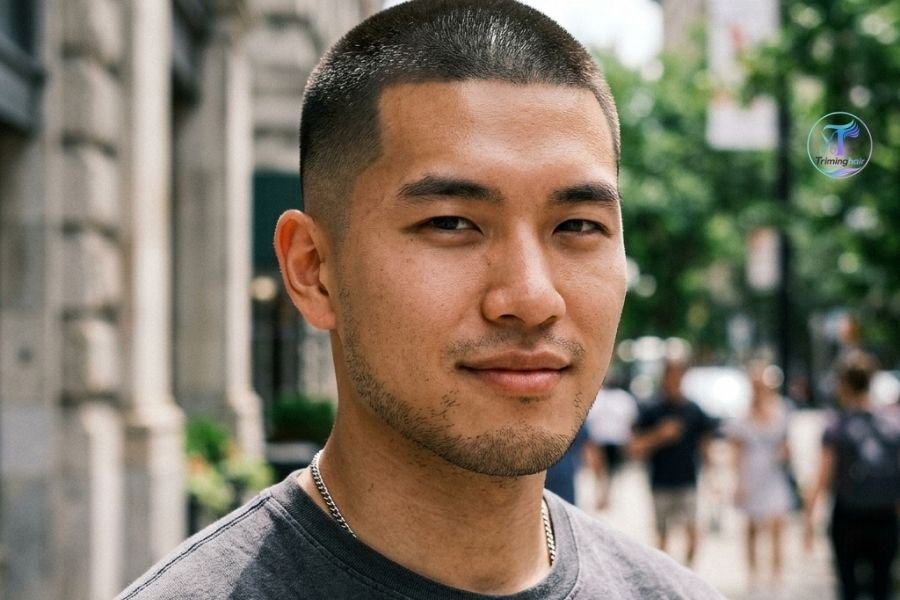
For men who already keep their hair short, transitioning to a buzz cut is a relatively easy adjustment since there’s minimal length to remove. The main decision becomes guard length and whether to add a fade or line up.
Because short hair grows back evenly on most Asian hair types, maintaining this length is straightforward with regular trims. It’s a practical option for anyone easing into shorter hairstyles for the first time.
Asian Buzz Cut Fade
The buzz cut fade remains one of the most requested combinations, pairing short, uniform length on top with a gradual fade on the sides. It works across nearly every face shape and hair density, which is part of its lasting popularity.
Fade height can be adjusted to taste, from subtle low fades to bold high fades, without changing the basic structure of the cut. This adaptability makes it a strong default choice for first-time buzz cut clients.
Common Mistakes Asian Men Should Avoid
Even a simple cut like the buzz cut has a few common pitfalls that can lead to disappointing results. Most of these mistakes come down to poor communication with the barber or skipping small but important details.
Avoiding these issues mostly comes down to preparation: knowing your hair’s quirks, being specific with requests, and understanding basic aftercare. The sections below cover the most frequent mistakes and how to sidestep them.
Going Too Short on the First Try
Jumping straight to an induction cut or number-1 guard without ever trying a buzz cut before can be a jarring change. Starting with a slightly longer guard, like a 3 or 4, gives a better sense of how short suits your face and head shape. It’s easier to go shorter next time than to regret an overly drastic first cut.
Ignoring the Cowlick
Failing to mention cowlicks before the cut often results in odd swirls or uneven patches once the hair is short. Barbers can usually work around cowlicks if they know beforehand, adjusting the cutting direction accordingly. Bringing this up early prevents an avoidable and frustrating outcome.
Skipping the Line Up
Leaving out a line up can make an otherwise sharp cut look slightly unfinished, especially around the hairline and temples. It’s a quick addition that most barbers can do in just a few extra minutes. Skipping it is fine for a softer look, but it should be a deliberate choice rather than an oversight.
Forgetting Sun Protection
With so little hair coverage, the scalp is far more exposed to sun damage than with longer hairstyles. A hat or scalp-specific sunscreen is worth using during long periods outdoors, especially in summer. Sunburn on the scalp is uncomfortable and can also affect how healthy the skin looks once the buzz grows out.
Asian Buzz Cut Taper
A taper differs from a fade in that the blend is more gradual and subtle, without going all the way down to skin. This creates a softer transition between the top length and the sides, which some men prefer over a sharper fade.
Tapers tend to suit more conservative or professional settings, since the overall look stays understated. It’s a solid alternative for men who like the buzz cut silhouette but want less contrast than a full fade provides.
Asian Buzz Cut Low Fade
A low fade keeps the blend close to the hairline around the ears and neck, leaving more length on the sides overall compared to a high fade. This creates a subtler transition that still adds shape without drawing too much attention to the sides.
It’s a versatile option that works well for both casual and formal settings, since the fade itself stays fairly understated. Many men choose a low fade specifically because it requires less frequent maintenance than higher, more dramatic fades.
FAQ’s
Does a buzz cut suit Asian hair?
Yes. Straight, dense hair holds clean lines and even coverage better than finer or wavier textures, which is exactly what a buzz cut needs to look sharp. It’s one of the main reasons the style is so popular among Asian men specifically.
How often do I need to get a buzz cut trimmed?
Most buzz cuts need a touch-up every two to three weeks to keep the shape and fade looking crisp. Faster-growing hair or higher fades may need slightly more frequent visits.
What guard length should I start with?
First-timers should start with a longer guard, such as a 3 or 4, rather than jumping straight to a 0 or 1. It’s easy to go shorter next time once you know how the length suits your face and head shape.
Can I buzz cut my own hair at home?
A uniform buzz cut with no fade is realistic to do yourself with a clipper set and a handheld mirror. Fades and line ups are harder to execute solo and are usually better left to a barber.
Will a buzz cut work with a cowlick?
Yes, but it’s important to point out the cowlick to your barber before the cut starts. They can adjust their cutting direction to prevent an odd swirl or uneven patch once the hair is short.
Does a buzz cut need any styling product?
The shortest versions, like the induction cut, need no product at all. Slightly longer buzz cuts, around a number 3 or 4, can take a small amount of matte paste for light texture.
Conclusion
The buzz cut remains one of the most practical and flattering hairstyles for Asian men, thanks to how well straight, dense hair holds its shape and lines. From the barely-there induction cut to longer, textured versions with a high skin fade, there’s a variation here to match almost any face shape or maintenance preference.
The key to getting it right comes down to clear communication with your barber, whether that’s guard numbers, fade height, or flagging a cowlick ahead of time. Once dialed in, a buzz cut is one of the lowest-effort styles to maintain, making it a smart long-term choice rather than just a passing trend.

Leave a Reply