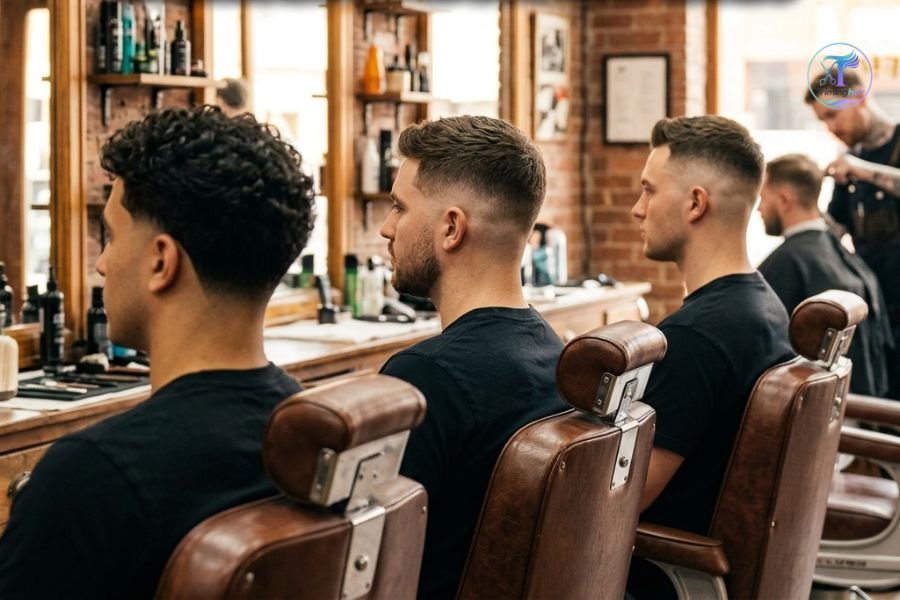
Choosing the right fade can completely change the look and feel of your haircut, but with so many options, it’s easy to feel unsure where to start. Low, mid, and high fades each offer a different balance of subtlety, boldness, and maintenance, making the choice more personal than it might seem. Your hair type, face shape, lifestyle, and even your career can all play a role in which fade suits you best.
In this guide, we’ll break down exactly what sets each fade apart, how often you’ll need touch-ups, and which style works best depending on your curls, face shape, or daily routine. By the end, you’ll have a clear idea of which fade fits your look and lifestyle. Let’s get into it.
What Is A Low Fade?
A low fade is a haircut where the hair gradually shortens starting just above the ears, close to the hairline. The blend is subtle and stays near the bottom of the head, leaving most of the length on top untouched. It’s a versatile choice that works well for people who want a clean look without a dramatic contrast.
Because the fade sits so low, it’s often the go-to option for more conservative or professional settings. It offers a neat, understated finish while still giving the hairstyle some shape and structure. Many first-time fade wearers start here since it’s easier to grow out and maintain.
Defining Characteristics of A Low Fade
The low fade is defined by its gradual, close-to-the-skin taper that begins right above the ear line. It keeps more length and volume on top, creating a softer overall silhouette compared to other fades. This makes it a flattering, low-maintenance option for everyday wear.
What Is A Mid Fade?
A mid fade starts the tapering process around the temple area, roughly midway up the side of the head. It strikes a balance between the subtlety of a low fade and the boldness of a high fade, making it one of the most popular fade styles today. The transition zone is more visible, giving the cut a sharper, more defined edge.
This style pairs well with a wide range of hair textures and top lengths, from slicked-back styles to textured crops. It offers more visual interest than a low fade while still being versatile enough for both casual and formal settings. Its balanced positioning is exactly why barbers often recommend it to first-time fade clients.
Defining Characteristics of A Mid Fade
A mid fade is characterized by its taper beginning at the temples, creating a clear but not extreme contrast between the sides and the top. It offers more dimension than a low fade without the intensity of a high fade. This middle-ground positioning is what gives it broad, everyday appeal.
How Often Should You Get Each Fade?
Low fades tend to hold their shape the longest since the taper sits close to the hairline, so touch-ups every three to four weeks are usually enough. Mid fades grow out a bit faster because the blend starts higher, often needing a refresh every two to three weeks to keep the lines sharp. High fades require the most frequent maintenance, typically every one to two weeks, since the dramatic contrast becomes noticeable as soon as new growth appears.
Your hair growth rate, texture, and how crisp you like the fade to look all affect how often you’ll need to see your barber. Thicker or faster-growing hair may need more frequent visits regardless of fade type. Ultimately, choosing a fade should factor in how much time and money you’re willing to commit to upkeep.
Which Fade Suits Your Lifestyle?

If you have a busy schedule and prefer low-maintenance grooming, a low fade is likely your best match since it grows out more gracefully. Professionals in corporate or client-facing roles often lean toward low or mid fades because they read as polished without being too edgy. Those with more flexible routines and a taste for bold style often gravitate toward mid or high fades.
Active lifestyles, like frequent gym-goers or athletes, may prefer high fades since they keep hair off the neck and ears during workouts. On the other hand, if you want a style that transitions well between casual and formal events, a mid fade offers that adaptability. Ultimately, your daily routine, career, and personal style should guide which fade fits best.
Low Fade vs Mid Fade vs High Fade for Curly Hair
Curly hair tends to shrink and add volume on top, so a low fade works well by keeping the sides subtle while letting curls take center stage. A mid fade gives curly hair a bit more definition on the sides, creating balance without overpowering natural texture. High fades can look striking on curly hair too, but they demand more precision since curls can make the transition line less crisp.
Curl pattern and density play a big role in how clean any fade looks, so it helps to work with a barber experienced in textured hair. Regardless of fade height, curly hair styles often benefit from added product to define curls and maintain shape between cuts. This makes communication with your barber about desired curl volume just as important as the fade choice itself.
Low Fade vs Mid Fade vs High Fade for Straight Hair
Straight hair shows off fade lines with exceptional clarity, which is why low, mid, and high fades all tend to look sharp on this hair type. A low fade on straight hair gives a smooth, seamless transition that’s easy to style in almost any direction. Mid and high fades create more visible contrast, which can make straight hair styles look more structured and modern.
Because straight hair lies flat, the fade lines are often more visible immediately after a cut, making regular touch-ups important for a crisp appearance. Styling products like pomade or matte clay can help add texture on top to balance out the sharper fade lines. Overall, straight hair offers flexibility to experiment with any fade height depending on your desired look.
Also Like To Read This: 37 Perfect High Fade Haircuts for Men in 2026
Which Fade Suits Your Face Shape?
Round faces often benefit from high fades, since the added height creates the illusion of a longer, more angular face shape. Square or angular faces tend to pair well with low or mid fades, which soften harsh jawlines rather than emphasizing them further. Oval faces are the most versatile, generally suiting any fade height without issue.
For longer face shapes, a low fade paired with more volume on top can help balance proportions by adding width rather than length. Those with heart-shaped faces often find mid fades flattering since they distribute visual weight evenly across the head. When in doubt, consulting with a barber who can assess your face shape in person will give the most personalized recommendation.
Skin Fade vs High Fade: What Is the Difference?
A skin fade refers to how close the hair is cut at its shortest point, tapering all the way down to bare skin for maximum contrast. A high fade, on the other hand, refers to where on the head the tapering begins, starting higher up near the temples or above. In other words, “skin” describes the closeness of the cut, while “high” describes its starting position.
These two terms are often combined, resulting in styles like a “high skin fade,” which starts high on the head and tapers completely to the skin. You can also have a low skin fade or mid skin fade, since skin fade simply describes the finish rather than the placement. Understanding this distinction helps you communicate more precisely with your barber about the exact look you want.
What Is A High Fade?
A high fade begins tapering much higher on the head, often starting above the temples or near the top of the ears. This creates a bold, dramatic contrast between the short sides and the longer hair on top. It’s a popular choice for those wanting a modern, edgy aesthetic.
Because the fade starts so high, it tends to draw more attention and requires more frequent maintenance to keep looking sharp. High fades pair especially well with textured or spiky top styles, since the strong contrast highlights shape and volume. This makes it a favorite among people who want their haircut to make a statement.
Defining Characteristics of A High Fade
A high fade is defined by its taper starting well above the temple, creating the most dramatic contrast of the three fade types. It gives the haircut a sharp, structured look that pairs well with shorter or textured top styles. This boldness is what sets it apart from the subtler low and mid fades.
Low Fade vs Mid Fade vs High Fade
The core difference between these three fades comes down to where the tapering begins on the head, ranging from close to the hairline for a low fade to well above the temple for a high fade. Low fades offer subtlety, mid fades strike a balance, and high fades bring maximum contrast and boldness. Each style also varies in maintenance needs, with low fades requiring the least frequent touch-ups and high fades needing the most.
Choosing between them ultimately depends on your personal style, career environment, hair type, and how much upkeep you’re willing to commit to. Someone wanting a professional, understated look may lean toward a low fade, while someone chasing a trendy, statement-making style might prefer a high fade. Mid fades remain a popular middle-ground choice for those who want the best of both worlds.
Different Types of Fade Haircuts
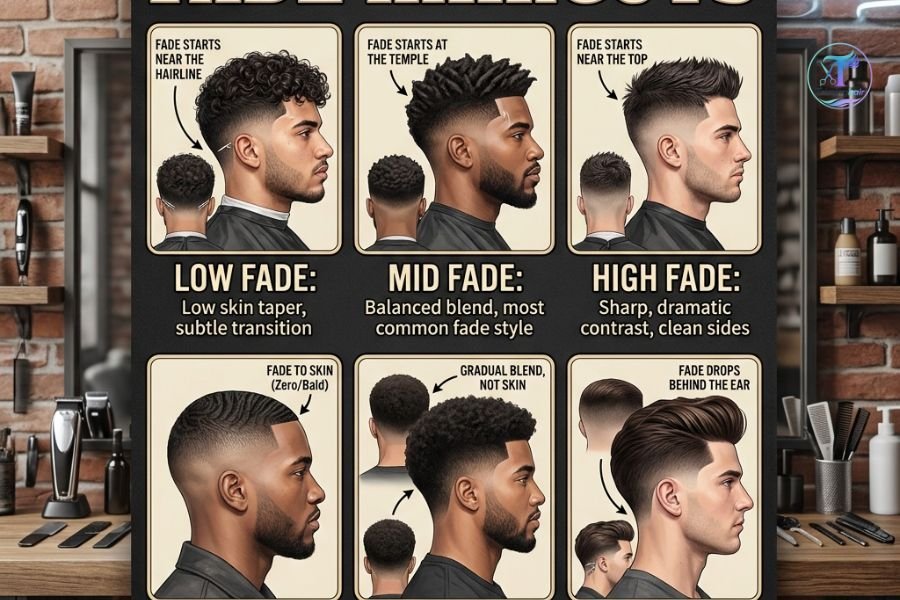
Beyond low, mid, and high fades, there are several variations worth knowing, including the taper fade, which blends more gradually and subtly than a traditional fade. The bald or skin fade takes any of the three heights and tapers completely down to the skin for maximum contrast. The drop fade curves downward behind the ear, following the head’s natural shape for a more dynamic look.
Other popular variations include the burst fade, which fades in a rounded shape around the ear rather than a straight line, and the shadow fade, which uses clippers to create a softer, less defined blend. Each variation can be combined with a low, mid, or high starting point, offering nearly endless customization. Talking through these options with your barber can help you find a style that’s uniquely suited to your preferences.
FAQ’s
Which fade is the most low-maintenance?
A low fade requires the least upkeep since the taper sits close to the hairline and grows out more gracefully than higher fades. You can typically go three to four weeks between trims and still keep a clean look.
Can any hair type get a high fade?
Yes, high fades work on straight, wavy, and curly hair, though curly hair may need a more skilled barber to keep the transition line crisp. Straight hair tends to show the sharpest, most defined results.
Is a mid fade a good choice for beginners?
Mid fades are often recommended for first-timers because they offer a balanced look that’s neither too subtle nor too bold. They also tend to suit a wide range of face shapes and hair types.
Do fades work for thinning hair?
Fades can actually help thinning hair look fuller by creating contrast between the shorter sides and the length on top. A skilled barber can recommend the best fade height to complement thinning areas.
How much does a fade haircut usually cost?
Prices vary by location and barber experience, but fades typically cost the same as a standard haircut since the technique doesn’t usually carry an extra charge. Skin fades or more detailed styles like burst or drop fades may cost slightly more due to the added precision involved.
Conclusion
At the end of the day, there’s no single best fade only the one that best matches your hair type, face shape, and lifestyle. Low fades offer subtlety and ease, mid fades bring balance, and high fades deliver bold, statement-making contrast. Whichever you choose, the right fade comes down to how much maintenance you’re willing to commit to and the overall vibe you want to project.
If you’re still unsure, don’t hesitate to bring reference photos to your barber and talk through your hair type and daily routine. A good barber can help tailor any of these fades to suit you perfectly, ensuring you leave the chair with a cut you’ll love.

Leave a Reply