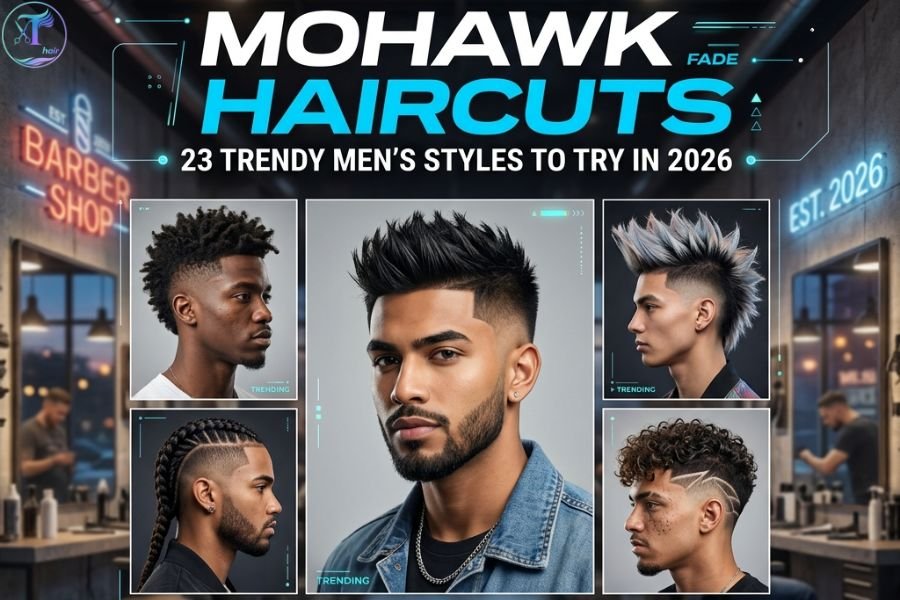
The mohawk fade has quietly become one of the most requested haircuts in barbershops right now, and it’s easy to see why. It takes the boldness of a classic mohawk and softens it with a clean, blended fade, making the style feel modern instead of costume-like. Guys of every hair type and age group are finding a version that fits their personal style.
What makes this cut so popular in 2026 is just how customizable it is. Between fade heights, strip widths, textures, and add-ons like beards or hair designs, no two mohawk fades have to look the same. It’s a haircut that can be dressed up for a night out or toned down for the office, all with the same basic foundation.
This guide walks through every major type of mohawk fade, how to ask your barber for exactly what you want, and how to style and maintain the cut once you have it. Whether you’re considering your first mohawk fade or looking to switch up your current one, you’ll find a style and a plan to match.
What Is A Mohawk Fade?
A mohawk fade combines two barbershop classics into one modern silhouette: a strip of longer hair running down the center of the head, paired with tightly faded sides that shrink gradually from skin to length. Instead of the shaved-sides punk look of the old-school mohawk, the fade version blends smoothly into the top section, giving the cut a cleaner and more wearable finish for everyday life.
This style works because it lets guys keep the bold, statement-making center strip while still looking sharp enough for work, school, or a formal event. The fade does the heavy lifting of making the haircut feel current, controlled, and intentional rather than rebellious or extreme.
How The Modern Mohawk Fade Is Different
Today’s mohawk fade trades the stiff, gelled-up spikes of the 80s and 90s for a softer, more textured top that can be worn slicked back, brushed forward, or left naturally tousled. Barbers now blend the fade higher and tighter, which makes the transition from scalp to strip almost seamless. The result is a cut that reads as stylish and low-key rather than shocking, making it far more office and school appropriate than its predecessor.
Mohawk Fade Types Explained
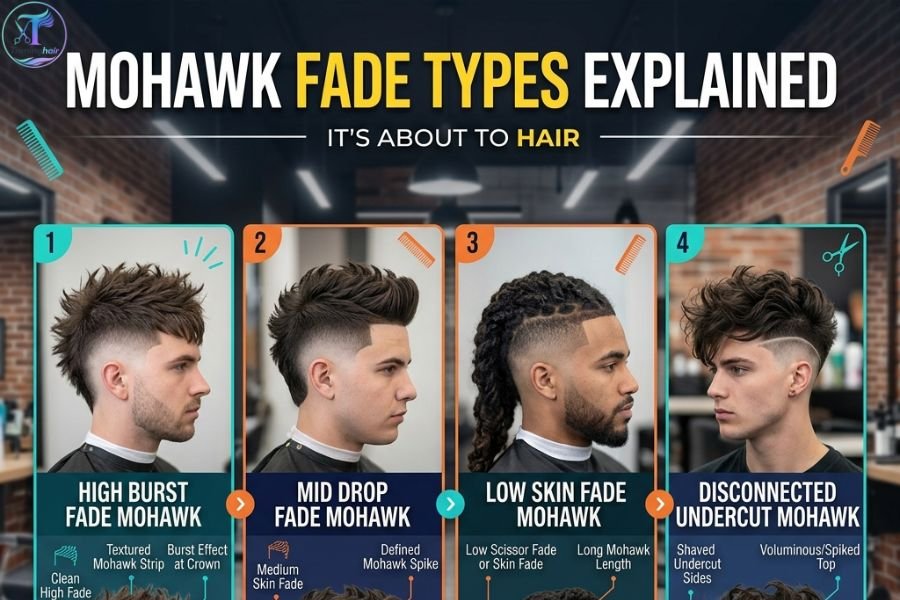
The word “fade” covers a wide range of finishes, and where the fade starts on the head changes the entire personality of the haircut. Low, mid, and high fades each pull the eye differently, while skin fades and taper fades control just how dramatic the contrast looks against the top strip. Knowing these differences helps you communicate clearly with your barber.
Choosing the right fade type usually comes down to face shape, hair texture, and how bold a look you want. A subtle taper keeps things professional, while a skin fade or burst fade pushes the style toward something edgier and more attention-grabbing.
Low Fade Mohawk
A low fade mohawk keeps the fading close to the ears and neckline, leaving most of the sides with a bit of length before they blend into the strip. It’s the most conservative version of the cut, making it a great entry point for anyone trying a mohawk fade for the first time without committing to a dramatic look.
Mid Fade Mohawk
The mid fade starts around the temple area, striking a balance between subtle and bold. It gives the strip more visual pop than a low fade while still leaving enough coverage on the sides to feel balanced, making it one of the most requested versions in barbershops.
High Fade Mohawk
A high fade mohawk starts well above the ears, sometimes close to the top of the head, creating a sharp contrast against the center strip. This version is bold and eye-catching, ideal for guys who want their haircut to make a statement.
Skin Fade (Bald Fade) Mohawk
Also called a bald fade, this take on the mohawk fade takes the sides down to bare skin before blending into the strip. It creates the most dramatic contrast of any fade style and requires more frequent touch-ups to keep the skin-level sections looking crisp.
Taper Fade Mohawk
A taper fade mohawk uses a gentler, more gradual blend rather than a sharp drop in length. It’s a softer, more natural-looking option that works well for guys who want the mohawk silhouette without the sides looking overly shaved down.
Burst Fade Mohawk
The burst fade curves around the ear in a semicircle instead of running in a straight line, giving the cut a rounded, dynamic shape. It’s a popular choice for mohawk fades because it frames the face nicely while still leaving room for a longer strip on top.
Drop Fade Mohawk
A drop fade dips lower behind the ear before curving back up, adding extra shape and dimension to the sides. Paired with a mohawk strip, it creates a more sculpted, three-dimensional look than a straight-line fade.
Temp Fade Mohawk
Short for temple fade, this version focuses the fading around the temple and hairline rather than the whole side of the head. It’s a subtler cousin of the mid fade, often chosen by guys who want a cleaner hairline without an aggressive overall fade.
Popular Men’s Mohawk Fade Haircut Variations
Beyond the basic fade type, the mohawk fade can be customized in dozens of ways through parting, texture, length, and add-ons like beards or hair designs. These variations are what turn a standard cut into something personal and distinct to the person wearing it.
This section rounds up the most requested mohawk fade variations seen in barbershops and on social media right now, from curly and wavy textures to sharp hard-part lines and creative shaved designs.
Mohawk Fade with Hard Part
A hard part adds a thin shaved line separating the top strip or side hair from the fade, giving the cut extra definition. It’s a small detail that makes the style look more deliberate and polished, especially when the strip is worn to one side.
Mohawk Fade with Hair Design
Hair designs use clippers to carve patterns, lines, or shapes into the faded sides, turning the haircut into a personalized piece of art. This variation is especially popular with younger guys who want their cut to stand out even more than a standard mohawk fade already does.
Curly Mohawk Fade
Curly hair adds natural volume and texture to the center strip, making it stand up and out without much extra styling effort. The contrast between tight curls on top and a clean faded side creates a striking, low-maintenance look for guys with naturally curly hair.
Textured Mohawk Fade
A textured mohawk fade uses choppy, layered cutting techniques on top to add movement and a less uniform finish. It softens the strip’s silhouette and pairs well with matte styling products for a modern, effortless appearance.
Mullet Mohawk Fade
This variation extends the strip down the back of the head, blending mohawk energy with mullet length at the nape. It’s a bold hybrid that has gained popularity thanks to skaters, musicians, and streetwear culture.
Mohawk Fade with Beard
Pairing the cut with a well-groomed beard balances out the boldness of the strip and creates a cohesive, masculine look from top to bottom. Barbers often recommend lining up the beard and fade together so both elements blend seamlessly.
Wavy Mohawk Fade
Natural waves give the top strip a relaxed, textured look that moves nicely without heavy product. It’s a great option for guys who want the mohawk fade silhouette but prefer a softer, more tousled finish over stiff spikes.
Burst Fade Frohawk
This variation combines a burst fade with a fuller, rounder “frohawk” top made for coarser or curlier hair types. The rounded fade shape complements the fuller volume on top, creating a balanced and eye-catching profile.
Long Mohawk Fade
A long mohawk fade keeps significant length on the center strip, allowing for dramatic styling like spikes, waves, or a slicked-back sweep. It requires more daily styling time but delivers the boldest, most editorial version of the cut.
Short Mohawk Fade
The short version keeps the top strip cropped close, offering a subtler nod to the mohawk shape that’s easy to maintain. It’s a practical choice for guys who like the concept but want something lower maintenance day to day.
Spiky Mohawk Fade
Using strong-hold product, the top strip is styled into defined spikes for a sharp, punk-inspired finish. This look leans more dramatic and works especially well for nights out or creative work environments.
Slicked-Back Mohawk Fade
Instead of standing straight up, the strip is combed back flat against the head for a sleek, polished look. It’s an elegant way to wear the mohawk fade in more formal or professional settings.
Edgar-Style Mohawk Fade
Borrowing from the popular Edgar cut, this version adds a straight, blunt fringe at the front of the strip along with a sharp fade on the sides. It’s a trendy, youthful take that’s especially popular among teens and young adults.
Mohawk Fade For Asian Hair
Because Asian hair is often thicker and straighter, barbers may adjust cutting angles to help the strip stand or lie the way the client wants. This variation focuses on working with natural hair density to achieve clean lines and a well-balanced fade.
Classic Mohawk
The classic mohawk skips the fade blend entirely, opting for fully shaved or buzzed sides against a longer center strip. It remains a bold, punk-rooted reference point that other mohawk fade styles are built from.
Faux Hawk Fade
A faux hawk fade mimics the mohawk shape without fully committing to it, using styling rather than a drastic clipper cut to create the illusion of a raised strip. It’s a flexible, everyday-friendly option for guys who aren’t ready for a full mohawk.
Curly Mohawk Fade
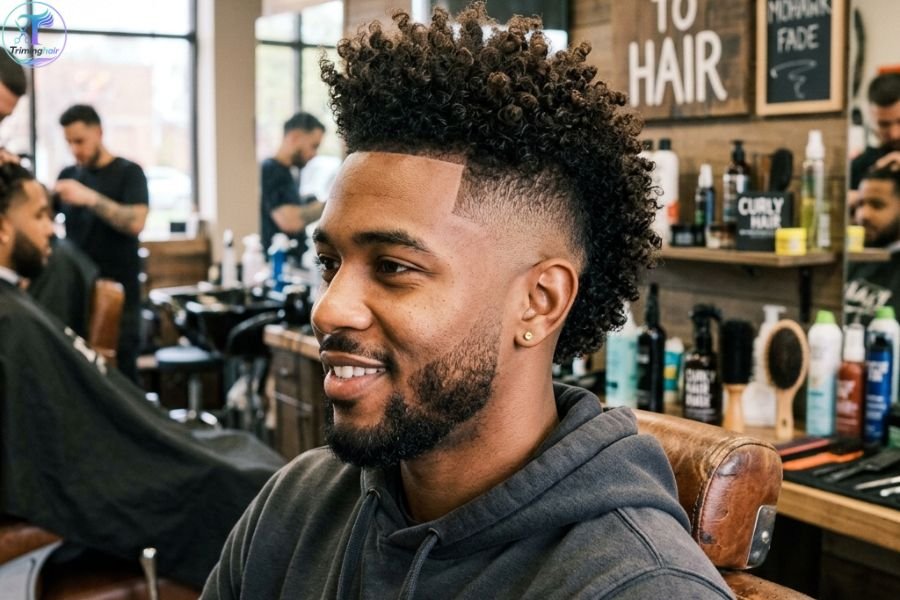
Curly texture naturally lifts and separates, which means the top strip on a curly mohawk fade often stands up with little more than a light curl cream. The faded sides keep curls from looking bulky or overgrown, giving the whole cut a neat, controlled frame.
Maintaining curl definition takes the right product routine, since curls can dry out faster than straight hair. Guys with this style typically rely on leave-in conditioners and curl-friendly creams to keep the strip looking defined rather than frizzy between barbershop visits.
Kids Mohawk Fade
A kids mohawk fade takes the same fade-and-strip formula and softens it slightly, often with shorter length on top and a more conservative fade for school-friendly styling. It’s a fun way for younger boys to try a trendy cut without going too extreme.
Parents often ask barbers to keep the strip short enough that it can be styled quickly in the morning without much fuss. This makes the kids’ version practical for busy routines while still giving children a cool, current look.
Mohawk Fade Black Men
For Black men, the mohawk fade is frequently paired with coilier or curlier hair textures on top, which naturally adds height and volume to the strip. Skin fades and burst fades are especially popular choices here because they create sharp, high-contrast lines against fuller top sections.
Barbers working with textured hair often use twist-outs, sponge coils, or curl definers to shape the top strip after cutting. This combination of a crisp fade with defined natural texture has become one of the most iconic modern takes on the mohawk fade.
How To Ask Your Barber For A Mohawk Fade
Getting the exact mohawk fade you want starts with clear communication before the clippers even come out. Barbers see dozens of clients a day, so vague requests like “just do a mohawk” often lead to results that don’t match what you pictured.
The tips below cover what to bring to your appointment and how to talk through the details so your barber has everything they need to nail the cut on the first try.
What Every Barber Needs To Know
Before starting, your barber should know your preferred fade height, how wide you want the top strip, and how you plan to style it day to day. This information shapes every decision they make with the clippers, from blending technique to how much length to leave on top.
Reference Photos Are Non-Negotiable
Words can be interpreted differently, but a photo removes the guesswork entirely. Bringing two or three reference images from angles that show the front, side, and back helps your barber understand exactly the fade height, strip width, and styling direction you’re after.
Plan The Back Profile, Not Just the Front
Many guys focus only on how the front will look and forget the back of the head is part of the cut too. Discuss how far down the strip should extend and how the fade should look from behind so there are no surprises once you see it in a mirror.
Use the Consultation
Treat the pre-cut consultation as your chance to ask questions, not just approve what the barber suggests. Speak up about hair texture concerns, past bad experiences, or areas you want extra attention, since this conversation directly shapes the outcome.
Budget for the Maintenance, Not Just the Cut
A sharp mohawk fade needs regular touch-ups to stay looking fresh, so factor that into your decision before booking. Ask your barber upfront how often you’ll need to come back in, and budget both the time and cost accordingly.
Visit For More: The Mod Haircut: 27 Trendy Mod Hairstyles for Men in 2026
Short Mohawk Fade
Keeping the strip short reduces daily styling time significantly while still preserving the core mohawk fade shape. It’s an especially good option for guys with busy mornings or active lifestyles who don’t want to spend extra time with product and a blow dryer.
Because there’s less length to work with, the fade itself becomes the star of the look, so precision blending matters even more. Many guys pair the short version with a skin fade for maximum contrast despite the shorter top.
Burst Mohawk Fade
A burst mohawk fade uses the rounded, ear-hugging burst fade technique on both sides of the strip, creating a soft curved line instead of a straight one. This shape flatters most face types and adds a bit of extra flair compared to a standard fade.
The rounded burst pattern also tends to grow out more gracefully than sharper fade lines, giving a little more time between barbershop visits before the cut starts looking uneven.
Mohawk taper Fade
A mohawk taper fade uses a gradual, blended transition rather than a crisp drop-off, giving the sides a softer, more natural finish. It’s often chosen by guys who want the mohawk silhouette without the sides looking too shaved down or severe.
This gentler approach also tends to be more forgiving as hair grows out between cuts, since there’s no hard line that becomes obvious after a couple of weeks.
Mohawk Drop Fade
The drop fade version curves the fade line down behind the ear before sweeping back up toward the nape, adding extra shape to the sides. Combined with a mohawk strip, it gives the cut a more sculpted, dimensional profile than a straight fade line.
Barbers say this style works particularly well for guys with rounder head shapes, since the dropped curve helps create the illusion of more angular definition.
mohawk low taper fade
A low taper fade keeps the blend close to the ears and neckline, offering one of the most subtle and versatile mohawk fade combinations. It suits workplaces with more conservative grooming expectations while still giving off mohawk-inspired styling on top.
Because the fade stays low and gradual, this combination tends to require slightly less frequent touch-ups compared to higher, sharper fade styles.
Mohawk Fade Mid
Sitting between low and high, the mid fade mohawk gives noticeable contrast without going to the extreme. It’s one of the most commonly requested combinations because it photographs well and still reads as professional in most settings.
This balance makes it a flexible choice for guys who want their haircut to stand out at a party but not draw unwanted attention in the office the next day.
Mohawk fade Short
Shortening the entire haircut, not just the strip, creates a tighter, more compact version of the mohawk fade that’s easy to maintain. This approach works well for first-timers who want to test the style before committing to more dramatic length or contrast.
A shorter overall length also means less daily upkeep, since there’s less hair to style, brush, or apply product to each morning.
Mohawk Fade Low
Low placement keeps the fading conservative while still delivering the signature mohawk look through the top strip. It’s a great middle ground for guys who want a trendy cut that won’t raise eyebrows at work or family gatherings.
Because the transition sits closer to the ears, regrowth is less noticeable, meaning slightly longer stretches between barbershop appointments.
Mohawk Fade High
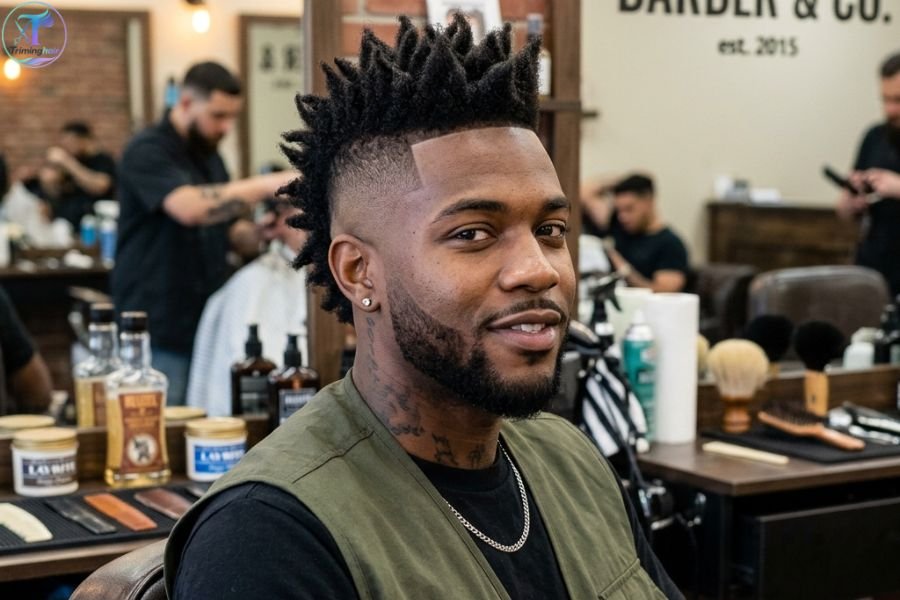
A high placement pushes the fade well above the ear, creating dramatic contrast against the top strip for a bold, statement-making finish. This version tends to photograph exceptionally well thanks to the sharp visual line it creates.
Because more hair is removed on the sides, high fades typically need more frequent maintenance to prevent the faded area from growing out and looking patchy.
How To Style A Mohawk
Styling a mohawk fade well comes down to using the right tools and products for your specific hair type and desired finish. Whether you want dramatic height or a relaxed, textured look, the process usually starts with clean, slightly damp hair.
Consistency matters just as much as technique, since a mohawk fade styled the same way each day tends to look more intentional than one styled inconsistently. The sections below break down the essentials.
Tools You’ll Need
A good comb, a blow dryer, and a strong-hold styling product form the foundation of most mohawk fade routines. Some guys also use a round brush for extra lift or a diffuser attachment for curlier textures.
Everyday Textured Styling
For a casual, low-effort look, work a small amount of matte paste or clay through damp hair with your fingers rather than a comb. This creates natural-looking separation and texture without the stiff, overly styled appearance of gel.
Dramatic, Lifted Styling
For maximum height, blow-dry the top strip upward while combing against the direction of growth, then lock it in place with a strong-hold gel or pomade. Letting the product dry completely before touching the hair helps the style hold throughout the day.
Product Hierarchy
Generally, gels and pomades offer the strongest hold for dramatic looks, while clays and pastes offer more natural texture with lower shine. Knowing which category a product falls into helps you choose the right one for the specific mohawk fade look you’re going for.
Best Men’s Hair Products For A Stylish Mohawk Fade
Choosing the right product can make or break how a mohawk fade looks throughout the day. Hold strength, finish, and compatibility with your hair type all play a role in whether your strip stays put or falls flat by the afternoon.
This section breaks down what to look for so you can build a small, effective product lineup instead of experimenting endlessly with items that don’t work for your hair.
Hold Strength
Mohawk fades generally need medium to strong hold products to keep the top strip standing or shaped throughout the day. Lighter hold formulas work fine for relaxed, textured looks but usually aren’t enough for dramatic, upright styling.
Finish
Matte finishes give a more natural, modern look, while glossy pomades create a sleeker, more polished appearance. Choosing between the two often comes down to personal style and whether the occasion calls for something casual or more dressed up.
By Hair Type
Thicker or curlier hair usually benefits from cream-based products that add moisture along with hold, while fine or straight hair often does better with lighter gels that won’t weigh the strip down. Matching product to texture prevents both flatness and excess buildup.
What to Avoid
Heavy waxes and greasy pomades can weigh down fine hair and make the strip collapse by midday. It’s also worth avoiding products with strong alcohol content if you have dry or textured hair, since they can leave the top strip looking brittle.
Maintenance
Keeping a mohawk fade looking sharp requires more attention than a standard haircut, mainly because the contrast between the faded sides and longer strip becomes obvious as soon as regrowth starts. A consistent maintenance routine keeps the style looking intentional rather than overgrown.
This section covers touch-up timing, washing habits, and a few everyday considerations that help extend the life of the cut between barbershop visits.
Touch-Up Schedules
Most mohawk fades need a touch-up every two to three weeks to keep the fade line crisp, especially for high or skin fade versions. Low and taper fades can often stretch a bit longer since the blend is more gradual to begin with.
Washing Routine
Washing two to three times a week with a gentle shampoo helps prevent product buildup without stripping natural oils from the scalp. Overwashing can dry out both the scalp and hair, making styling harder and the fade line look duller.
Sleeping with a Mohawk Fade
To protect the shape overnight, many guys use a silk or satin pillowcase, which reduces friction and helps prevent the strip from getting flattened or frizzy. A light wrap or bonnet is another option for those with longer or curlier top sections.
Gym and Sweat Management
Sweat can break down styling product and cause the strip to lose its shape mid-workout. A sweatband or simply rinsing and restyling with a small amount of product after exercise helps keep the cut looking fresh.
Why Fades Grow Out Faster
Because fades rely on a precise gradient of lengths, even a small amount of regrowth is enough to disrupt the smooth blend, making them look outgrown faster than uniform haircuts. This is one of the main reasons mohawk fades require more frequent barbershop visits than simpler cuts.
How To Grow Out A Mohawk
Growing out a mohawk fade takes patience, since the awkward in-between stage usually involves letting the sides catch up to the length of the strip. Many guys transition through shorter, more textured styles during this period to avoid an uneven, patchy look.
Regular trims to keep the sides tidy, even while growing out, help the transition look more like an evolving style than a neglected haircut. Working closely with a barber during this phase makes the process smoother and helps avoid drastic missteps.
Common Mistakes To Avoid
Even a well-executed mohawk fade can go wrong if a few key decisions aren’t handled carefully. Most mistakes come down to poor communication with the barber or unrealistic expectations about maintenance and upkeep.
Knowing these common pitfalls ahead of time can save you from a haircut you regret and help you get the most out of every barbershop visit.
Going Bigger Than Your First Mohawk Should Be
First-timers often request a dramatic, high-contrast version right away, only to find it’s more maintenance and attention than they’re ready for. Starting with a more moderate fade and strip width is usually the smarter move.
Mismatching the Strip Width to Your Head Shape
A strip that’s too narrow or too wide for your head shape can throw off the whole look. Barbers typically recommend adjusting strip width based on head size and shape to keep proportions looking natural.
Skipping the Maintenance Conversation
Walking out of the shop without asking about touch-up timing often leads to disappointment a few weeks later when the fade grows out unevenly. Always confirm a maintenance schedule before you leave the chair.
Using the Wrong Product for the Style
Applying a light gel when you wanted dramatic height, or a heavy pomade when you wanted natural texture, is a common source of frustration. Matching the product to the intended finish prevents daily styling disappointment.
Forgetting About the Beard
A sharply faded haircut paired with an unkempt beard can look mismatched and unfinished. Lining up beard grooming with haircut appointments keeps the whole look cohesive.
Trying to Do Touch-Ups at Home
Attempting to maintain a fade line at home with clippers often results in uneven blending that’s hard to fix. It’s generally best to leave fade touch-ups to a professional barber, even between full haircuts.
Picking the Wrong Reference Photo
Choosing a photo with a completely different hair texture or density than your own can set unrealistic expectations. Look for reference images with hair similar to yours for a more accurate preview of your results.
Pros and Cons of This Modern Cut
Like any bold hairstyle, the mohawk fade comes with real benefits alongside a few trade-offs worth considering before booking your appointment. Weighing both sides helps you decide if the style fits your lifestyle and maintenance tolerance.
The breakdown below covers the main advantages and drawbacks so you can go into your next barbershop visit with realistic expectations.
Pros
The mohawk fade offers a versatile, trend-forward look that can be dialed up or down depending on the occasion, from subtle office-friendly versions to dramatic statement styles. It also works across a wide range of hair textures and face shapes with the right adjustments.
Cons
The main drawback is maintenance, since both the fade and the strip require regular attention to keep the style looking sharp. Styling time can also add up daily, especially for guys who prefer more dramatic, lifted looks.
Frequently Asked Questions
Is a mohawk fade high maintenance?
Yes, compared to most standard haircuts, a mohawk fade needs more frequent touch-ups. The fade line can start looking uneven within two to three weeks as new growth comes in, so regular barbershop visits are part of committing to this style.
Can any hair type get a mohawk fade?
Almost any hair type can work with a mohawk fade, though the results will look different depending on texture. Curly and coily hair naturally adds volume to the strip, while straight hair often needs more product to achieve height or texture.
How long does hair need to be for a mohawk fade?
There’s no strict minimum, since the strip can be styled short or long depending on preference. Most barbers suggest at least a few inches of length on top to give enough room for shaping and styling options.
Does a mohawk fade suit round or square face shapes?
Yes, with the right adjustments. A higher, sharper fade can add angularity to a round face, while a lower, softer fade often balances out a more square or angular jawline.
How often should I get my mohawk fade touched up?
Most guys need a touch-up every two to three weeks, though low and taper fades can sometimes stretch to three or four weeks. Skin fades and high fades tend to need the most frequent attention.
Can I style a mohawk fade without heat tools?
Yes, plenty of textured and natural-looking mohawk fade styles rely on air-drying and a strong-hold product instead of heat. Heat tools are mainly useful for dramatic, lifted looks rather than everyday styling.
Conclusion
The mohawk fade has earned its place as one of the standout men’s haircuts of 2026 thanks to its balance of bold styling and everyday wearability. With so many fade heights, strip widths, and texture options to choose from, there’s a version of this cut for nearly every hair type, face shape, and lifestyle.
Getting the best results comes down to clear communication with your barber, realistic expectations about maintenance, and a styling routine that matches your hair type. A little planning before your appointment goes a long way toward walking out with the exact look you had in mind.
Whether you go bold with a high skin fade or keep things subtle with a low taper, the mohawk fade offers a way to stand out without going overboard. It’s a haircut built for guys who want their style to say something about them, one sharp line at a time.

Leave a Reply