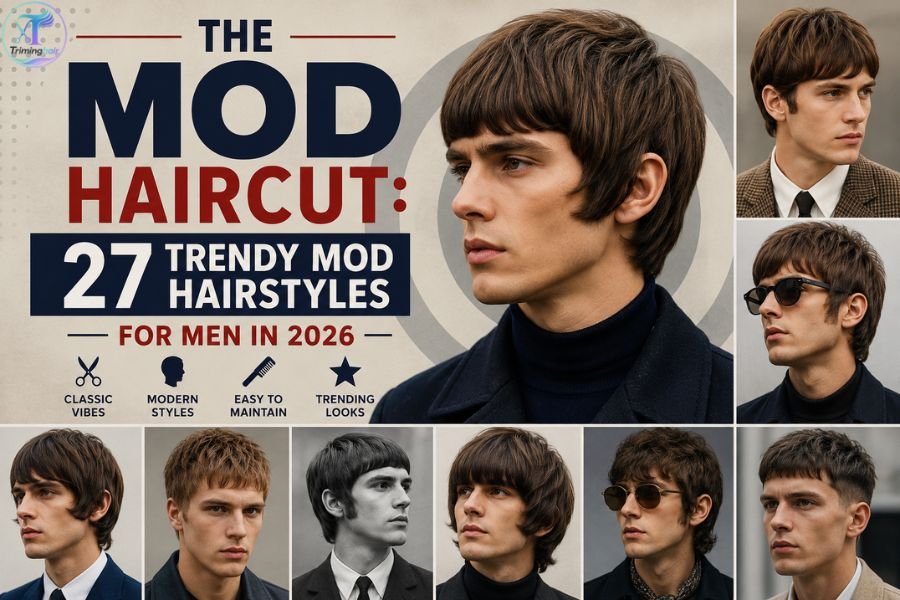
The mod haircut is back in barbershops for 2026, and it’s easy to see why. It’s sharp without trying too hard, structured without looking stiff, and flexible enough to suit straight, wavy, or curly hair. Whether you want a faithful 1960s recreation or a modern hybrid with a low taper, there’s a version of this cut built for you.
This guide breaks down everything you need to know: the 27 most popular mod hairstyles for men, the style’s history and defining rules, how to actually ask your barber for one, and how to style and maintain it once it’s cut. By the end, you’ll know exactly which mod cut to ask for and how to keep it looking sharp between appointments.
What Is A Mod Haircut?
A mod haircut is a scissor-cut men’s style rooted in 1960s British youth culture, built around a neat, structured fringe, softly tapered sides, and a rounded, polished shape. It sits between clean-cut and rebellious, favoring precision over volume or edginess. The look was designed to feel sharp on a Friday night out and still hold its form the next morning.
At its core, the mod cut is defined by proportion rather than length. The fringe frames the face, the sides stay controlled without being shaved close, and the back keeps a soft, rounded silhouette. Modern barbers have stretched the style into dozens of variations, but the original mod DNA — scissors, structure, and a strong fringe still anchors every version.
The Defining Rule of the Mod Cut: Scissor Work, Not Clipper Work
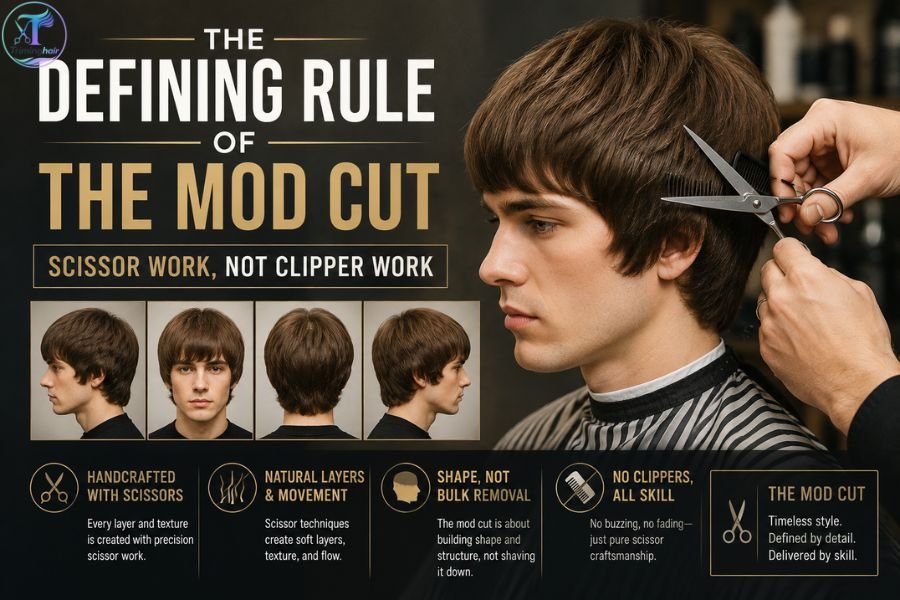
The single non-negotiable rule of a true mod haircut is that it’s cut with scissors, not clippers. Clippers create hard, mechanical lines that clash with the soft, rounded movement mod hair depends on. A scissor-only cut allows the barber to taper hair gradually, keeping natural texture and flow intact.
This distinction matters because it’s the reason mod cuts age so well and photograph so consistently across decades. A clipper fade under a mod fringe instantly turns the style into a modern crop or undercut hybrid, losing its period accuracy. If scissor work isn’t mentioned specifically, most barbers will default to clippers on the sides out of habit.
Popular Mod Hairstyles For Men
The mod haircut isn’t a single style but a family of related cuts, unified by fringe-forward structure and scissor tapering. Below are 27 of the most requested mod variations for 2026, ranging from faithful 1960s recreations to modern hybrids that blend mod shaping with contemporary texture and color trends.
Each version below adapts the same core principles — rounded silhouette, defined fringe, scissor-cut perimeter — to different hair types, lengths, and personal styles. Use these as reference points when browsing photos or describing what you want in a barber’s chair.
Wavy Mod Cut
Natural waves give the mod silhouette extra dimension without extra effort, since the movement already does the styling work. The fringe sits slightly looser than a straight-hair mod cut, curving instead of falling flat. This version photographs especially well in humid or coastal climates where product tends to fight natural texture anyway.
Modern Mod
The Modern Mod keeps the classic rounded shape but trims the fringe a touch shorter and blends the sides more gradually into everyday styling. It reads as office-appropriate while still nodding to the original silhouette. This is usually the safest entry point for someone trying a mod cut for the first time.
The Choppy Mod Cut
Choppy texture is added through point-cutting at the ends, giving the fringe and crown a slightly broken, imperfect edge instead of a razor-sharp line. It softens the formality of the classic mod without abandoning its structure. This works particularly well on thick or coarse hair that resists a completely smooth finish.
The Mod French Crop
Blending mod fringe shaping with the shorter, tighter perimeter of a French crop creates a low-maintenance hybrid. The fringe is trimmed to sit just above the brow rather than skimming it, and the sides are kept close but still scissor-finished. It’s a practical choice for anyone wanting mod styling without daily upkeep.
Curly Mod Cut
On curly hair, the mod cut relies on curl pattern to do the rounding naturally, so barbers cut dry to see how each curl falls before trimming. The fringe is left slightly longer to account for shrinkage once it dries. This version often looks fuller and more textured than the straight-hair original.
The Layered Mod Cut
Layering throughout the crown removes bulk and adds movement, preventing the classic mod silhouette from looking helmet-like on thicker hair. The fringe stays structured while the rest of the head gets subtle graduation. It’s a good middle ground between vintage precision and modern softness.
The Mod Caesar Cut
Combining the short, forward-brushed fringe of a Caesar cut with mod-style tapered sides produces a cropped, low-maintenance take on the trend. The length is shorter overall than a traditional mod, making it easier to maintain between barber visits. It suits men who want the reference without the longer grow-out phase.
The Mod Bowl Cut
This is the boldest, most literal nod to 1960s mod culture, with a rounded, uniform-length fringe that wraps further around the head than standard variations. It requires precise scissor work to avoid looking accidental rather than intentional. It’s best suited to thick, straight hair that holds a clean line.
The Mod Mullet
Mixing mod fringe shaping with mullet-length back hair creates a style that’s part vintage, part rock-and-roll. The front stays disciplined and structured while the back is left longer and looser. It’s a strong statement cut that works best on someone comfortable standing out.
Textured Messy Mod with Beard
Pairing a slightly undone, textured mod fringe with a full beard softens the formality of the classic cut and adds masculine weight to the lower face. The top is finger-styled rather than combed for a lived-in finish. This combination has become one of the most requested modern mod looks.
The Short Mod Cut
Trimming the fringe and sides shorter overall keeps the mod silhouette intact while dramatically cutting down on styling time. It reads cleaner and more corporate than longer versions. This is a popular choice for men returning to a mod-inspired look after years of low-maintenance short hair.
The Blonde Mod Cut
Lightening the hair, whether through natural blonde tones or color treatment, makes the fringe and rounded shape read more distinctly against the face. It was a common look during the original 1960s mod era and photographs strongly under studio and flash lighting. Upkeep includes both a barber and a colorist.
Mod Flow
Mod Flow lets the sides grow slightly longer than a traditional mod, creating a soft, swept-back movement instead of a tight taper. The fringe remains the anchor point, but the overall silhouette feels looser and more contemporary. It suits men transitioning out of longer hair without cutting everything short at once.
The Mop Top (Beatles-Style)
The most iconic mod-adjacent cut in history, the mop top uses a uniformly rounded fringe and sides that all fall to roughly the same length. It requires thick, straight-leaning hair to hold its shape without heavy product. Reference photos of The Beatles’ early career remain the clearest guide for barbers.
The 90s Mod Cut
This version borrows the slightly shaggier, less rigid fringe popularized during the 1990s Britpop mod revival, when bands like Blur and Oasis reintroduced the style to a new generation. The lines are softer and less uniform than a 1960s original. It’s a good option for men who want mod without looking costume-accurate.
Shaggy Mod with A Blunt Fringe
Contrasting a heavily textured, shaggy crown with a sharply blunt-cut fringe creates visual tension that keeps the style feeling current. The fringe stays disciplined while everything else moves freely. This combination requires a barber comfortable mixing precision cutting with looser texturizing techniques.
Thick Mod with Slight Waves
On naturally thick hair with a gentle wave pattern, the mod cut needs extra thinning to avoid excessive bulk at the crown. The waves add subtle texture to what would otherwise be a very structured silhouette. Barbers often use texturizing shears specifically to manage the volume.
Side Swept Mod Cut
Instead of a straight-across fringe, this version sweeps the front section diagonally to one side while keeping the mod’s rounded body underneath. It softens the look slightly and suits men with an asymmetrical hairline or a natural side part. Styling takes slightly longer since the sweep needs daily reinforcement.
Shaggy Mod Cut
A fully shaggy interpretation loosens every element of the classic mod, from the fringe to the perimeter, favoring movement over precision. It’s closer to a 70s rock silhouette layered onto mod bones. This version tends to require the least daily styling of any variation on this list.
The Textured Mod Cut
Texturizing throughout the top and crown breaks up the smoothness of a traditional mod, giving it a more tactile, modern finish. The fringe keeps its shape but loses its glassy, combed-flat appearance. It’s one of the most commonly requested versions among younger clients in 2026.
Modern Mod with Low Taper
Adding a low taper fade to the sides kept subtle enough to preserve the scissor-cut spirit bridges mod styling with contemporary barbershop trends. The fade stays close to the skin only at the very base of the neck and ears. It works well for men who want a hybrid rather than a strict period piece.
The Medium Mod Cut
Falling between the short and long versions, the medium mod keeps enough length for movement while staying manageable day to day. The fringe sits just above the brow, and the sides carry moderate length rather than a tight taper. It’s often described as the most versatile mod length for everyday wear.
Edgy Short Mod Cut
This version sharpens the classic mod’s soft edges into something harder, using cleaner lines around the hairline and a slightly more angular fringe. It suits men who want the reference point without any of the original’s softness. Product with stronger hold is typically needed to maintain the sharper finish.
The Messy Mod Cut
Deliberately disheveled, the messy mod uses the same underlying cut as a classic mod but is styled with fingers instead of a comb for an undone finish. It works especially well as a second- or third-day style once product has settled naturally. It’s a low-effort way to wear a technically precise cut.
The Long Mod Cut
Growing the fringe and sides out further than standard mod proportions creates a longer, more romantic silhouette while keeping the rounded mod shape. It requires more frequent trims to maintain the shape as it grows. This version takes the longest to reach its full intended look after a fresh cut.
The Fluffy Mod Cut
Blow-drying the top with a round brush adds volume and softness, giving the mod cut a fuller, almost airy finish rather than a flat, combed one. It relies more on styling technique than on the cut itself. This version needs a diffuser or round brush as part of the regular routine.
The Spiky Mod Cut
Using a strong-hold matte product, the crown is pushed up and slightly forward while the fringe stays intentionally disconnected from the rest of the shape. It’s the most modern departure on this list, borrowing spiked texture from other trends. The underlying cut is still mod, but the styling reads much more current.
The Mod Quiff (Paul Weller Style)
Named after the mod revival icon, this version lifts the fringe up and slightly back into a quiff rather than letting it fall forward. It needs a strong-hold cream or paste and a comb to set the lift while damp. It’s one of the more recognizable modern mod references among enthusiasts of the style.
The Mod Haircut At A Glance
Across every variation, the mod haircut always returns to the same three pillars: a defined fringe, scissor-cut sides, and a rounded overall silhouette. Hair type, length, and color can shift dramatically, but straying from those pillars usually means the result isn’t really a mod cut anymore. Keep this checklist in mind when browsing references or briefing a barber.
Visit For More Styles: Triming Hair
Short Mod Haircut Male
Shorter mod cuts trim both the fringe and the sides down for a cleaner, lower-maintenance take on the style, without sacrificing the signature rounded shape. They suit men with fine or thinning hair, since less length means less risk of the top looking flat or sparse. This is also the most common request among first-time mod clients.
Because there’s less length to work with, precision becomes even more important on a short mod cut. A barber needs to get the fringe proportion right on the first pass, since there’s little room to correct mistakes without starting the growth process over. It’s worth showing multiple reference angles, not just a front-facing photo.
Long mod Haircut Male
Longer mod cuts let the fringe and sides grow past the classic proportions, creating a softer, more flowing version of the style that leans closer to mod-inspired than strictly traditional. This length works especially well on hair with natural wave or curl, since the extra length gives texture more room to show. It does require patience during the growing-out phase between cuts.
Maintenance becomes more demanding as the cut gets longer, since the fringe needs regular trims to stay out of the eyes without losing its shape. Many men alternate between a longer summer length and a shorter, tighter version for cooler months. Discussing this seasonal flexibility with a barber upfront makes future visits faster.
Mod Haircut Curly Hair
Curly hair changes how a mod cut behaves more than almost any other texture, since curl shrinkage means the fringe sits noticeably higher once dry than it appeared while wet during the cut. Barbers experienced with curly textures typically cut dry, or very close to dry, to judge the final fall accurately. This prevents the frustrating result of a fringe that’s suddenly too short.
The rounded mod silhouette actually complements natural curl patterns well, since curls already create soft, organic shaping without much extra work. Product choice matters more here than on straight hair, favoring lightweight creams over anything that weighs curls down or disrupts their pattern. A diffuser can help maintain shape through drying.
Mod Haircut Boy
For younger clients, the mod cut is usually simplified into a shorter, easier-to-maintain version that keeps the fringe and rounded shape but skips more elaborate styling routines. Parents often prefer this because it grows out gracefully and doesn’t require daily product application before school. It’s also a durable style that photographs well for years of school pictures.
Barbers cutting mod styles on kids typically build in extra room for growth between visits, since children’s hair appointments are usually spaced further apart than adult ones. A slightly longer fringe at the initial cut gives more flexibility before it needs trimming again. This makes the boy’s version more forgiving than the adult original.
Mod Haircut Straight Hair
Straight hair is closest to the original texture the mod cut was designed around in the 1960s, which is why straight-haired versions tend to look most period-accurate. The fringe falls flat and even, and the rounded silhouette holds its line cleanly without needing much correction from product. This is the easiest texture to style day to day.
Because straight hair shows every line clearly, precision cutting matters more here than on textured hair types that naturally disguise small errors. Any unevenness in the fringe or perimeter will be immediately visible once styled flat. This makes finding a barber specifically experienced with scissor-only cutting especially important for straight-haired clients.
A Brief History of The Mod Haircut
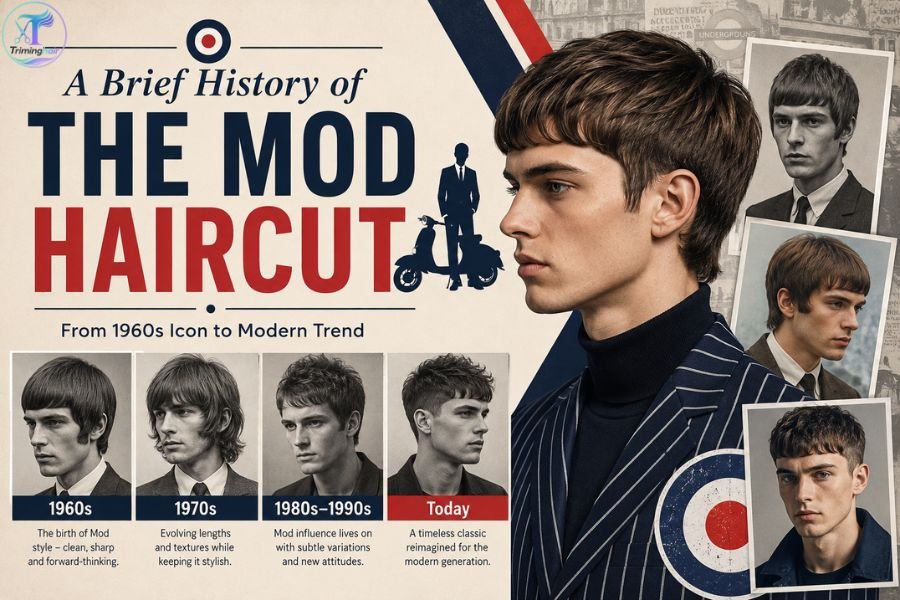
The mod haircut emerged out of London’s mod subculture in the late 1950s and early 1960s, a youth movement built around tailored Italian suits, scooters, and a sharp, deliberately put-together appearance. Hair was part of that same philosophy of precision, rejecting the greased-back rockabilly styles that came before it in favor of something cleaner and more European in influence. Barbers of the era treated the cut with the same discipline as a bespoke suit fitting.
The style spread quickly through London’s music and club scene before crossing into mainstream fashion by the mid-1960s, helped along by bands and cultural figures who wore it publicly. It became shorthand for a specific attitude youthful, urban, and stylish without trying too hard. That reputation has followed the cut through every revival since.
The Peak Years
The mod haircut’s original peak ran roughly from 1962 to 1966, tracking closely with the height of mod subculture itself in London and other British cities. This period produced the most recognizable reference photography still used by barbers today. By the late 1960s, cultural attention had already begun shifting toward longer, more countercultural hairstyles.
The Symbolism of The Mod
Beyond aesthetics, the mod haircut symbolized a specific working- and middle-class British identity built around ambition, style, and precision as a form of self-respect. It stood in deliberate contrast to more disheveled countercultural looks of the same decade. That symbolism is part of why the cut still carries a sense of intentional sharpness today.
How To Ask Your Barber For A Mod Haircut
Walking in and simply saying “mod haircut” often produces inconsistent results, since the term covers dozens of variations across six decades. The more specific you can be about length, era, and reference, the closer the outcome will match what you actually pictured. Treat the consultation like briefing a project, not just naming a trend.
A good mod haircut conversation covers length, texture, maintenance tolerance, and at least one clear visual reference before the scissors come out. Barbers unfamiliar with the style’s history may default to a generic short crop unless guided otherwise. The sections below break down exactly what to cover.
Decide Which Mod You Actually Want
Before sitting in the chair, narrow your choice down to one or two specific variations from this list rather than describing “a mod cut” in general terms. Vague requests leave too much room for interpretation. Bringing a decided direction saves time and avoids a result that only loosely resembles what you wanted.
Name the Figure If You Have One
If you have a specific reference in mind a musician, actor, or era-defining figure say so directly, since names communicate proportion and texture faster than words alone. Most barbers familiar with mod styling will immediately understand the reference points. It also gives them a clear benchmark to check their work against as they cut.
Confirm Scissor-Cut Sides
Explicitly ask for scissor work on the sides rather than assuming it, since many barbers default to clippers unless told otherwise. This single instruction is the most important one on this entire list for getting an authentic result. Repeat it if the barber reaches for clippers out of habit partway through.
Treat The Sideburns and Perimeter As Part of The Design
The sideburns and hairline aren’t afterthoughts in a mod cut they’re part of the overall shape and should be discussed with the same care as the fringe. Ask for them to be tapered to match the rest of the cut rather than left as a default straight line. This detail is often what separates a convincing mod cut from an approximate one.
Discuss the Fringe First
Since the fringe defines the entire style, it should be the first thing addressed in any consultation, including exact length and how it should fall relative to the eyebrows. Get this decision locked in before any other cutting begins. Every other element of the cut is built around this single reference point.
Talk About Your Texture Honestly
Be upfront about your natural hair texture, including any tendency toward frizz, curl, or thinning, since this directly affects which mod variation will actually work. A barber can’t plan around information they don’t have. Honest texture conversations prevent disappointment once the style is dry and away from the salon chair.
Be Honest About Your Routine
If you’re not willing to style your hair daily, say so clearly, since some mod variations demand more upkeep than others. A shorter, lower-maintenance version will hold up better against a busy schedule than a longer, more elaborate one. Barbers can recommend cuts that match your actual routine rather than an idealized one.
A Note on the Paul Weller Question
Paul Weller’s name comes up constantly in mod haircut consultations, and it’s worth clarifying which era of his look you mean, since his hair has changed considerably across decades. His early Jam-era cut differs significantly from his later mod revival styling. Being specific here avoids a mismatch between reference and result.
How To Style A Mod Haircut
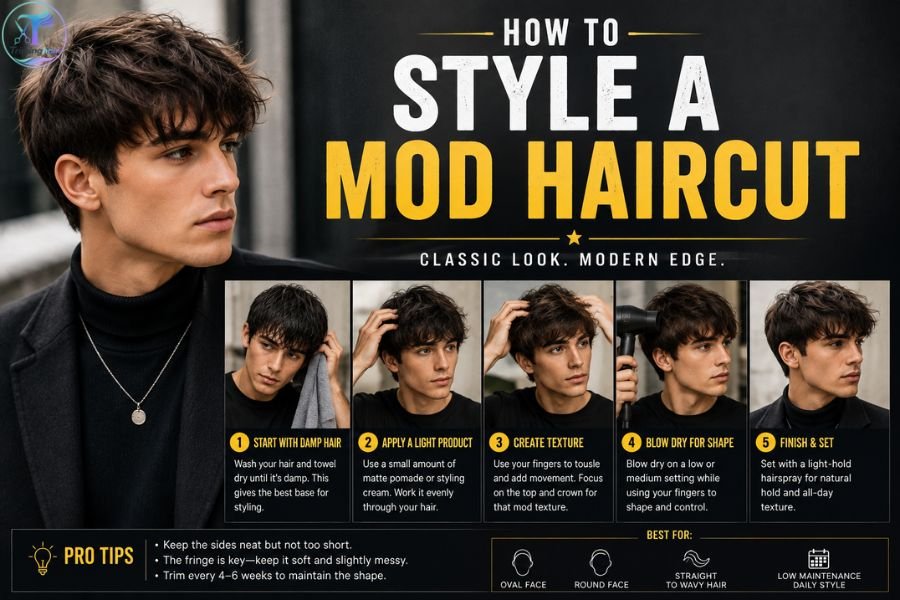
Styling a mod cut is less about heavy product and more about disciplined technique, since the cut itself is designed to hold shape with minimal intervention. Most of the work happens with a comb and a small amount of product while hair is still slightly damp. Overworking it with too much product usually undoes the precision the cut was built for.
The goal at every stage is control without stiffness — hair should move naturally but return to its intended shape. This balance is what separates mod styling from more rigid, heavily gelled looks. Once the basic routine is learned, most versions take under five minutes to style each morning.
The Styling Philosophy
Mod styling follows a “less is more” philosophy, using just enough product to guide hair into shape without creating a hard, artificial finish. The cut should do most of the work, with styling simply reinforcing what the scissors already established. This is a deliberate contrast to styles that rely heavily on product to create their shape from scratch.
Styling by Variation
Different mod variations call for different techniques a mop top needs a round brush and blow-dry, while a messy mod is finger-styled with minimal tools. Matching styling method to cut variation prevents wasted effort and better results. Ask your barber to demonstrate the specific technique suited to your version before leaving the chair.
The Everyday Routine
A basic daily routine involves washing or wetting the fringe, applying a small amount of cream or paste, and combing it into shape while damp. The rest of the head usually needs only light finger-styling to settle into place. This entire process typically takes only a few minutes once it becomes familiar.
The Fringe Is the Focal Point
Every styling decision should prioritize the fringe first, since it’s the most visible and defining element of the entire cut. Get it right, and the rest of the style tends to fall into place with minimal effort. Neglecting the fringe while focusing on the sides or back is one of the most common styling mistakes.
Best Men’s Hair Products For Mod Hairstyles
The right products for a mod cut favor definition and light hold over stiffness or heavy shine, matching the cut’s original scissor-precision philosophy. Overly waxy or gel-based products tend to fight the natural movement mod styles are built around. A small, well-chosen product kit is usually more effective than a large one.
Most mod styling routines only need two or three products total: something for hold, something for texture, and basic grooming tools. Layering too many products on top of each other is a common mistake that weighs the cut down. The sections below cover the essentials worth keeping in a routine.
Matte Clay
Matte clay provides moderate hold without shine, making it ideal for shaping the fringe and controlling the sides without an artificial gloss. It works particularly well on straight to wavy hair types. A small amount goes a long way, since too much can clump and look uneven once dry.
Sea Salt Spray
Sea salt spray adds light texture and a slightly tousled finish, useful for messier or fluffier mod variations that don’t rely on a sleek, combed look. It works best applied to damp hair before air-drying or diffusing. Overuse can dry hair out, so it’s best kept to occasional use rather than daily.
Light Styling Cream
Light styling cream offers subtle hold and a soft finish, well suited to classic and modern mod cuts that need control without stiffness. It’s especially useful for taming the fringe into place without weighing it down. This is often the single most-used product in a standard mod routine.
Brushes and Combs
A fine-tooth comb is essential for shaping and defining the fringe precisely, while a round brush helps add lift and volume for fuller mod variations. Fingers alone work fine for messier styles but won’t achieve the same clean lines. Keeping both tools on hand covers most mod styling needs.
What to Skip
Heavy gels, high-shine pomades, and strong-hold waxes generally work against the mod aesthetic, creating a stiffness that clashes with the style’s natural movement. These products are better suited to slicked-back or pompadour styles than mod cuts. Skipping them keeps the finished look closer to the style’s original intent.
Common Mistakes To Avoid
Even a well-executed mod haircut can fall short of expectations if a few common pitfalls aren’t addressed during the consultation or aftercare. Most mistakes trace back to unclear communication with the barber or a mismatch between the chosen style and the client’s actual hair type. Awareness of these issues before booking an appointment prevents most of them entirely.
The good news is that nearly every mistake on this list is easily avoidable with a slightly more detailed conversation before the cutting begins. None of them require an especially difficult skill to sidestep. Reviewing this section before an appointment is often the single best way to guarantee satisfaction with the result.
Accepting a Fade as Part of the Cut
Letting a barber default to a clipper fade on the sides is one of the most common ways a mod cut loses its authenticity. Fades belong to a different family of styles entirely and clash with the mod’s soft, scissor-tapered silhouette. Always confirm scissor work explicitly before cutting begins.
Asking for “A Mod Cut” Without Specifying the Era
Because mod styling spans the 1960s original, the 1990s revival, and countless modern hybrids, a vague request leaves too much room for a mismatched result. Naming an era or reference figure narrows things down considerably. This single clarification prevents most miscommunication before it happens.
Ignoring the Fringe Length
Since the fringe is the defining feature of the entire style, failing to specify its exact length relative to the eyebrows is a costly oversight. A fringe cut too short can take months to grow back to the intended length. Always address fringe length as the very first detail in any consultation.
Choosing To Get It on a Texture It Was Not Designed For
Certain mod variations, like the bowl cut or mop top, rely heavily on straight, thick hair to hold their precise shape. Attempting the same style on fine, thin, or very curly hair often produces disappointing results. Choosing a variation suited to your actual texture avoids this mismatch entirely.
Using Heavy Product on a Finished Mod Cut
Applying too much gel, wax, or pomade after the cut is finished can flatten the fringe or create an artificial, overly stiff appearance. Mod styling depends on light, controlled product use rather than heavy layering. Less product, applied carefully, almost always produces a better final result.
Letting the Fringe Grow Out
Delaying trims allows the fringe to grow past its intended length, gradually losing the defined edge that makes the mod cut recognizable in the first place. Regular maintenance trims, typically every three to four weeks, are necessary to preserve the shape. Skipping them turns a sharp mod cut into a shapeless grow-out phase.
Treating Mod as Casual
Some clients assume mod styling is a low-effort, wash-and-go look, when in reality it depends on consistent, deliberate maintenance to look intentional rather than unkempt. Skipping the daily styling routine can undercut the entire point of the cut. A mod haircut rewards a small amount of daily effort with a consistently sharp result.
Picking a Reference Photo of Someone with Completely Different Hair
Bringing in a photo of someone with drastically different hair density, texture, or growth pattern sets unrealistic expectations for what a barber can actually achieve. The underlying hair has to support the reference style for the result to look right. Choosing a reference closer to your own natural hair type produces far more reliable results.
Frequently Asked Questions
Is a mod haircut high maintenance?
It depends on the variation. Shorter, messier versions like the Short Mod Cut or Messy Mod Cut need only a few minutes of daily styling, while longer or more structured versions like the Mop Top require more regular blow-drying and trims. Choosing a variation that matches your routine keeps upkeep manageable.
Can I get a mod haircut with curly hair?
Yes, and it’s one of the more popular textures for the style right now. Curly mod cuts rely on the hair’s natural pattern to create the rounded silhouette, though barbers usually cut it dry to account for shrinkage. The fringe is typically left slightly longer than on straight hair to compensate.
How often do I need to trim a mod haircut?
Most mod variations need a trim every three to four weeks to keep the fringe from growing past its intended length. Waiting longer between visits gradually softens the defined lines that make the cut recognizable. Longer mod styles can sometimes stretch this window slightly, but the fringe still needs regular attention.
What’s the difference between a mod cut and a mullet?
A standard mod cut keeps a consistent, tapered length all around, framed by a defined fringe. A Mod Mullet specifically borrows the mullet’s longer back section while keeping the mod’s structured front and sides, making it a deliberate hybrid rather than the classic silhouette.
Do I need a specific type of barber for a mod cut?
Not necessarily, but it helps to find one comfortable with scissor-only cutting, since clippers on the sides can undermine the style’s soft, rounded shape. Showing clear reference photos and asking directly for scissor work on the sides is usually enough guidance for most barbers.
Conclusion
The mod haircut has survived six decades of trend cycles for a simple reason: it’s built on proportion and precision rather than passing fads, which means it never really goes out of style. Whether you’re drawn to the razor-sharp 1960s original, the shaggier 90s revival, or a modern hybrid with a low taper, there’s a version on this list suited to your hair type and daily routine.
The key to getting it right comes down to communication as much as the cut itself. Be specific about the era, length, and reference you have in mind, insist on scissor work over clippers, and match the variation to your natural texture rather than forcing a style your hair wasn’t built for. Get those details right, and a mod haircut will reward you with one of the sharpest, most versatile looks a barber’s chair has to offer.

Leave a Reply