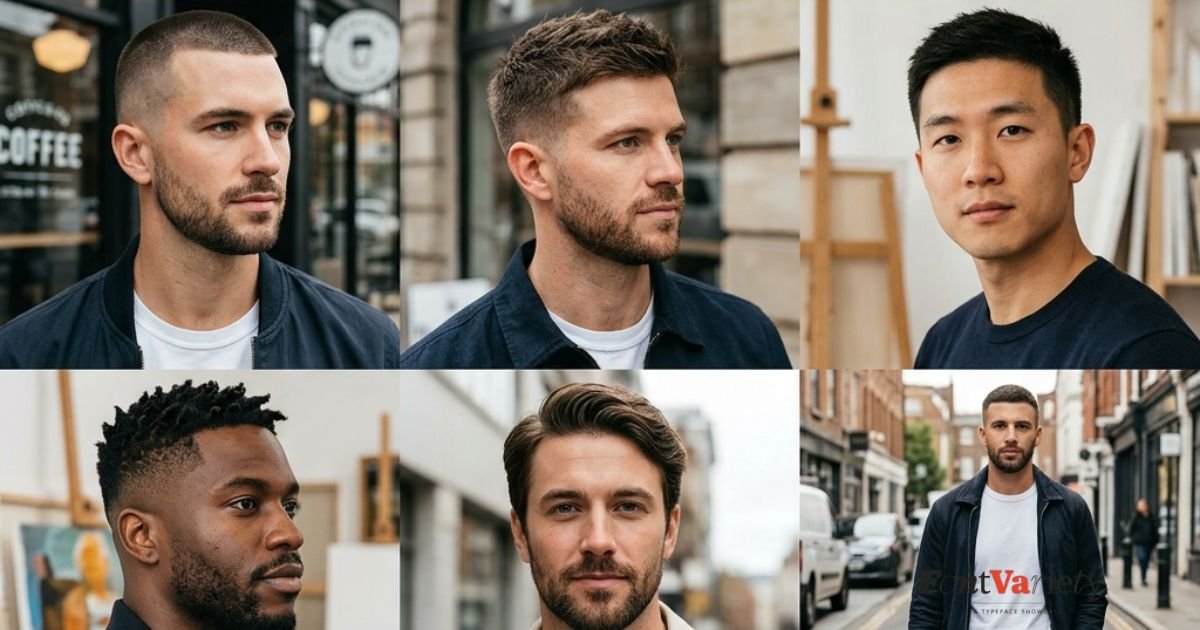
Not every guy wants to spend fifteen minutes in front of the mirror every morning, and the good news is you don’t have to. Low-maintenance haircuts prove that looking sharp and putting in minimal daily effort aren’t mutually exclusive, as long as you pick a style that actually works with your hair type, face shape, and schedule.
This guide rounds up 35 of the best low-maintenance men’s haircuts, from classic buzz cuts to more textured medium-length options, along with practical advice on choosing the right one for you. You’ll also find guidance on trim frequency, at-home cutting, minimal product routines, and common mistakes to avoid.
Whether you’re a busy professional, a new dad, or just tired of fighting with your hair every morning, there’s a cut on this list that fits. Let’s get into the styles, the science behind what makes a haircut easy to maintain, and how to choose the right one for you.
Classic Low-Maintenance Haircuts For Guys
Classic cuts earn their reputation because they’ve been tested by decades of guys who wanted to look sharp without spending time on it every morning. These styles rely on solid technique rather than styling products, so once the cut is done at the barbershop, you’re basically finished. They also grow out evenly, which means you get more mileage between trims than trendier shapes.
What ties this group together is that almost none of them need a comb, brush, or product to look intentional. A quick towel-dry or a rub of the palms is often all it takes. If you want a haircut you can genuinely forget about between appointments, this is the category to start with.
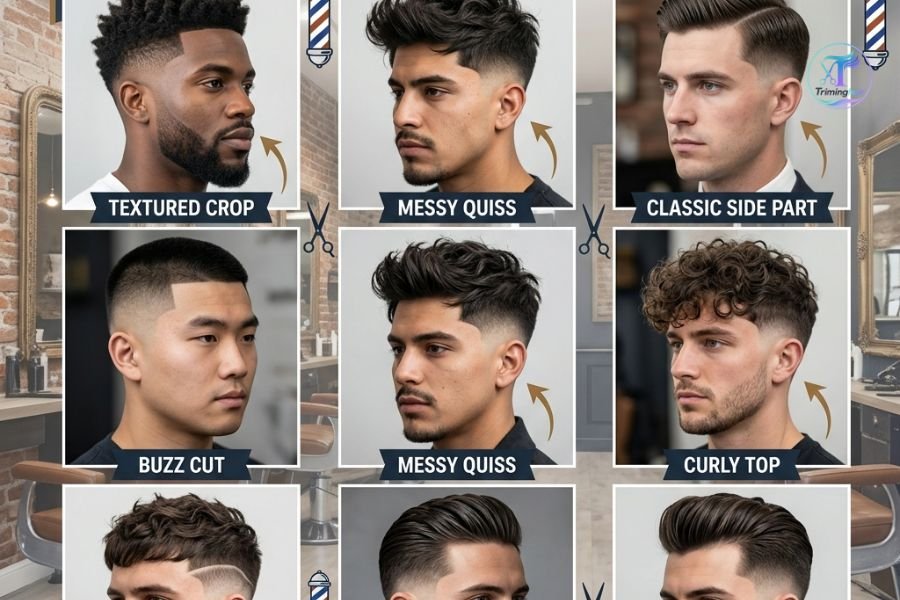
Buzz Cut
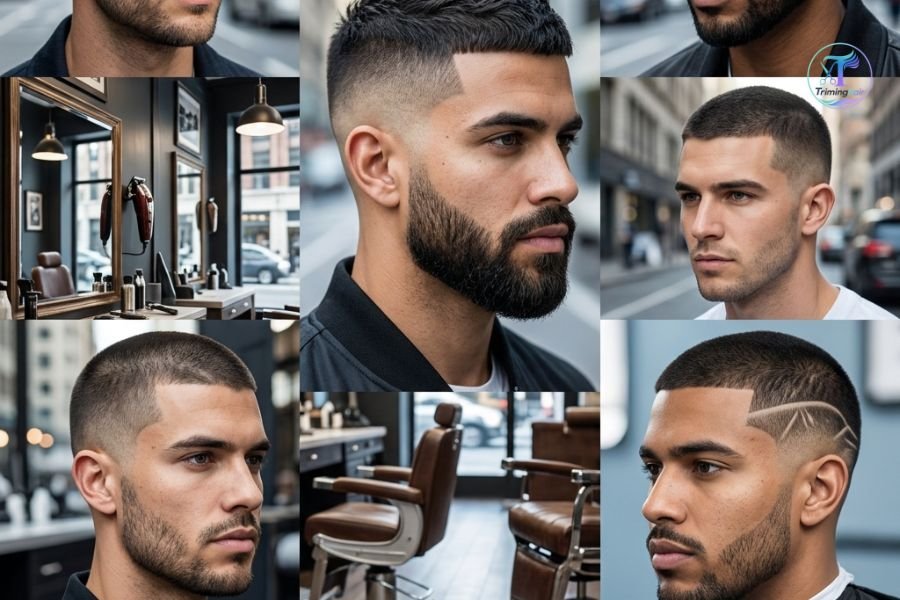
The buzz cut is the gold standard of low-maintenance hair because there’s nothing to style at all. One length, one pass with the clippers, and you’re done for the day. It also hides thinning hair and cowlicks better than almost any other cut on this list.
Crew Cut
A crew cut keeps a bit more length on top than a buzz cut, giving you a small amount of texture to play with if you want it. Most mornings you can skip styling entirely and just run a hand through it. It’s a favorite for guys who want a slightly softer look without adding upkeep.
Curly Hair Fade
This pairs natural curl texture with a tapered fade on the sides, letting the curls do the visual work up top. Because curls already have volume and shape built in, you don’t need gel or cream to make the style look finished. Regular trims keep the fade sharp while the curls stay loose and easy.
Short Brush Up
The short brush up trains the hair to stand slightly forward or upward with minimal length, so a quick finger comb in the morning sets it for the day. It’s a step up from a buzz cut in personality but still asks almost nothing of you. Guys who want a bit of texture without committing to real styling gravitate toward this one.
Burr Cut
A burr cut is essentially a slightly longer buzz cut, using a bigger clipper guard for a hint more coverage. It keeps all the wash-and-go convenience of a buzz while looking a touch softer on the head. There’s no line of demarcation to grow out awkwardly, so it ages gracefully between cuts.
French Crop
The French crop combines short sides with a textured, slightly longer top that’s cut with scissors for movement. It looks deliberately styled even on days you do nothing to it, thanks to the natural texture. A small amount of matte paste can sharpen it up, but it’s optional rather than required.
Comb Over Fade
This classic pairs a side part on top with a fade underneath, giving you a polished look that works for both casual and formal settings. The fade needs refreshing every few weeks to stay crisp, but daily styling is as simple as a comb and a touch of pomade. It’s a dependable option for guys who want to look put-together without much effort.
Fringe with Scissor-Tapered Sides
A soft fringe falls naturally over the forehead while the sides are tapered with scissors instead of clippers for a gentler transition. Because the top is cut to fall a certain way, it tends to sit correctly on its own after a shower. This makes it a good pick for guys who don’t want to fuss with a blow dryer or comb every day.
High and Tight Fade
The high and tight takes the fade almost to the top of the head, leaving only a small patch of length. It’s about as close to a buzz cut as you can get while still having a defined style. Styling time is essentially zero, and it holds its shape well between trims.
Short, Spiky Hair with Fade
Short spikes paired with a fade give you a bit of edge without demanding real skill to style. A small amount of wax worked through damp hair is usually enough to get texture that lasts the day. The fade keeps things clean, so you’re not relying on the spikes alone to make the cut look sharp.
Butch Cut Fade
The butch cut fade is a very short, uniform length on top blended into a fade on the sides, sitting between a buzz cut and a crew cut in terms of length. It requires no product and dries in minutes after a shower. This makes it one of the most practical options for guys who shower right before heading out the door.
Cool Low-Maintenance Short Men’s Haircuts
Short haircuts don’t have to look plain to be practical. This group proves you can have visible texture, movement, and personality while still keeping your morning routine under a minute. The shorter overall length means less hair to fight with, so even styles with some flair fall into place fast.
Many of these cuts lean on a fade or taper to do the heavy lifting, which means the top can be a little looser and more forgiving. That combination of a tight foundation with relaxed styling on top is exactly what makes a short cut feel current instead of dated, without adding real upkeep.
Textured Quiff
A textured quiff lifts the front of the hair up and back for a bit of height, using natural texture rather than heavy product to hold its shape. A small amount of matte clay worked in while damp is usually enough to set it for the day. It reads as more styled than it actually takes to maintain.
Short Curls
Keeping curls short lets natural texture do most of the work, since shorter curls hold their shape better than longer ones and need less product to control frizz. A leave-in conditioner or light curl cream on wash days keeps things defined. Between washes, you can typically just wet your hands and scrunch to refresh it.
Mohawk Fade
A modern mohawk fade is far more subtle than the classic punk version, with a narrow strip of slightly longer hair blended into faded sides. It looks bold without needing daily restyling, since the fade holds its shape for weeks. A touch of product on the center strip is the only real styling step.
Undercut
The undercut disconnects a longer top from closely shaved or clipped sides, creating contrast that looks intentional even when the top is left to air dry. It works with straight, wavy, or curly hair alike. Trims on the sides can happen less often than the top, since the buzzed sides grow out cleanly.
Braids
Braids pull hair away from the face and keep it contained for days or weeks at a time, which makes them genuinely low-maintenance despite looking intricate. Once they’re done, there’s no daily styling required at all. The main upkeep is protecting them at night and keeping the scalp moisturized between installs.
Short, Messy Hair with Taper Fade
This style is built around looking effortlessly undone, which ironically means there’s very little effort involved. A dab of texturizing paste scrunched through towel-dried hair creates the messy look in seconds. The taper fade underneath keeps the overall shape from ever looking unkempt.
Modern Caesar Cut
The modern Caesar cut keeps hair short and forward-swept across the whole head, often with a subtle fringe. It naturally falls forward after washing, so there’s rarely a need to reshape it during the day. It’s a favorite among guys with receding hairlines because the forward direction helps mask thinning at the temples.
Temp Fade with Line Up
A temp fade uses a very subtle, low-contrast blend on the sides, finished off with a crisp line up across the front hairline. The subtlety of the fade means it grows out less noticeably than a high or skin fade. The line up is the detail that keeps the whole cut looking fresh, and it’s a quick job for the barber to touch up.
Long Buzz Cut Fade
This takes the standard buzz cut and lets the top run a bit longer, paired with a fade on the sides for contrast. It still requires zero daily styling since the length is short enough to hold its own shape. The slightly longer top gives a bit more versatility than a true buzz without adding upkeep.
Textured Crew Cut Fade with Blunt Fringe
This variation on the crew cut adds a blunt-cut fringe across the front and a fade on the sides for a more fashion-forward finish. The fringe is cut to fall into place on its own, so styling is mostly about letting it dry naturally. It’s a good option for guys who want something more current than a standard crew cut.
Shaved Sides
Shaving the sides completely, whether paired with a longer top or an undercut, removes any need to style or maintain that part of the head at all. It also makes the contrast with the top extremely sharp right after a cut. Touch-ups are quick since there’s no blending to worry about, just a straightforward shave.
Afro Fade
An afro fade keeps natural afro texture on top while fading the sides down to skin or a short length. The top needs a light pick or fingers to shape rather than any heavy product. It’s a style that celebrates natural texture while still looking tailored thanks to the clean sides.
Regular Cut with Low Drop Fade
A low drop fade curves gently down behind the ear rather than staying in a straight line, giving a soft, rounded look to an otherwise standard short cut. It’s a subtle upgrade that doesn’t add any extra styling time. This makes it an easy pick for guys who want a slightly more modern shape without changing their daily routine.
Short Twists with Mid Fade and Beard
Short twists paired with a mid fade and a beard create a coordinated, put-together look with very little daily effort. The twists hold their shape for one to two weeks at a time, and the fade simply needs a refresh every few weeks. Keeping the beard trimmed to match rounds out the style without adding real extra work.
Also like To Read This: Fade Haircuts for Black Men: 27 Best Fade Styles for a Fresh Look
Attractive Low-Maintenance Men’s Medium Hairstyles
Medium-length hair gives you more to work with than a short cut, but that doesn’t automatically mean more maintenance. The key with these styles is choosing cuts that have enough built-in texture or movement to look good air-dried, rather than ones that depend on a blow dryer and multiple products every day.
Most of the styles in this group work with your hair’s natural fall rather than against it, which is what keeps them easy. A little length also means more time between trims than a short cut needs, so even though the daily styling might take a minute or two, the overall upkeep can actually be lighter.
Layered Flow
Layered flow hair is cut with soft layers that let the hair move naturally rather than sitting in one heavy block. Air-drying usually gives it enough shape on its own, and a little sea salt spray can add texture if needed. It’s one of the easiest medium lengths to maintain because it doesn’t rely on a specific part or direction to look right.
Slick Back Fade
The slick back fade takes medium-length hair on top, combs it straight back, and pairs it with a fade underneath for contrast. A small amount of pomade is usually the only product needed to hold it in place all day. Once you’ve got the comb angle down, it takes under a minute each morning.
Shaggy Hair
Shaggy cuts are built around looking a little undone, with choppy layers that fall forward and to the sides. This is one of the most forgiving medium styles because messy is the intended result, not a mistake to fix. Towel-dry, run your fingers through it, and you’re set.
Man Bun
A man bun keeps medium to long hair pulled back and secured, which means no daily styling decisions once your hair is long enough to tie up. It also keeps hair out of your face during work or workouts. The main maintenance is switching to hair ties that won’t cause breakage over time.
Short Mod Cut
The short mod cut brings back a rounded, slightly retro silhouette with length concentrated on top and a defined fringe. It relies on the natural weight of the hair to hold its shape rather than heavy product. A light hairspray or pomade can sharpen the fringe line if you want extra polish.
Wavy Medium Shaggy Hair
This style leans into natural wave patterns, using shag layering to let waves show without looking flat. A texturizing spray on damp hair before air-drying enhances the waves without extra effort. It’s especially easy for guys who already have some natural wave, since the cut is built around working with it.
Medium Middle Part
A middle part on medium-length hair creates a clean, symmetrical look that mostly styles itself as it dries. Once the part is trained, gravity does most of the work in keeping it in place. Occasional touch-ups with a comb are usually all that’s needed throughout the day.
Messy Medium Waves
Messy medium waves combine a shaggier cut with encouraged natural texture, so the “messy” look is actually the finished product. A sea salt or texture spray scrunched in after a shower is the extent of the styling routine. It’s a go-to for guys who want personality without a strict routine.
Dreads
Dreads or locs require real effort at the start to establish, but once mature they’re genuinely low-maintenance day to day since there’s no cutting, brushing, or restyling involved. Retwisting happens on a longer cycle, often measured in weeks rather than days. The main daily task is simply keeping the scalp and locs clean.
Textured Side-Swept Styling with A Low Fade
This pairs a side-swept top with plenty of natural texture and a subtle low fade on the sides. The texture is what keeps it from needing a comb, since the piecey finish looks intentional even when tousled by hand. A light matte product can be added for hold, but it’s not strictly necessary on most hair types.
The Most Basic Men’s Hairstyles
Some cuts have stuck around for generations for one simple reason: they work with almost any hair type, face shape, and lifestyle without asking much in return. These are the haircuts barbers can do with their eyes closed, and the ones that never really look out of place no matter the setting.
Basic doesn’t mean boring here; it means dependable. These styles form the foundation that most low-maintenance haircuts are built on, whether it’s a buzz cut, a crew cut, or a simple side part. If you’re not sure where to start, one of these is almost always a safe bet.
Why These Cuts Stay Popular
These cuts endure because they solve the same problem for every generation of men: looking neat without spending real time or money on upkeep. They’re also easy for any barber to execute consistently, so you get a reliable result no matter where you get your hair cut. On top of that, they tend to suit a wide range of face shapes and hair textures rather than being a niche fit for only one type of guy.
What’s The Easiest Haircut To Maintain For Guys?
The buzz cut is generally considered the single easiest haircut to maintain, since it requires no daily styling, no products, and dries in seconds after a shower. Crew cuts and burr cuts follow closely behind, offering a small amount of extra length while still skipping the need for styling tools. If your priority is spending the least possible time on your hair each day, these ultra-short options are hard to beat.
That said, “easiest” depends a little on your lifestyle too. A short cut that needs a trim every two weeks might be more effort overall than a slightly longer style you only need to visit the barber for once a month. The truly easiest haircut for you is the one that matches both your daily routine and how often you’re realistically willing to get a trim.
What Counts As A Low-Maintenance Haircut?
A haircut earns the “low-maintenance” label when it holds its shape without daily product, styling tools, or a long routine, and when it doesn’t demand frequent trips to the barber to look intentional. It’s less about length and more about how forgiving the cut is when you don’t have time to fuss with it. A style that looks great fresh out of the chair but falls apart after one shower doesn’t really qualify.
The best way to judge any cut against this standard is to run it through a few practical tests: how long does it take to style, how often does it need a trim, and how much product does it actually require. Cuts that pass all three tend to be the ones guys stick with for years rather than switching every few months.
The Criteria For A Low-Maintenance Style
A genuinely low-maintenance style checks three boxes: quick to style, forgiving between trims, and light on product needs. If a cut fails even one of these, it usually ends up feeling like more work than it’s worth day to day. The best low-maintenance cuts tend to pass all three comfortably rather than just scraping by on one.
The Styling Time Test
If a haircut takes more than a couple of minutes and multiple products to look right each morning, it’s not really low-maintenance, no matter how good it looks. The test is simple: towel-dry it, run your fingers or a comb through it once, and see if it looks presentable. Cuts that pass this test are the ones you can rely on even on rushed mornings.
The Trim Cadence Test
A style is only low-maintenance if it still looks acceptable a few weeks after your last trim, not just on day one. Cuts that lose their shape or start looking messy within a week or two demand more barber visits than most guys want. The best low-maintenance cuts grow out gradually and gracefully instead of hitting a hard expiration date.
The Product Test
If a haircut needs three or four different products just to look normal, it’s adding a layer of daily effort that undercuts the whole point of choosing something easy. A true low-maintenance style should look good with either no product or just one simple option, like a light pomade or texture spray. The fewer steps between shower and out the door, the better it fits the category.
How To Choose A Low-Maintenance Cut For Your Face Shape
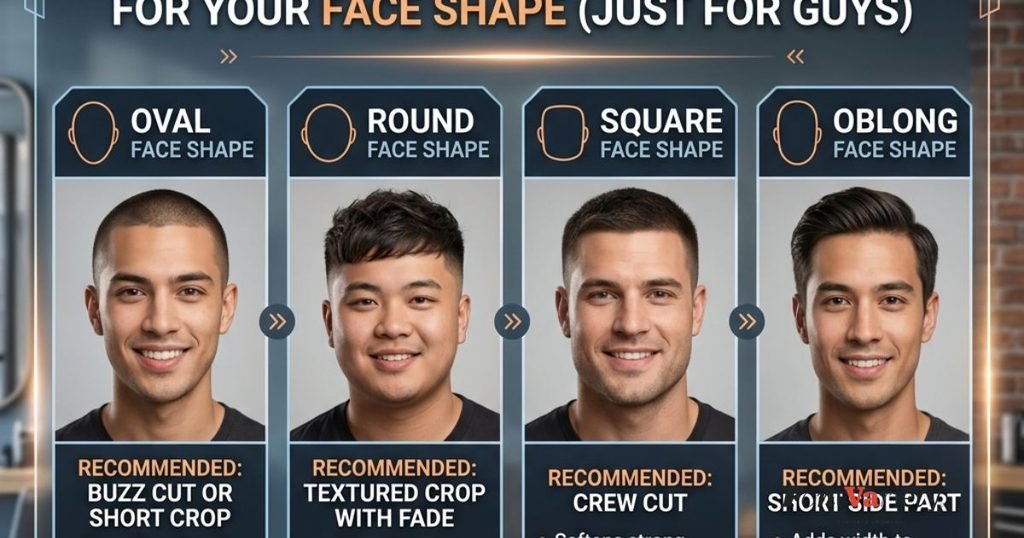
Picking a cut based on face shape isn’t just about looking good, it’s about picking a style that will keep looking good with minimal upkeep. The right proportions on top and sides can make a cut more forgiving as it grows out, while the wrong ones can force you back into the barber’s chair sooner than you’d like.
The goal with any face shape is balance: adding volume where a face is narrow, and keeping things tighter where a face is already wide or angular. Once you know your shape, narrowing down a low-maintenance style becomes a lot faster, since you can skip anything that would need constant adjustment to look right on you.
Oval Face
Oval faces are considered the most versatile shape, meaning almost any low-maintenance cut on this list will work well, from a buzz cut to a textured quiff. There’s no real balancing act needed since the proportions are already even. This gives you the freedom to choose based on personal style rather than face-shape restrictions.
Round Face
Round faces benefit from cuts with more height on top and shorter sides, which helps elongate the face visually. A crew cut, textured quiff, or high and tight fade all work well here. Avoiding rounded, close-cropped shapes all over helps keep the face from looking wider than it is.
Square Face
Square faces have strong, angular jawlines that pair well with textured or slightly longer styles that soften the edges, like a French crop or textured crew cut. Very short buzz cuts can sometimes emphasize the jaw more than intended. A bit of length on top balances out the strong bone structure nicely.
Oblong (Long) Face
Oblong faces do best with cuts that add width rather than height, since extra length on top can make the face look even longer. Styles like a crew cut, side part, or short fringe work well by keeping things horizontal rather than vertical. Avoiding tall quiffs or heavily spiked styles helps keep proportions balanced.
Heart-Shaped Face
Heart-shaped faces are wider at the forehead and narrower at the chin, so cuts that add a bit of width near the jaw, like a slight taper rather than a skin fade, help balance things out. A side-swept fringe can also soften a prominent forehead. Keeping the top from being too voluminous prevents the imbalance from standing out.
Diamond Face
Diamond faces have narrower foreheads and jawlines with wider cheekbones, so styles with some fringe or texture at the forehead help soften the width at the cheeks. A textured quiff or fringe with tapered sides works well here. Very short, tight cuts can sometimes draw more attention to the cheekbone width than intended.
The Pro Move for Low-Maintenance Specifically
The real trick to combining face-shape flattery with low maintenance is picking a cut that still looks good as it grows out, not just on the day you leave the barbershop. A style that only works at one exact length forces more frequent trims regardless of how flattering it is. Choosing a cut with a gradual, forgiving growth pattern for your face shape gives you the best of both worlds.
The Best Low-Maintenance Haircuts by Hair Type
Hair type has a bigger impact on how “low-maintenance” a cut actually feels than most guys expect. The same haircut can take thirty seconds to style on one hair type and five minutes of fighting with a comb on another. Matching the cut to your natural texture, rather than working against it, is what actually keeps daily effort low.
The general rule across every hair type is the same: work with what your hair naturally wants to do. Straight hair that wants to fall flat, curly hair that wants to hold shape, and coily hair that wants volume all have low-maintenance options once you stop trying to force them into the “wrong” style.
Straight Hair
Straight hair tends to fall flat and hold a part well, making cuts like a crew cut, comb over fade, or slick back fade especially easy to maintain. Because straight hair doesn’t add its own texture, styles that rely on natural movement, like a shag, may need a bit more product to look intentional. Simpler, cleaner shapes tend to be the lowest-effort choice for this hair type.
Wavy Hair
Wavy hair already has built-in texture, which makes it a great match for cuts like a textured quiff, layered flow, or wavy shag that let the waves show through. A light sea salt spray is often the only product needed to enhance what’s already there. Wavy hair is one of the more forgiving types since it looks good both styled and left alone.
Curly Hair
Curly hair holds volume and shape naturally, so cuts like a curly fade or short curls let the curl pattern do most of the visual work without extra styling. Curls do need consistent moisture to avoid frizz, but that’s more a hair-health step than a daily styling task. Keeping curls on the shorter side generally makes them easier to manage day to day.
Coily Hair
Coily hair pairs especially well with afro fades, twists, or braids, all of which either work with the natural coil pattern or protect it for longer stretches between styling. These styles can go days or weeks without needing to be touched up. Moisture and scalp care matter more here than any styling product.
Thick Hair
Thick hair holds shape well and can handle more length without looking flat, making cuts like a crew cut fade or textured crop good choices. The main challenge with thick hair is bulk, so regular trims to remove weight keep the cut from looking heavy. Once shaped correctly, thick hair often needs less product than fine hair to look finished.
Fine or Thin Hair
Fine or thin hair benefits from shorter cuts that create the illusion of density, like a buzz cut, crew cut, or short textured crop. Longer styles can look limp or reveal the scalp more easily on thin hair. Keeping things short and slightly textured is usually the lowest-effort way to make fine hair look fuller.
Choosing An Easy Hairstyle For Your Lifestyle
The best low-maintenance haircut isn’t just about hair type or face shape, it also has to fit how you actually spend your day. A style that’s technically easy to maintain can still be impractical if it doesn’t hold up to gym sweat, professional dress codes, or constant travel.
Thinking through your typical week before choosing a cut can save you from picking something that looks great in theory but becomes a hassle in practice. The following breakdowns match common lifestyles to the styles that tend to work best for them.
For Busy Professionals
Busy professionals generally do best with clean, classic cuts like a comb over fade or slick back fade that look polished with minimal daily effort. These styles also transition easily from the office to after-work plans without needing a restyle. A short list of reliable products, often just one, keeps the morning routine fast.
For Dads and Parents
Parents benefit most from cuts that can survive an unpredictable morning, like a crew cut or textured crop that still looks fine even if there’s no time to style it. These cuts also tend to need fewer touch-ups, which matters when barbershop visits have to be scheduled around everything else. Durability and simplicity matter more here than a specific trend.
For Athletes and Gym Regulars
Guys who work out regularly tend to do best with very short cuts like a buzz cut or high and tight fade, since these hold up well to sweat and frequent washing without losing shape. There’s also no product to sweat out or reapply after a workout. Short styles simply require less recovery time before you look presentable again.
For Students
Students often want something that looks current without eating into study or class time, making cuts like a textured quiff, short messy hair, or a fade with a line up good middle-ground options. These styles look intentional with a small amount of effort but don’t demand a strict routine. They’re also flexible enough to fit a tight student budget between trims.
For First Job Interviews and Conservative Workplaces
Conservative settings call for the safest, most classic options, like a crew cut, side part, or Caesar cut, which read as neat and professional across almost any industry. These cuts avoid anything trendy that could read as less serious in a formal interview setting. When in doubt, choosing the most traditional option on this list is the safer bet.
For Frequent Travelers
Frequent travelers benefit from cuts that don’t rely on specific products or tools, since packing space and time zones make routines harder to keep up. A buzz cut, crew cut, or burr cut travels well because it needs nothing beyond a shower to look normal. Longer trim cycles also mean less scrambling to find a barber in an unfamiliar city.
For Men Over 40
Men over 40 often do best with cuts that account for changing hair density and hairlines, like a Caesar cut, crew cut, or textured crop that can be adjusted as hair thins. These styles tend to age well rather than looking stuck in an earlier decade. Working with a barber who can adjust the cut gradually over time helps it stay flattering as hair changes.
How Often To Get A Low-Maintenance Haircut
Even the easiest haircuts need occasional trims to stay looking sharp, though the frequency varies quite a bit by style. Very short cuts like buzz cuts or high and tight fades often need attention every two to three weeks to keep the fade crisp, while medium-length styles can often stretch to five or six weeks between visits.
The trade-off worth understanding is that shorter cuts usually need more frequent trims but each visit is quick and cheap, while longer cuts need fewer visits but each one may take more time and cost more. Neither approach is more “low-maintenance” than the other, it just depends on whether you’d rather spend a little time often or more time occasionally.
Timeline By Style
Buzz cuts and high and tight fades typically need a refresh every two to three weeks to keep the contrast sharp. Crew cuts, French crops, and textured crops can usually stretch to three to five weeks. Medium-length styles like a layered flow, shag, or man bun often go five to eight weeks, since the goal isn’t a crisp line but an overall shape that grows out gradually.
How to Cut Your Own Low-Maintenance Haircut at Home
Cutting your own hair can save time and money, but it only works well for certain styles and skill levels. The simplest cuts, like a buzz cut, are genuinely doable at home with basic clippers and a bit of practice, while anything involving a fade or precise blending is much harder to pull off without training.
Knowing which cuts are realistic to DIY, and which ones you should leave to a professional, is the difference between saving money and ending up back at the barbershop for a fix. The breakdown below should help you figure out where your own haircut falls on that spectrum.
Styles You Can Actually Do At Home
Buzz cuts, crew cuts, and burr cuts are the most realistic styles to cut yourself, since they involve a single guard length with no blending required. A basic clipper set with a mirror is really all you need to get a clean, even result. These are the styles most guys start with when they decide to try cutting their own hair.
Cuts You Can Maintain at Home, But Shouldn’t Start There
Styles like an undercut or a simple taper can be maintained at home once a barber has established the initial shape, since you’re mostly just cleaning up regrowth rather than creating the cut from scratch. Trying to establish these cuts from zero without any barber training is much riskier. Touch-ups between professional visits are a safer way to practice.
Ones You Should Never Attempt
Skin fades, intricate line ups, and anything involving precise blending between lengths are extremely difficult to get right without professional training and the right tools. Mistakes here are also hard to hide, since uneven fades are obvious from a distance. These are the cuts worth paying a barber for every time.
The Minimum Equipment You Need
A solid clipper set with multiple guard attachments, a handheld mirror to check the back of your head, and a cape or old towel to manage the mess are the real essentials. Sharp clippers matter more than an expensive brand name here, since dull blades pull hair instead of cutting cleanly. A small trimmer for cleaning up the neckline and edges rounds out the basic kit.
The Basic At-Home Buzz Cut Process
Start with dry, unwashed hair, since product-free hair is easier to see clearly for an even cut. Choose your guard length, work from the front to the back in slow, overlapping passes, and use a mirror to check both sides for symmetry. Finish by going over the neckline and around the ears with a shorter guard or trimmer for a cleaner edge.
Cost vs. Barbershop Math
A basic clipper set is typically a one-time cost that pays for itself after just a couple of skipped barbershop visits, especially for guys who’d otherwise be going every two to three weeks. Over a year, the savings from cutting your own buzz cut or crew cut regularly can add up significantly compared to professional visits. The trade-off is your own time and the learning curve of the first few cuts.
The Minimum Product Setup
One of the quiet benefits of a genuinely low-maintenance haircut is that it doesn’t need a bathroom shelf full of products to look good. Most of the styles on this list can be handled with just one well-chosen product, or in some cases, none at all.
Keeping your product setup minimal isn’t just about saving money, it also cuts down on decision fatigue every morning. The goal is to find the single product that works best for your hair type and cut, rather than layering several just because they’re available.
The One-Product Setup
For most short and classic cuts, a single matte pomade, clay, or texturizing paste is enough to handle styling needs for the entire week. Picking one product that matches your hair type means you’re never standing in front of the mirror deciding between three different tubs. This single-product approach is really the backbone of keeping a haircut low-maintenance day to day.
The Right Styling PRoduct By Texture
Straight and fine hair generally does best with lightweight pomades or clays that add texture without weighing hair down. Wavy and curly hair benefits more from creams or sea salt sprays that enhance natural movement rather than flatten it. Coily hair usually needs a moisturizing product first and foremost, with styling being a secondary concern.
The Two-Product Setup (If You Want It)
If you want slightly more control, a leave-in or pre-styler paired with a finishing product, like a light cream followed by a matte wax, covers most needs without going overboard. This setup is really the ceiling for a low-maintenance routine, not a starting point. Most guys can get away with just the first product alone.
What Not to Buy
Skip heavy gels, strong-hold hairsprays, and anything marketed as an “all-day extreme hold” formula unless you have a style that specifically calls for it, since these tend to require more effort to apply evenly and remove later. Multiple products from the same brand marketed as a “system” are usually more than a low-maintenance routine needs. Simpler, single-purpose products are almost always the better choice here.
Cost Expectation
A quality pomade, clay, or paste typically lasts several months with regular use, making the ongoing cost of a minimal product setup quite low. Spending a bit more upfront on a product that actually matches your hair type usually saves money over time compared to cycling through cheaper options that don’t work as well. One good tub is genuinely enough for most guys following a low-maintenance routine.
Common Haircut Mistakes
Even a haircut that’s technically low-maintenance can end up feeling like a hassle if a few common mistakes creep in. Most of these issues come down to picking a style that doesn’t actually match your hair, your face shape, or your willingness to keep up with trims.
Avoiding these pitfalls is often more important than finding the “perfect” cut in the first place, since even a great style can be ruined by the wrong choices around it. The mistakes below are the ones barbers see most often.
Choosing a Cut That Requires a Fade
Picking a style built entirely around a sharp, high-contrast fade means committing to trims every two to three weeks just to keep it looking clean, which undercuts the whole point of going low-maintenance. A subtler taper or lower-contrast fade grows out far more gracefully. If frequent barbershop visits aren’t realistic for your schedule, this is the mistake to watch for first.
Skipping the Line Up to Save Time
Skipping a line up to save a few dollars or minutes at the barbershop often makes the whole haircut look less finished, even if the rest of the cut is solid. A crisp hairline frames the face and makes a simple style look more intentional. It’s a small detail that has an outsized effect on how put-together a cut appears.
Picking a Cut Based on a Celebrity, Not Your Hair Type
A style that looks effortless on a celebrity with a specific hair type and texture can look completely different, and require far more work, on hair that doesn’t match. Bringing a photo to a barber is useful for inspiration, but a good barber will adjust the cut to suit your actual hair rather than copying it exactly. Skipping this step is one of the most common reasons guys end up frustrated with a new cut.
Trying to Fade at Home Without Practice
Attempting a skin fade or detailed blend at home without prior experience almost always results in visible lines or uneven sections that are hard to fix without going even shorter. This is one of the riskiest cuts to DIY, since mistakes are obvious and hard to hide. Leaving fades to a professional avoids an emergency trip to fix a botched attempt.
Not Adjusting the Cut as You Age
Hairlines, density, and texture all change over time, and sticking with the same cut from your twenties into your forties or fifties can end up working against you rather than for you. A good barber can suggest small adjustments, like slightly more length on top or a softer fade, that keep a classic style looking current. Revisiting your cut every few years is worth doing even if you love your current style.
Low Maintenance Men’s Haircuts Straight Hair
Straight hair is naturally one of the easiest textures to keep low-maintenance, since it falls flat and holds a clean line without much effort. Cuts like a crew cut, comb over fade, or slick back fade all work especially well because straight hair doesn’t fight against a defined part or shape. A little pomade is usually the only product needed to keep things in place all day.
The main thing to watch for with straight hair is choosing a cut that doesn’t rely on texture it simply doesn’t have. Shaggy or heavily tousled styles can end up looking flat rather than effortlessly messy on straight hair without extra product. Sticking to cleaner, more structured shapes tends to give the best low-maintenance results for this hair type.
Low Maintenance Haircuts For Men Over 50
Hair often becomes finer and thinner over 50, so shorter cuts that create the illusion of density, like a crew cut, Caesar cut, or textured crop, tend to work better than longer styles that can look thin or reveal the scalp. These cuts also tend to require less daily styling, which suits a simpler morning routine. A barber experienced with mature hair can help choose a length that flatters current density rather than an old go-to from years earlier.
Beyond just length, texture and color changes are also worth factoring in at this stage. A slightly longer top can help soften a receding hairline, while keeping the sides shorter maintains a clean, tidy appearance. Regular trims matter more here too, since thinner hair can start looking unkempt faster than thicker hair as it grows out.
Low Maintenance Haircuts For Men With Receding Hairline
A receding hairline is best managed by working with it rather than trying to hide it entirely, and low-maintenance cuts like a Caesar cut, buzz cut, or textured crop do exactly that. Forward-swept styles like the Caesar cut in particular help soften the appearance of a receding hairline without requiring a comb-over or heavy styling. Shorter overall length also reduces the contrast between areas with more and less hair.
Buzzing the hair very short, or even shaving it completely, remains one of the most popular low-maintenance solutions for a receding or thinning hairline, since it removes the issue of uneven density altogether. For guys not ready to go that short, a barber can create a soft, textured fringe that blends a receding line more naturally. Either route keeps daily styling minimal while addressing the hairline directly.
Medium Length Low Maintenance Men’s Haircuts
Medium-length cuts can absolutely be low-maintenance as long as they’re built around natural movement rather than a strict shape that needs daily recreation. Styles like a layered flow, shaggy cut, or wavy medium shag all rely on letting hair fall and dry naturally, which keeps the morning routine short even at a longer length. A light texturizing spray is usually the only extra step needed.
The trade-off with medium length is that trims happen a bit less often, but each one may take a little longer since there’s more hair to shape. Choosing a cut with soft, blended layers rather than one heavy length helps it grow out more gracefully between visits. This makes medium-length styles a solid option for guys who don’t mind a slightly longer cycle between barbershop trips.
Medium Thick Hair Low Maintenance Men’s Haircuts
Thick hair at a medium length benefits from cuts that remove some bulk through layering, like a textured crew cut fade or a layered flow, since thick hair left at one length can look heavy and hard to manage. Removing weight through the right technique lets the natural body of thick hair show without becoming unruly. This also means less reliance on product to keep the style looking intentional.
Regular trims matter more for medium thick hair than for finer textures, since thickness can make a cut look overgrown faster than thinning hair would. A barber who thins strategically with each visit keeps the style manageable between appointments. Once shaped correctly, medium thick hair often needs surprisingly little product to look finished.
Low Maintenance Men’s Haircuts For Thin Hair
Thin hair benefits most from shorter to medium cuts that create the appearance of fullness, since longer lengths can make thin hair look flat and reveal more scalp than a guy might want. Cuts like a buzz cut, crew cut, or short textured crop are particularly effective because the shorter length itself adds the illusion of density. Avoiding heavy products that weigh hair down further is just as important as the cut itself.
A lightweight texturizing spray or powder can add a bit of lift at the roots without the greasy look that heavier pomades sometimes cause on thin hair. Keeping trims consistent also matters more here, since thin hair can start looking sparse and uneven faster than thicker hair as it grows past its ideal length. Simplicity in both cut and product is generally the winning formula for thin hair.
FAQ’s
What is the lowest-maintenance haircut for men?
The buzz cut is widely considered the lowest-maintenance option, since it requires no daily styling, no product, and dries almost instantly after a shower.
How often should I get a low-maintenance haircut?
Very short cuts like buzz cuts typically need a trim every two to three weeks, while medium-length styles can often stretch to five or six weeks between visits.
Can I maintain a low-maintenance haircut without any styling products?
Yes, many low-maintenance cuts, especially very short styles like buzz cuts and crew cuts, need no product at all and look fine with just a towel-dry.
Are fades considered low-maintenance?
Subtle, low-contrast fades can be low-maintenance, but high-contrast skin fades usually need trims every two to three weeks to stay sharp, which adds more upkeep.
What’s the best low-maintenance cut for thinning hair?
Shorter cuts like a Caesar cut, buzz cut, or textured crop tend to work best for thinning or receding hair, since they reduce the contrast between thicker and thinner areas.
Can I cut my own hair at home to keep it low-maintenance?
Simple, single-length styles like buzz cuts and crew cuts are realistic to do at home with a basic clipper set, though fades and line ups are best left to a barber.
Do curly and coily hair types have low-maintenance options?
Yes, styles like curly fades, afro fades, twists, and braids all work with natural texture and can go days or weeks without much daily styling.
How do I know if a haircut will actually be low-maintenance for me?
Check it against three things: how long it takes to style, how long it looks good between trims, and how many products it needs. A cut that scores well on all three is a safe bet.
Conclusion
Finding a low-maintenance haircut really comes down to matching the cut to your hair type, face shape, and daily routine, rather than chasing a specific trend. Whether you land on a classic buzz cut, a textured medium shag, or something in between, the 35 styles in this guide cover options for pretty much every guy and every lifestyle.
The best part is that once you find the right cut, you can spend a lot less time thinking about your hair and a lot more time just living your day. Use the face shape, hair type, and lifestyle sections above to narrow down your pick, then talk to your barber about keeping it easy to maintain between visits.

Leave a Reply