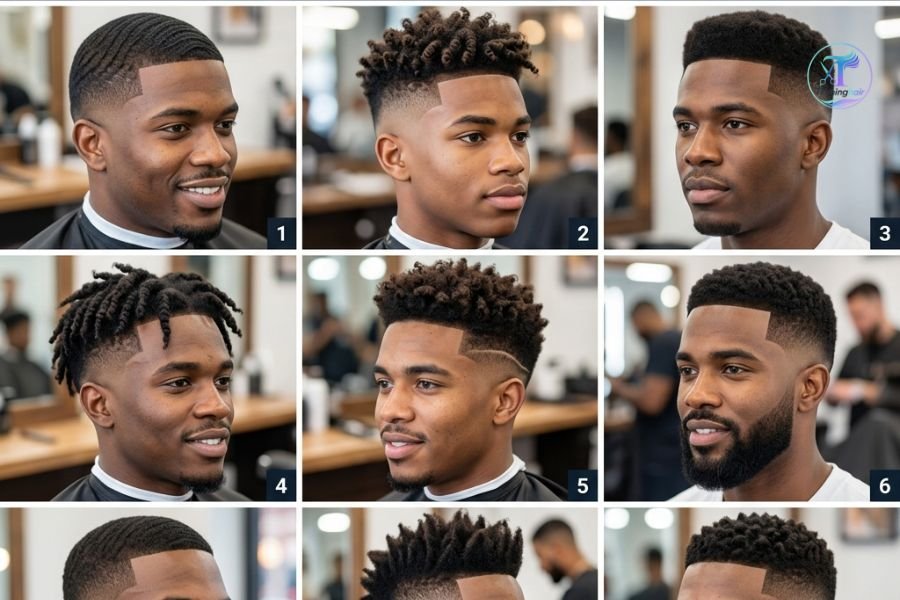
A great fade is one of the fastest ways to sharpen up your entire look without changing much else about your style. For Black men, fades work especially well because they highlight natural curl patterns, waves, and hairlines that other cuts tend to hide. Whether you want something subtle for the office or a bold statement for the weekend, there’s a fade style built for it.
This guide breaks down 27 of the best fade haircuts for Black men, plus everything you need to know about choosing, requesting, and maintaining one. You’ll find real talk on face shapes, hair texture, barber communication, and the small mistakes that can turn a great fade into a bad one.
Stylish, Trending Black Men’s Fade Haircut Styles
Fades aren’t a one-size-fits-all cut, and the styles below prove it. From subtle low fades to eye-catching burst fade mohawks, each variation brings something different to the table depending on your hair type, face shape, and personal style. Some are built for everyday wear, while others are made to turn heads.
Below you’ll find a rundown of the most popular and trending fade styles Black men are wearing right now. Each one includes what makes it distinct, who it tends to suit best, and why it’s earned a spot on this list.
Low Fade
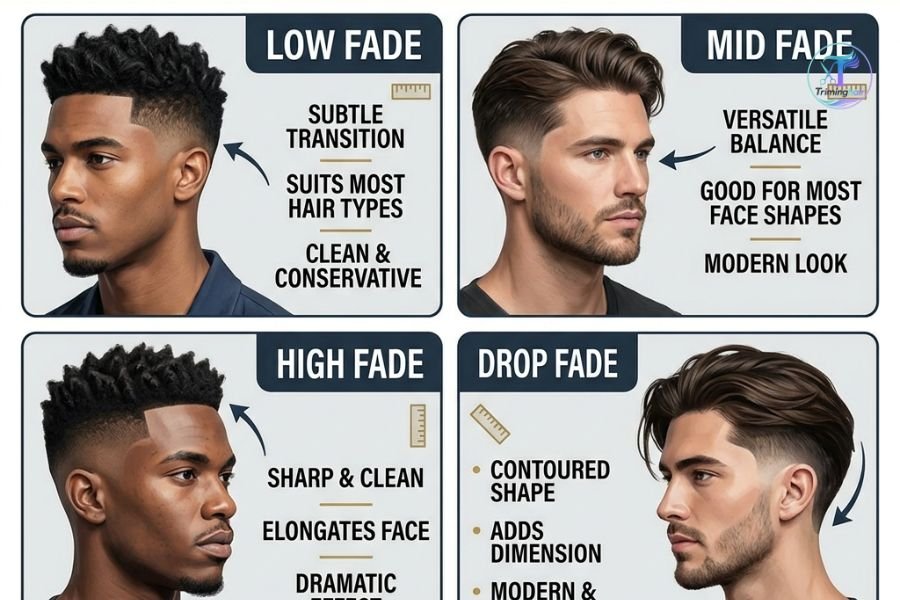
The low fade keeps the blending close to the neckline and above the ears, leaving more length on top for versatility. It’s a subtle option that works well in professional settings since it doesn’t draw too much attention. This style pairs nicely with curls, waves, or a simple brush-up on top.
Mid Fade
Sitting between the low and high fade, the mid fade starts blending around the temple area for a balanced, all-around look. It offers more visual contrast than a low fade while still feeling wearable for daily life. Most face shapes handle a mid fade well, which is part of why it’s so popular.
High Fade
The high fade starts blending much higher up the head, creating a sharper and more dramatic contrast with the top. It works great with textured or curly hair since it puts more focus on the top section. This is a bolder choice best suited for guys who want their haircut to make a statement.
Taper Fade
A taper fade gradually shortens the hair around the edges without necessarily reaching skin level. It’s a softer, more subtle version of a fade that still keeps things looking neat and intentional. Taper fades are a safe, classic choice for almost any hair length or style on top.
Drop Fade
The drop fade curves downward behind the ear, following the natural shape of the head instead of running in a straight line. This creates a rounder, more dynamic blend that pairs especially well with curly or coily textures. It’s a great pick if you want something a little different from a standard fade.
Skin Fade
A skin fade blends all the way down to bare skin, creating the sharpest possible contrast against the hair on top. It requires more upkeep since regrowth shows quickly, but the payoff is a clean, high-impact look. Skin fades work well for guys who don’t mind more frequent barber visits.
Burst Fade
The burst fade blends in a rounded, semicircle pattern around the ear rather than running straight across the sides. It’s a popular choice for guys with a mohawk, faux hawk, or longer top section since it frames the face nicely. This style stands out without looking overly flashy.
Temp Fade
A temp fade, short for temple fade, blends just around the temples while leaving the rest of the sides longer. It’s one of the more low-maintenance fade options since less hair needs constant touch-ups. Temp fades work especially well for guys who want a hint of a fade without full commitment.
Afro Fade
The afro fade combines a full, rounded afro on top with a tapered or skin-faded blend on the sides. It’s a striking style that celebrates natural texture while still keeping the sides sharp and controlled. This combo has become a go-to for guys embracing their natural curl pattern.
High Top Fade
A modern take on the classic ’90s high top, this style keeps the top flat and boxy while fading the sides down close to the skin. It’s a bold, retro-inspired look that still feels fresh today. High top fades require regular trims on top to keep the shape crisp.
Also Like To Read This: 50 Cool Haircuts for Teenage Guys: Trendy Styles to Try in 2026
Fade with Line Up
Adding a line up to any fade sharpens the hairline, edges, and sideburns for an extra clean finish. It’s often the difference between a good fade and a great one, especially for guys with a defined hairline. Most barbers recommend a line up as a finishing touch rather than a standalone style.
Short Afro Curls with Low Skin Fade
This style keeps curls short and defined on top while the sides fade down to skin at a low level. It’s a great balance of texture and precision, giving off a polished but natural vibe. It works particularly well for guys who want low maintenance without sacrificing style.
Twists Fade
Pairing twists on top with a faded side creates a striking contrast between texture and clean lines. The twists can be worn loose or more structured depending on preference. This style holds up well over a few weeks, making it a practical option between salon visits.
Dread Fade
Dreadlocks combined with a fade on the sides give off a look that’s both edgy and low maintenance once established. The fade keeps things looking sharp while the locs on top do their own thing. This combination has become increasingly popular for guys growing out their locs.
Low Skin Fade
The low skin fade blends to bare skin, but only starts the blend near the neckline and ears. It offers the sharp contrast of a skin fade without the boldness of a high fade. This makes it a versatile option for both casual and professional settings.
Temp Taper Fade
Combining a temple fade with a soft taper on the rest of the sides, this style offers a subtle but noticeable transition. It’s a good middle ground for guys who want more than a basic haircut but aren’t ready for a full skin fade. The result feels clean without looking overly styled.
Waves Fade
This style pairs a faded side with waves brushed into the top, creating that signature 360-wave pattern many guys chase. Regular brushing and a durag are usually part of the maintenance routine to keep waves spinning. The fade itself keeps the sides looking sharp between wave sessions.
Low Taper Fade
The low taper fade offers a gentle, gradual fade near the bottom of the sides while keeping more length overall. It’s one of the most versatile and low-key fade options available. This style suits guys who want a clean look without much noticeable contrast.
Mid Temp Fade with Short Hair and Beard
This look pairs a mid-level temple fade with short hair on top and a well-groomed beard. It’s a masculine, put-together style that works for both casual days and more formal occasions. Keeping the beard lined up alongside the fade ties the whole look together.
Buzz Cut Fade
Combining a buzz cut with a fade on the sides creates a uniform, low-maintenance style that still has some visual interest. It’s one of the easiest fades to maintain since the top requires little to no styling. This is a solid option for guys who want simplicity without giving up a sharp finish.
Sponged Long Afro Fade
Using a curl sponge to define longer afro curls, this style pairs textured, coily hair on top with a fade below. It gives natural hair a more polished, uniform curl pattern while the fade keeps the sides tidy. This look has grown popular for guys embracing longer natural hair.
Low Temp Fade with Thick, Medium Curls
This style keeps curls medium in length and full on top while fading gently near the temples. It highlights natural curl definition without the sides overwhelming the overall look. It’s a great option for guys who want their curls to be the main focus.
Burst Fade Mohawk
Combining a mohawk strip down the center with a rounded burst fade around the ears creates a bold, eye-catching style. It requires more styling effort to keep the center section upright and defined. This is a favorite for guys who like standing out from the crowd.
Faux Hawk Fade
A softer alternative to the mohawk, the faux hawk keeps more hair on the sides while still creating volume down the center. Paired with a fade, it offers an edgy look that’s easier to dial back for everyday settings. It’s a flexible style that can go bold or subtle depending on styling.
Wavy Buzz Cut Fade with Shape Up
This style combines a short, wavy buzz cut with a faded side and a crisp shape up around the hairline and edges. The shape up adds definition that elevates a simple buzz cut into something more intentional. It’s an easy style to maintain between barber visits.
Short Curly Hair with Low Fade and Goatee
Pairing short, natural curls with a low fade and a groomed goatee creates a clean, mature look. This combination works well for guys who want a style that reads as professional but still has personality. The low fade keeps the focus on the curls and facial hair.
Afro Temp Fade with Line Up
This style keeps a fuller afro on top, adds a temple fade on the sides, and finishes with a crisp line up. It’s a great way to wear natural hair long while still keeping the overall look sharp and defined. The line up especially helps frame the face.
Professional Afro Fade with Groomed Beard
Designed with workplace settings in mind, this style pairs a neatly shaped afro with a subtle fade and a well-maintained beard. It strikes a balance between embracing natural texture and keeping things polished. This combination works well for interviews, meetings, or any setting where a clean image matters.
Types of Fade Haircuts For Black Men
Beyond specific styles, fades generally fall into a few broader categories based on where the blending starts and how far it goes. Understanding these categories, such as low, mid, high, skin, taper, and temp fades, makes it easier to communicate with your barber and know what to expect. Each type offers a different balance of boldness, maintenance, and versatility.
Knowing the difference between these fade types also helps when browsing reference photos or trying to describe a look you’ve seen. A skin fade and a taper fade, for example, might look similar in photos but require very different techniques and upkeep. Getting familiar with these categories puts you in a better position to get the exact cut you want.
How To Choose The Right Fade For Your Look
Picking the right fade isn’t just about what looks good in a photo; it’s about what actually works with your features, hair, and daily routine. Face shape, hair texture, and lifestyle all play a role in determining which fade will look best and hold up over time. Skipping this step often leads to a cut that looks great on someone else but feels off on you.
Taking a few minutes to think through these factors before your appointment can save you from a disappointing result. It also gives you more confidence walking into the barbershop, since you’ll have a clearer sense of what to ask for. The sections below break down exactly what to consider.
Choose A Fade Based on Your Face Shape
Round faces often benefit from higher fades that add length and angles, while square or angular faces can handle lower fades that soften sharp lines. Oval faces tend to suit almost any fade style since the proportions are naturally balanced. Taking face shape into account helps the haircut complement your features instead of working against them.
Picking A Fade Based on Your Hair Texture
Coily and curly hair textures tend to shine with afro fades, twist fades, or styles that leave more length on top for definition. Straighter or wavy textures often pair well with skin fades or taper fades that show a cleaner line. Your natural texture should guide the style rather than fighting against it with heavy product or heat.
Based on Your Lifestyle
An active lifestyle or a job with a strict dress code might call for a lower-maintenance fade like a taper or low fade. If you have more time for grooming and enjoy switching up your look, a skin fade or bolder style might suit you better. Being honest about your routine helps you choose a cut you’ll actually keep up with.
How To Ask Your Barber For the Fade You Want
Communication is often the biggest factor separating a great fade from a disappointing one. Barbers rely on clear guard numbers, reference photos, and specific language to understand exactly what you’re picturing. Walking in with a vague idea like “just fade it” often leads to results that don’t match what you had in mind.
Learning a few key terms and bringing the right materials to your appointment can make a huge difference in the outcome. It also helps build a better relationship with your barber over time, since they’ll understand your preferences more clearly with each visit. The sections below cover exactly how to communicate what you want.
Guard Numbers and What They Mean
Guard numbers on clippers typically range from a 0, which is skin level, up to a 8, which leaves about an inch of length. Knowing roughly what number you want on the sides versus the top gives your barber a clear starting point. It’s helpful to know your usual numbers so you can repeat a look you liked in the past.
Bring a Reference Photo, But Choose It Right
A reference photo works best when the person in it has a similar hair texture, hairline, and face shape to yours. Photos of guys with completely different hair types can lead to unrealistic expectations or a cut that doesn’t translate well. Choose a photo that closely matches your starting point for the best results.
Touch-Up vs. Full Reset
A touch-up simply refreshes an existing fade without changing much, which is ideal for maintaining a style between full cuts. A full reset starts from scratch and is used when you want to change the fade level, length, or overall shape. Letting your barber know which one you want prevents miscommunication at the start of the appointment.
How To Maintain Your Fade
A sharp fade doesn’t stay sharp on its own, especially for Black hair, which tends to show regrowth and blend lines faster than other textures. Regular upkeep between barber visits keeps the style looking fresh instead of grown out and uneven. This includes everything from wash routines to knowing what’s safe to touch up at home.
Maintenance isn’t just about looks either; it plays a role in scalp health and hair growth over time. Neglecting a fade can lead to buildup, dryness, or an uneven hairline that’s harder to fix later. The sections below cover the essentials of keeping your fade looking its best.
Why Black Hair Needs More Frequent Cuts
Black hair often grows in tighter coils, which means new growth becomes visible at the fade line faster than with straighter hair types. This makes touch-ups every one to two weeks fairly standard for keeping a sharp fade. Skipping too many appointments can cause the fade to blend into an uneven, overgrown look.
What You Can Touch Up At Home, and What You Shouldn’t
Simple edge and hairline touch-ups with clippers are generally safe to handle at home between barbershop visits. However, attempting to re-fade the sides yourself often leads to uneven blending or accidental bald spots. It’s best to leave the actual fade blending to a professional and stick to minor cleanups at home.
Wash and Moisturize Routine
Washing with a moisturizing shampoo once or twice a week helps prevent dryness without stripping natural oils too often. Following up with a lightweight moisturizer or oil keeps both the scalp and hair looking healthy. This routine also helps the fade line stay looking clean rather than dull or ashy.
If You’re Running Waves Under the Fade
Brushing regularly, usually two to three times a day, is essential for building and maintaining a strong wave pattern under a fade. Wearing a durag at night helps compress the hair and protect progress while you sleep. Keeping the fade fresh alongside consistent brushing gives waves a cleaner, more defined appearance.
Taper Fade Haircuts for Black Men
Taper fades remain one of the most requested styles because they offer a subtle transition that works in almost any setting. Rather than a dramatic contrast, the hair gradually shortens toward the edges, giving a polished but understated finish. This makes taper fades a favorite for guys who want a clean look without drawing too much attention.
They also pair well with a wide range of hair lengths and textures on top, from short curls to longer twists or locs. Because the blend is gradual rather than sharp, taper fades tend to grow out more gracefully between appointments. This lower-maintenance quality is part of why they remain a go-to choice year after year.
Short Fade Haircuts for Black Men
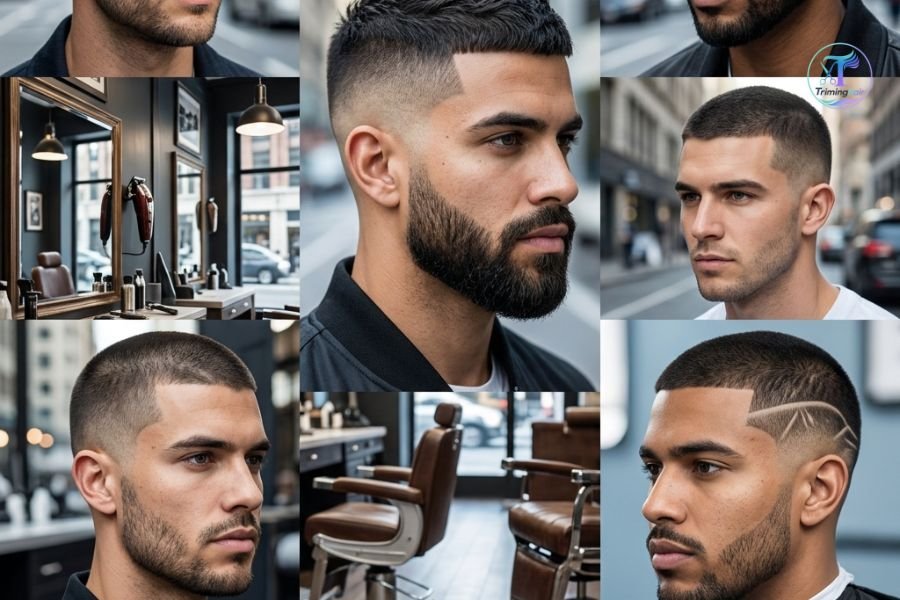
Short fade haircuts keep the top length minimal, creating a uniform, low-maintenance look that pairs naturally with a faded side. These cuts are popular among guys who want something quick to style, or who prefer not to style their hair much at all. A short fade also tends to highlight the sharpness of the blend itself.
This category works especially well for guys with busy schedules or active lifestyles, since there’s little upkeep required day to day. It’s also a practical choice during warmer months when shorter hair feels more comfortable. Short fades can still look intentional and sharp with the right line up and edge work.
Low Taper Fade Haircuts for Black Men
The low taper fade is one of the most versatile and widely worn fade styles among Black men. Because the blend starts low and fades gradually, it offers just enough contrast to look intentional without being bold. This makes it a safe, reliable choice for school, work, or any formal setting.
Its subtlety also means it grows out more forgivingly than higher or sharper fades. Guys who don’t want to visit the barbershop every week often gravitate toward this style for that reason. It pairs well with almost any top style, from curls to twists to a simple brush-up.
Mid Fade Haircuts for Black Men
Mid fade haircuts strike a balance between the subtlety of a low fade and the boldness of a high fade. The blend typically starts around the temple, offering noticeable contrast without being overly dramatic. This makes mid fades a popular middle-ground choice for guys who want their haircut to stand out a bit more.
Because mid fades work well with nearly every face shape and hair texture, they’ve become one of the most requested styles at barbershops. They also pair nicely with beards, line ups, and various top styles, making them a flexible option overall. This versatility is a big reason mid fades continue to trend.
High Fade Haircuts for Black Men
High fade haircuts create the most dramatic contrast between the sides and the top, since the blend starts much higher up the head. This style tends to draw more attention and works especially well with textured or voluminous hair on top. It’s a bold choice for guys who want their cut to make a statement.
Because the fade starts higher, regrowth becomes noticeable more quickly, meaning more frequent touch-ups are usually needed. Guys who choose this style are often comfortable with more regular barbershop visits in exchange for a sharper look. High fades tend to pair especially well with afros, curls, and twists.
Best Fade Haircuts for Black Men
With so many fade variations available, the “best” one really comes down to personal style, hair texture, and how much maintenance you’re willing to commit to. Styles like the low taper fade, skin fade, and burst fade consistently rank among the most popular for their versatility and sharp appearance. Each offers a slightly different balance of boldness and upkeep.
Ultimately, the best fade is one that complements your face shape, works with your natural hair texture, and fits realistically into your routine. Trying out a few different styles over time can help you figure out what suits you best long term. Consulting with a trusted barber is also a great way to narrow down the right fit.
2 Fade Haircut Black Male
A two-fade combination, such as pairing a low fade with a burst fade around the crown, adds extra dimension and detail to a haircut. These combo styles are often used to create more distinct sections on top, like a mohawk or faux hawk. They require a skilled barber to blend multiple fade levels smoothly.
This approach works well for guys who want a haircut that feels more custom and less like a standard, single-style fade. It also gives more room for creativity when adding line ups, designs, or shape ups. Because of the added detail, these styles usually take a bit longer in the chair.
Long Fade Haircuts for Black Men
Long fade haircuts keep more length on top, whether that’s afro curls, twists, locs, or waves, while still fading the sides for contrast. This combination lets natural hair texture take center stage while keeping the overall look controlled and neat. It’s a great option for guys who want to grow their hair out without losing a sharp appearance.
These styles do require a bit more daily maintenance on top, from moisturizing to detangling, depending on the hair type. However, the payoff is a fuller, more textured look that stands out from shorter fade styles. Long fades have become increasingly popular as more guys embrace longer natural hairstyles.
Common Mistakes Black Men Make When Getting A Fade
Even a well-executed fade can go wrong when small details are overlooked before, during, or after the haircut. Many of the most common mistakes come down to miscommunication, rushing the process, or skipping proper aftercare. Being aware of these pitfalls ahead of time makes it much easier to avoid them.
Most of these issues are completely avoidable with a bit of planning and patience. Whether it’s choosing the wrong fade level or trying to fix things at home with the wrong tools, small missteps can add up quickly. The sections below cover the mistakes to watch out for most.
Going Too High Too Fast
Jumping straight into a high skin fade without easing into it can be a shock, both visually and in terms of maintenance. It’s often better to start with a lower or mid-level fade and work up once you’re comfortable with the upkeep. This also gives you time to see how the style suits your face and lifestyle.
Mismatching Fade Level and Face Shape
Choosing a fade based purely on trend photos without considering your own face shape can lead to a cut that doesn’t flatter your features. A style that looks great on someone with an oval face might not work the same way on a rounder or squarer face. Taking face shape into account before committing helps avoid this common misstep.
Asking For A Skin Fade With An Uneven Hairline
A skin fade puts more attention on the hairline than most other styles, which can highlight any natural irregularities. If your hairline is uneven, a skilled barber can often work around it, but it’s worth mentioning beforehand. Ignoring this detail can lead to a fade that draws attention to something you’d rather downplay.
Skipping The Post-Shave Routine
After a fresh fade, especially a skin fade, applying a soothing aftershave or alcohol-free balm helps prevent irritation and bumps. Skipping this step can lead to redness, ingrown hairs, or discomfort in the days following the cut. A simple post-shave routine goes a long way in keeping the skin healthy.
Trying To Re-Fade at Home With the Wrong Guard
Attempting to touch up a fade at home with the wrong clipper guard can quickly turn a clean cut into an uneven mess. Fades require precise blending techniques that are difficult to replicate without proper training and tools. It’s usually safer to stick to minor edge touch-ups and leave the actual fading to a professional.
Skipping The Line Up
Neglecting a line up can make even a well-done fade look unfinished, especially as the hairline starts to grow out. A crisp line up around the edges and sideburns often makes the biggest visible difference in how sharp a haircut looks overall. Regular line ups between full cuts help maintain that fresh, just-left-the-barbershop appearance.
FAQ’s
How often should Black men get their fade touched up?
Most Black men need a fade touch-up every one to two weeks, since tighter curl patterns show regrowth faster than straighter hair. Skin fades and high fades tend to need the most frequent visits, while low and taper fades can stretch a bit longer. Sticking to a consistent schedule keeps the blend looking sharp instead of grown out.
What’s the best fade for a beginner who’s never had one before?
A low fade or low taper fade is usually the safest starting point, since it offers a subtle transition that’s easy to grow out and hard to get wrong. These styles also require less frequent touch-ups while you figure out what level of contrast you actually like. Once you’re comfortable, you can experiment with mid or high fades.
Can I get a skin fade with natural, coily hair?
Yes, skin fades work well with coily and curly hair, and they’re actually a popular pairing with afro fades and twist-outs. The key is finding a barber experienced with textured hair, since curl pattern can affect how the fade blends near the skin. A skilled barber will adjust technique based on your specific hair density and texture.
How do I stop my fade from looking patchy or uneven?
Patchiness usually comes from waiting too long between cuts, using the wrong guard at home, or an inexperienced barber rushing the blend. Sticking to a regular touch-up schedule and letting a professional handle the actual fading, rather than trying it yourself, solves most of these issues. Moisturizing regularly also helps hair lie flatter, making any unevenness less noticeable.
Does a fade work with a beard?
Fades and beards pair naturally, and many barbers recommend lining up both at the same time for a cohesive look. A well-groomed beard adds balance to bolder fades like high or skin fades, while a low fade tends to keep the focus more evenly split. Keeping both trimmed on the same schedule helps the whole look stay consistent.
Conclusion
With 27 styles and multiple fade categories to choose from, there’s no shortage of options for Black men looking to switch up their look. The key is matching the fade to your face shape, hair texture, and how much upkeep you’re realistically willing to commit to. From a low-key low taper fade to a bold burst fade mohawk, the right choice comes down to personal style as much as trend.
Getting the most out of any fade also depends on clear communication with your barber and consistent maintenance between visits. Knowing your guard numbers, bringing the right reference photos, and sticking to a touch-up schedule all make a noticeable difference in how long a fade stays sharp. With the right style and routine, a fresh fade is one of the easiest ways to keep your look polished year-round.

Leave a Reply